Henbane
Image: Denis Ivanov (cc-by-nc)
NameHenbane
Scientific NameHyoscyamus niger
Common NamesHenbane, Black Henbane, Stinking Nightshade, Devil's Eye, Hog's Bean
Plant FamilySolanaceae
Natural HabitatCommonly found in disturbed soils, waste ground, roadsides, field margins, and ruins, preferring well-drained, nitrogen-rich soils in temperate climates.
Parts Usedleaf,seed,whole_plant
Medicinal Actionsanalgesic, sedative, nervine
Traditional UsesHistorically, Henbane was used as a powerful sedative and analgesic for pain relief, insomnia, and muscle spasms. It also saw use as an anesthetic in traditional surgery and dentistry, and for conditions like asthma and coughs. Due to its extreme toxicity and hallucinogenic properties, its internal use is now largely obsolete and highly dangerous.
Active ConstituentsHyoscyamine, Scopolamine, Atropine
Preparation Methodsinfusion, tincture, poultice, powder, salve
Contraindications & WarningsEXTREMELY TOXIC. Contraindicated in pregnancy, breastfeeding, glaucoma, prostatic hypertrophy, heart conditions, gastrointestinal obstruction, and in children. Can cause severe anticholinergic syndrome including delirium, hallucinations, tachycardia, dry mouth, blurred vision, and coma. Interacts with other anticholinergic drugs, sedatives, and alcohol. Not for self-medication.
Cultivation NotesPrefers full sun to partial shade and well-drained, fertile soil. Propagated by seed. Requires careful handling due to its toxicity. Can be invasive in some areas.
Rarityuncommon
Description
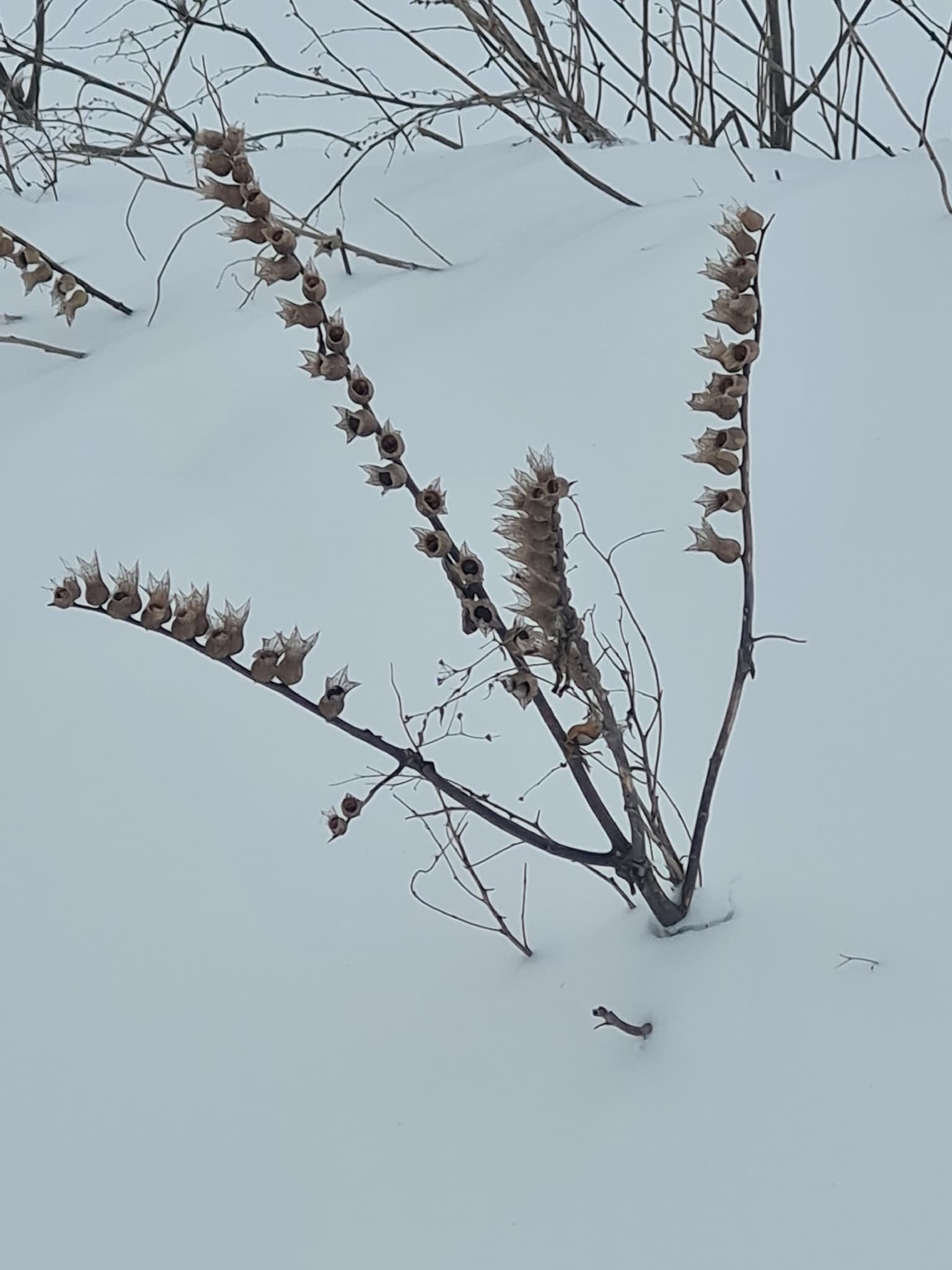
Hyoscyamus niger is a biennial or annual herbaceous plant, typically growing up to 1 meter tall, characterized by sticky, hairy leaves and pale yellow-purple flowers. The image displays dried stalks with persistent, urn-shaped calyces containing seeds, indicative of the plant in its dormant or post-fruiting stage during winter.