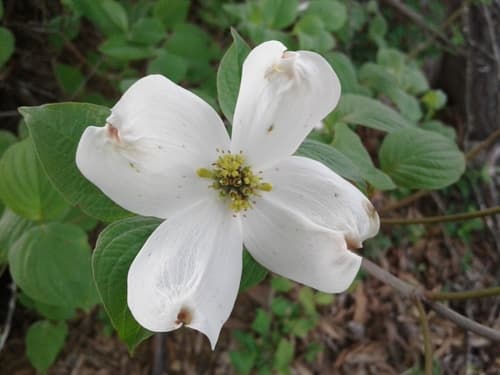
Flowering Dogwood
NameFlowering Dogwood
Scientific NameCornus florida
Common NamesFlowering Dogwood, American Dogwood, Eastern Dogwood
Plant FamilyCornaceae
Natural HabitatTypically found as an understory tree in deciduous forests, forest edges, and open woodlands, preferring moist, well-drained, acidic soils.
Parts Usedbark,root
Medicinal Actionsastringent, anti-inflammatory
Traditional UsesHistorically, the bark of the flowering dogwood was used by Native Americans and early European settlers as a febrifuge, particularly as a substitute for quinine to treat fevers, malaria, and chills. It was also employed as a general tonic, for digestive complaints, and externally as an astringent wash for wounds and skin irritations.
Active ConstituentsCornin, tannins, gallic acid, resin
Preparation Methodsdecoction, tincture, powder
Contraindications & WarningsLarge doses may cause nausea, vomiting, or diarrhea. Due to its tannin content, it may interact with medications that affect blood clotting. Not recommended for use during pregnancy or breastfeeding.
Cultivation NotesPrefers partial shade, especially in warmer climates, and moist, well-drained, acidic soil. It can tolerate full sun if soil moisture is consistently adequate. Protect from strong winds and ensure good air circulation to prevent fungal diseases.
Raritycommon
Description
A small, deciduous understory tree native to eastern North America, known for its distinctive white or pink petal-like bracts that surround small, greenish-yellow true flowers in spring. Its leaves turn a vibrant reddish-purple in autumn, and it produces bright red berry-like fruits.