Apricot Angel's Trumpet
NameApricot Angel's Trumpet
Scientific NameBrugmansia suaveolens
Common NamesApricot Angel's Trumpet, Angel's Trumpet, Tree Datura
Plant FamilySolanaceae
Natural HabitatNative to the tropical regions of South America, particularly southeastern Brazil, often found in disturbed areas, forest edges, and riverbanks. It is widely cultivated as an ornamental plant in warm climates worldwide.
Parts Usedleaf,flower,seed,whole_plant
Medicinal Actionssedative, analgesic
Traditional UsesHistorically, various indigenous cultures used Angel's Trumpet for ritualistic purposes, divination, and as a potent entheogen due to its hallucinogenic properties. It was also applied topically for pain relief and, with extreme danger, ingested as an anesthetic or sedative, often leading to severe poisoning or death.
Active Constituentsscopolamine, atropine, hyoscyamine, tropane alkaloids
Preparation Methodsinfusion, decoction, poultice, powder
Contraindications & WarningsEXTREMELY TOXIC AND POISONOUS. All parts of the plant contain potent tropane alkaloids and are highly dangerous if ingested or absorbed through the skin. Can cause severe anticholinergic syndrome, hallucinations, delirium, coma, and death. Not for internal or external medicinal use; avoid all contact.
Cultivation NotesThrives in warm, humid climates with full sun to partial shade, requiring rich, well-drained soil and consistent moisture. It can be grown in containers and overwintered indoors in colder regions, and is typically propagated by cuttings.
Raritycommon
Description
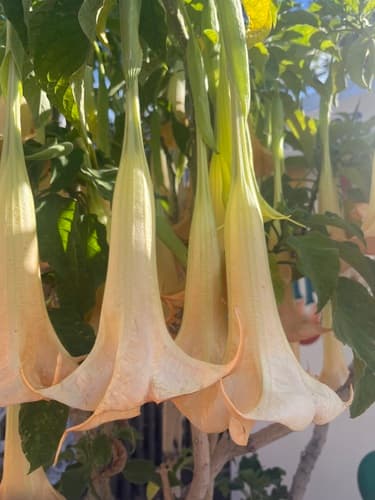
A woody shrub or small tree known for its large, pendulous, trumpet-shaped flowers, which are often fragrant and can range in color, including apricot hues. The leaves are typically large, ovate, and softly hairy.