Hawaiian Moon Flower
NameHawaiian Moon Flower
Scientific NameIpomoea alba
Common NamesMoonflower, Tropical White Morning-glory, Moon Vine, Hawaiian Moon Flower
Plant FamilyConvolvulaceae
Natural HabitatNative to tropical and subtropical regions worldwide, it thrives in warm, humid climates. Commonly found in disturbed areas, forest edges, coastal thickets, and widely cultivated in gardens.
Parts Usedleaf,flower,whole_plant
Medicinal Actionsdemulcent, anti-inflammatory
Traditional UsesIn some traditional medicine systems, the leaves are applied externally as a poultice to soothe boils, reduce swellings, and alleviate various skin irritations. The sap has also been traditionally used for its mild demulcent properties.
Active Constituentsalkaloids, resins, tannins
Preparation Methodsinfusion, poultice, powder
Contraindications & WarningsThe seeds of Ipomoea alba are considered toxic and should not be ingested. Internal use of any part of the plant is generally not recommended without expert guidance due to the presence of alkaloids and potential toxicity, especially for pregnant or breastfeeding women and children.
Cultivation NotesThis plant prefers full sun to partial shade and well-drained soil. As a vigorous climber, it requires a sturdy trellis or support structure. It is sensitive to frost and thrives in warm, humid conditions, easily propagated by seeds or stem cuttings.
Raritycommon
Description
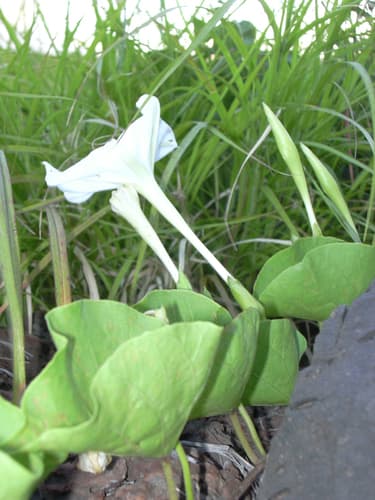
A vigorous, perennial vine characterized by large, heart-shaped leaves and striking, fragrant, trumpet-shaped white flowers. These nocturnal blooms unfurl at dusk and typically close by morning, often reaching several inches in diameter.