Guggul
Image: Malaika Mathew Chawla (cc-by)
NameGuggul
Scientific NameCommiphora wightii
Common NamesGuggul, Indian Bdellium, Guggul tree, Guggulu
Plant FamilyBurseraceae
Natural HabitatNative to arid and semi-arid regions of India (Rajasthan, Gujarat, Karnataka), Pakistan, and Bangladesh, often found in rocky, poor soils and desert scrublands.
Parts Usedbark
Medicinal Actionsanti-inflammatory, antioxidant, adaptogen
Traditional UsesTraditionally used in Ayurvedic medicine for treating arthritis, obesity, high cholesterol, skin diseases, and promoting detoxification. It is revered for its ability to balance Vata and Kapha doshas and is often used for its rejuvenating properties.
Active ConstituentsGuggulsterones, Myrrhanol A, Lignans
Preparation Methodspowder, tincture
Contraindications & WarningsNot recommended for pregnant or breastfeeding women. May interact with blood-thinning medications, birth control pills, and thyroid medications. Can cause mild gastrointestinal upset in some individuals.
Cultivation NotesPrefers dry, well-drained, sandy or rocky soils and full sun exposure. It is highly drought-tolerant and thrives in hot, arid climates. Propagation is typically by seeds or stem cuttings.
Rarityrare
Description
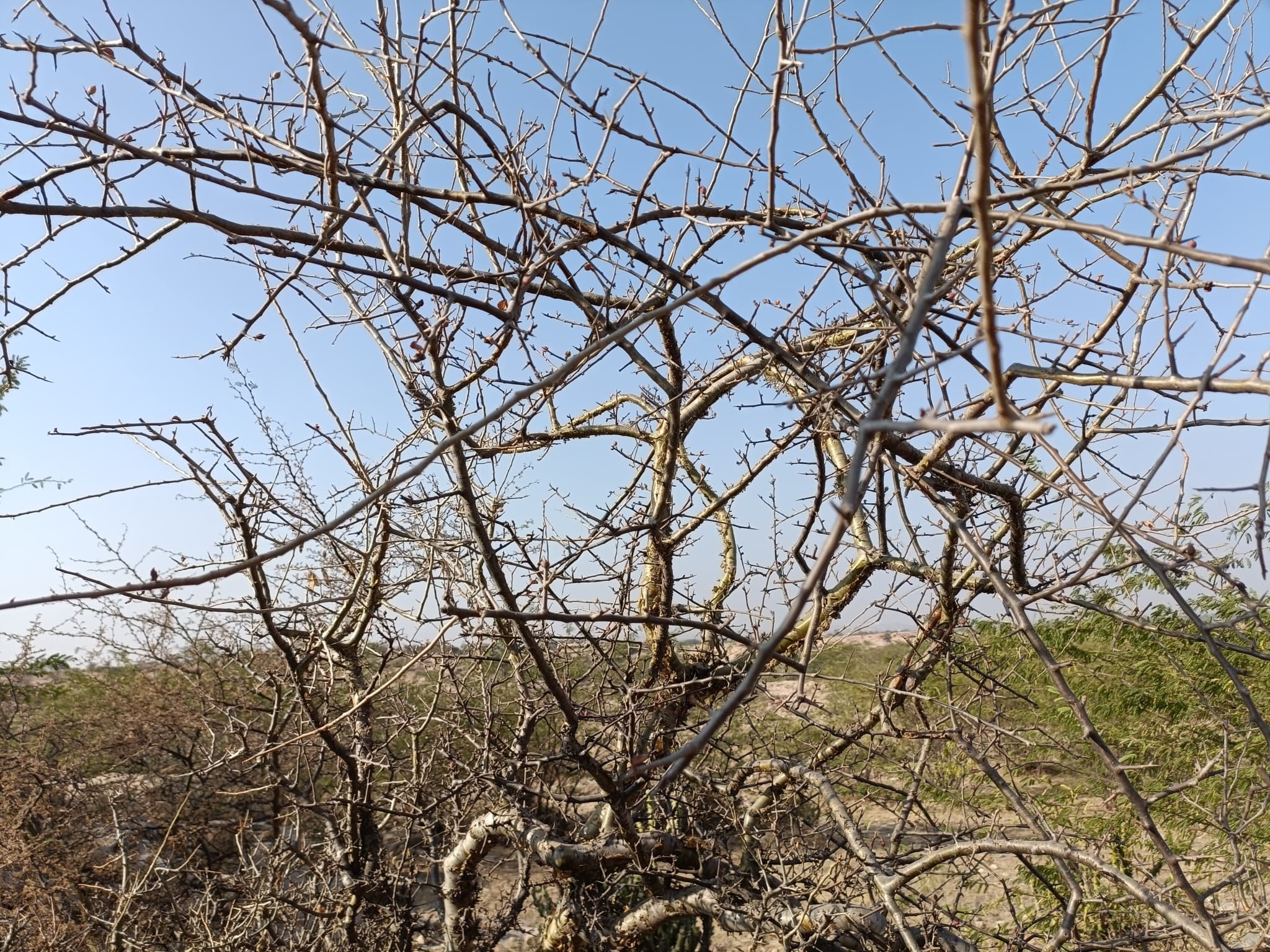
Commiphora wightii is a thorny, deciduous shrub or small tree, typically growing in arid regions. It features a papery bark that peels off in flakes, revealing a greenish-yellow underbark, and produces a fragrant oleo-gum-resin from its stem. The image shows a leafless, thorny shrub, consistent with its appearance in dry, dormant seasons.