Grausa lateritia
NameGrausa lateritia
Scientific NameSphaeralcea ambigua
Common NamesDesert Mallow, Apricot Mallow, Globe Mallow, Desert Globemallow
Plant FamilyMalvaceae
Natural HabitatNative to arid and semi-arid regions of the southwestern United States and northwestern Mexico, thriving in deserts, rocky slopes, washes, and disturbed areas. It prefers full sun and well-drained soil.
Parts Usedleaf,flower,root,whole_plant
Medicinal Actionsdemulcent, anti-inflammatory, astringent
Traditional UsesTraditionally used by Native American tribes for soothing irritated mucous membranes in coughs, sore throats, and gastrointestinal issues due to its mucilaginous properties. It was also applied topically as a poultice for skin irritations, wounds, and burns.
Active ConstituentsMucilage, Flavonoids, Tannins
Preparation Methodsinfusion, decoction, poultice, powder
Contraindications & WarningsGenerally considered safe; however, large internal doses of mucilaginous plants may interfere with the absorption of medications. Consult a healthcare professional before use, especially if pregnant, nursing, or on medication.
Cultivation NotesDrought-tolerant and prefers full sun with well-drained, sandy or rocky soil. It is easy to grow in suitable climates, requiring minimal water once established, and can be propagated from seed.
Raritycommon
Description
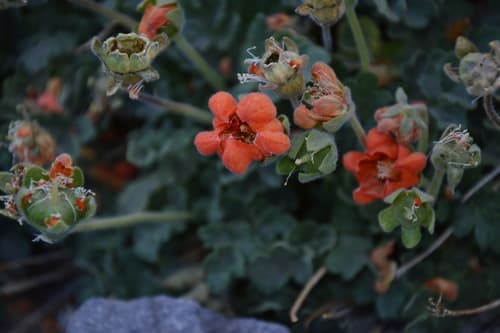
A perennial subshrub growing up to 3 feet tall, characterized by soft, grayish-green, lobed leaves covered in stellate hairs. It produces abundant cup-shaped flowers, typically apricot to orange-red, with five petals and a prominent central column of fused stamens.