Galápagos tomato
NameGalápagos tomato
Scientific NameSolanum cheesmaniae
Common NamesGalápagos tomato, Galapagos wild tomato
Plant FamilySolanaceae
Natural HabitatEndemic to the Galápagos Islands, this species thrives in arid to semi-arid coastal zones, lava fields, and dry scrubland. It is adapted to harsh, dry conditions and often found in disturbed areas.
Parts Usedfruit
Medicinal Actionsantioxidant
Traditional UsesTraditionally, the fruits of the Galápagos tomato have been consumed as a food source by local wildlife and historically by humans on the islands. While not a primary medicinal herb, its fruits are rich in vitamins and antioxidants, contributing to general health and nutrition.
Active ConstituentsLycopene, Beta-carotene, Vitamin C, Vitamin K
Preparation Methodspowder
Contraindications & WarningsLike many plants in the Solanaceae family, the leaves and unripe fruits may contain solanine, which can be toxic if ingested in large quantities. Allergic reactions to tomatoes are also possible.
Cultivation NotesThis species prefers full sun, warm temperatures, and well-drained soil. It is notably drought-tolerant and can thrive in poor, rocky soils. It can be grown from seed and requires conditions similar to cultivated tomatoes but with less water.
Rarityuncommon
Description
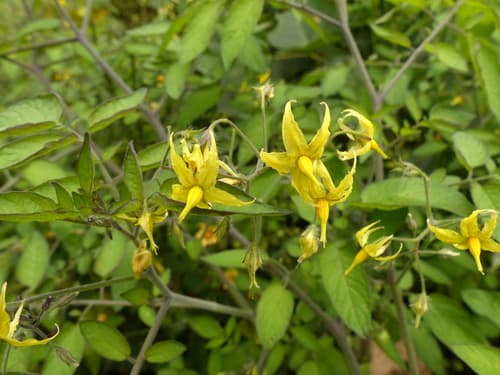
The Galápagos tomato is an herbaceous plant characterized by its compound leaves and small, bright yellow, star-shaped flowers. It produces small, round, red or orange fruits, resembling miniature tomatoes. The plant typically has a sprawling or bushy growth habit.