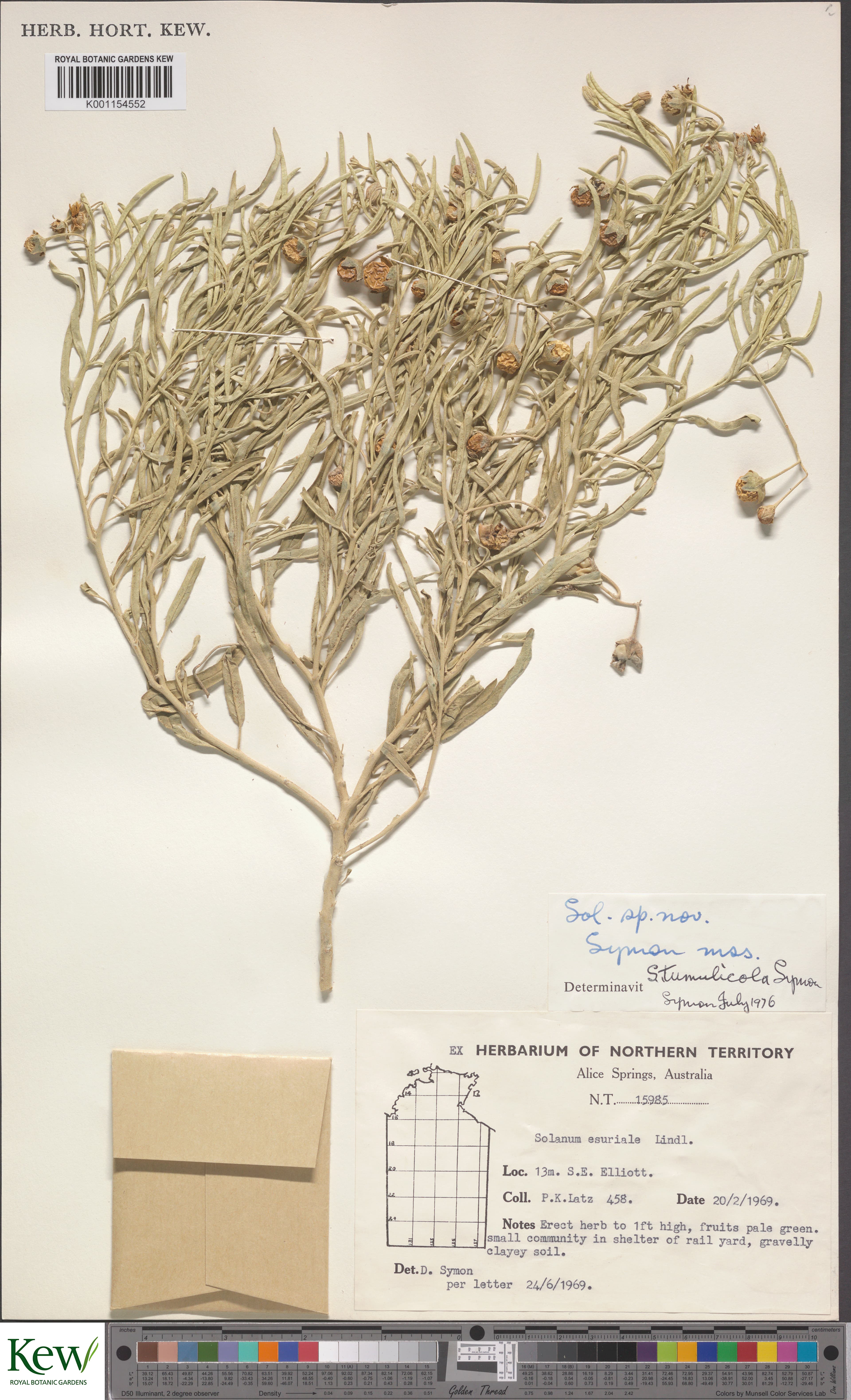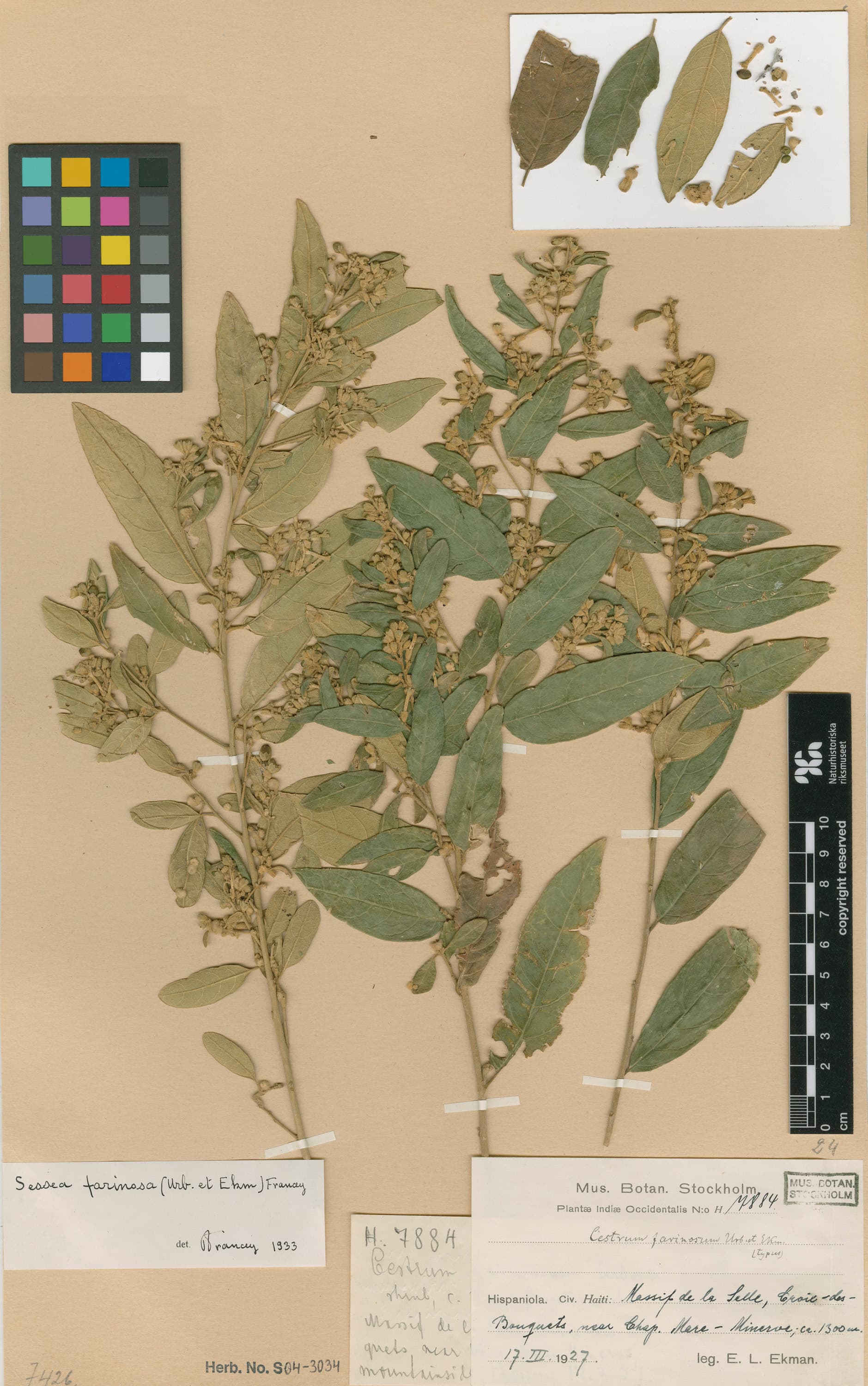
Cestrum farinosum
Image: Karin dos Santos (S) (cc-by)
NameCestrum farinosum
Scientific NameCestrum farinosum
Plant FamilySolanaceae
Natural HabitatEndemic to Hispaniola (Haiti and Dominican Republic), typically found in montane forests, moist thickets, and disturbed areas at elevations ranging from 1000 to 1500 meters.
Parts Usedwhole_plant
Medicinal Actionsanalgesic, anti-inflammatory, antimicrobial
Traditional UsesTraditional medicinal uses specifically for Cestrum farinosum are poorly documented. However, other Cestrum species have been used in some traditional systems for conditions like fever, pain, and skin ailments, often with extreme caution due to the plant's inherent toxicity. Any internal use would be highly diluted and risky.
Active Constituentssteroidal saponins, alkaloids
Preparation Methodsinfusion, decoction, poultice
Contraindications & WarningsCestrum farinosum is considered toxic, similar to many other Cestrum species. Ingestion of any part can lead to severe gastrointestinal distress, neurological symptoms, and can be fatal. Internal use is strongly contraindicated. External use should be approached with extreme caution due to potential skin irritation and absorption of toxic compounds. Avoid use by pregnant or breastfeeding individuals, children, and those with liver or kidney conditions.
Cultivation NotesThis tropical to subtropical shrub thrives in moist, well-drained soils and prefers full sun to partial shade. Propagation is typically achieved through seeds or cuttings. It is not widely cultivated due to its toxic nature.
Rarityuncommon
Description
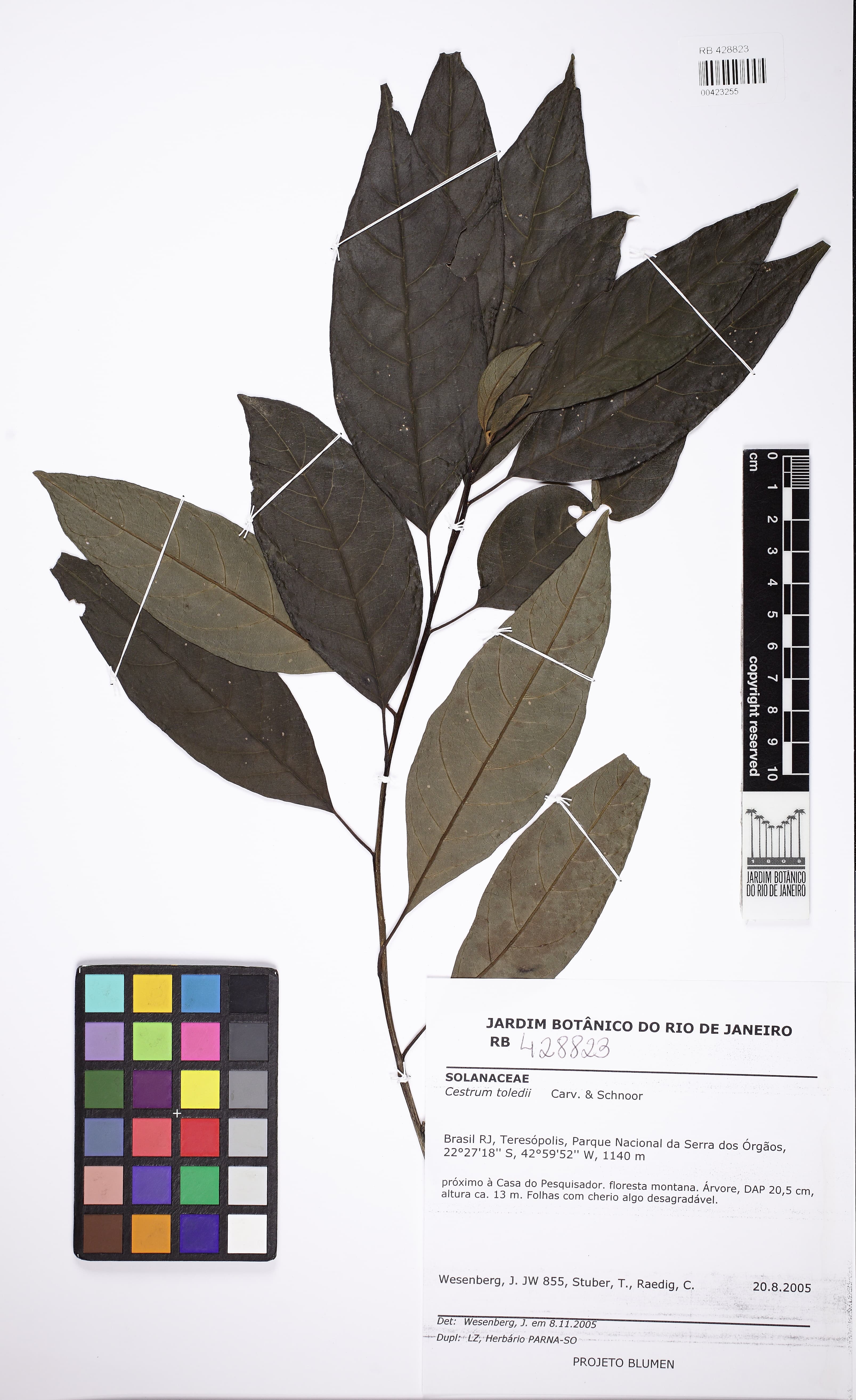
Cestrum farinosum is a shrub or small tree native to Hispaniola, characterized by simple, alternate leaves. It produces clusters of small, often greenish-yellow flowers that develop into berries. The plant's younger parts may exhibit a farinose or pubescent texture.