Field Elm
NameField Elm
Scientific NameUlmus minor
Common NamesField Elm, European Field Elm, Smooth-leaved Elm, Common Elm
Plant FamilyUlmaceae
Natural HabitatNative to Europe, North Africa, and Western Asia, it typically grows in lowland forests, hedgerows, riverbanks, and open woodlands. It prefers moist, fertile soils but is adaptable to various conditions.
Parts Usedbark,leaf
Medicinal Actionsdemulcent, astringent, anti-inflammatory
Traditional UsesTraditionally, the inner bark of Field Elm has been used as a demulcent to soothe inflamed mucous membranes, particularly in the digestive and respiratory tracts, for conditions like coughs, sore throats, and gastrointestinal irritation. It was also applied externally as a poultice for wounds, burns, and skin irritations due to its astringent and anti-inflammatory properties.
Active Constituentsmucilage, tannins, flavonoids, triterpenes
Preparation Methodsdecoction, poultice, powder, infusion
Contraindications & WarningsGenerally considered safe, but large doses of mucilage can potentially interfere with the absorption of other medications. Allergic reactions are possible in sensitive individuals.
Cultivation NotesField Elm is a hardy tree that prefers full sun to partial shade and well-drained, fertile soil. It is tolerant of various soil types and urban pollution, making it suitable for street planting, though it is highly susceptible to Dutch Elm Disease.
Raritycommon
Description
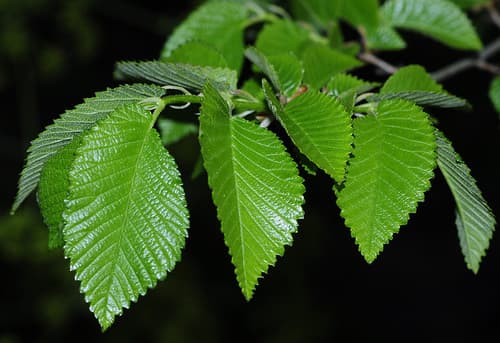
A medium to large deciduous tree, typically growing up to 30 meters tall, with a broad crown. Its leaves are alternate, simple, ovate to elliptic, doubly serrated, and often asymmetrical at the base, with prominent venation.