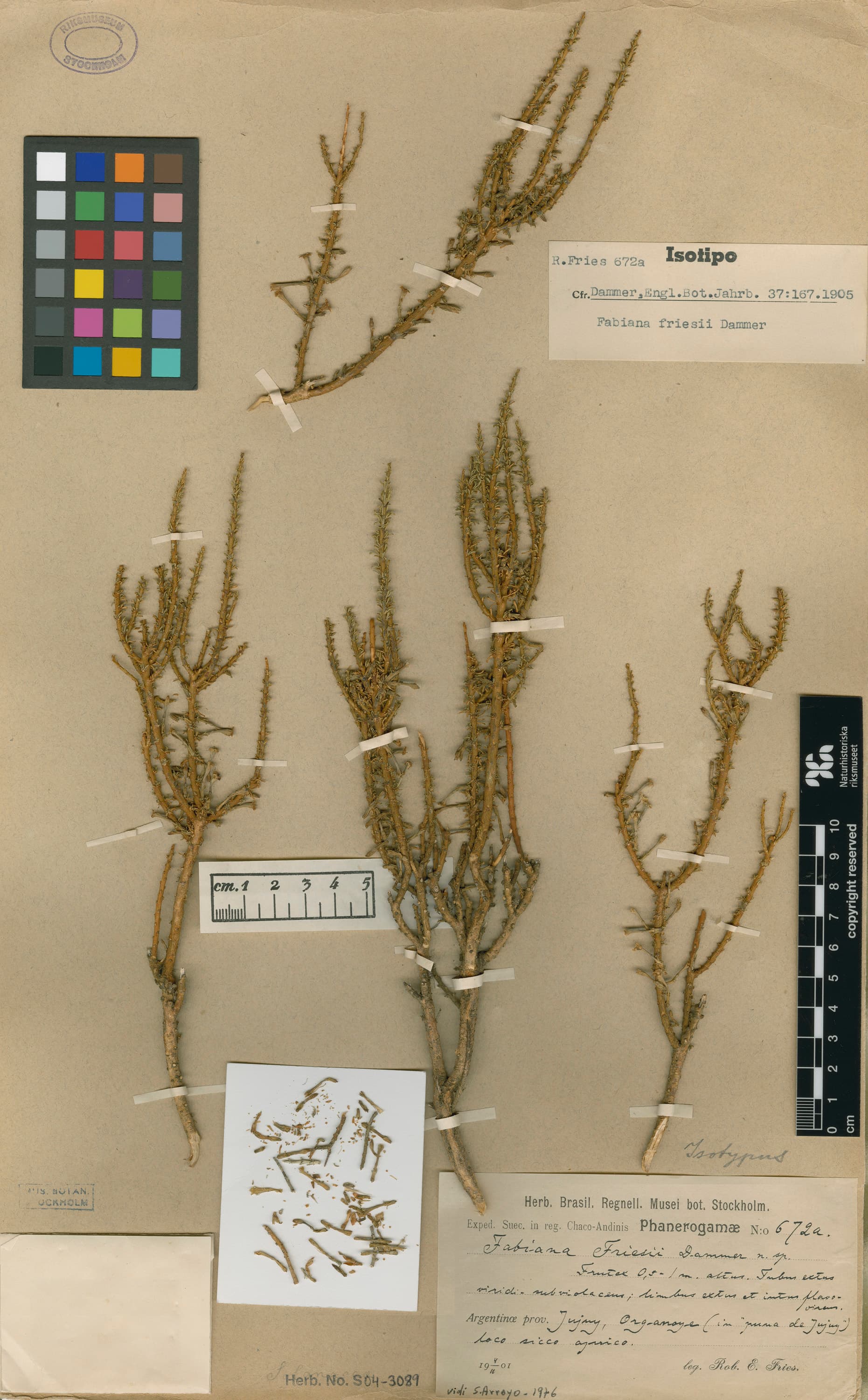
Fabiana friesii
Image: Gunilla Dahlerus Lehman (S) (cc-by)
NameFabiana friesii
Scientific NameFabiana friesii Dammer
Plant FamilySolanaceae
Natural HabitatThis species is native to high-altitude, arid, and sunny regions of the Andes, specifically found in the Puna de Jujuy province of Argentina. It thrives in dry, open, and exposed environments.
Parts Usedwhole_plant
Medicinal Actionsdiuretic, anti-inflammatory, antimicrobial
Traditional UsesWhile specific traditional uses for Fabiana friesii are not extensively documented, other species within the genus Fabiana, particularly Fabiana imbricata (Pichi), are traditionally used as diuretics for urinary tract infections, kidney stones, and as digestive aids. It is plausible that Fabiana friesii shares similar properties and uses due to its close botanical relation and similar chemical profile.
Active Constituentsflavonoids, coumarins, diterpenoids
Preparation Methodsinfusion, decoction, tincture
Contraindications & WarningsBased on related species, caution is advised during pregnancy and lactation. Individuals with severe kidney or liver conditions should consult a healthcare professional before use, especially due to potential diuretic and choleretic effects.
Cultivation NotesFabiana friesii prefers full sun and well-drained, sandy or rocky soils, mimicking its natural high-altitude, arid habitat. It is likely drought-tolerant and can withstand cold temperatures typical of its native Puna region.
Rarityuncommon
Description
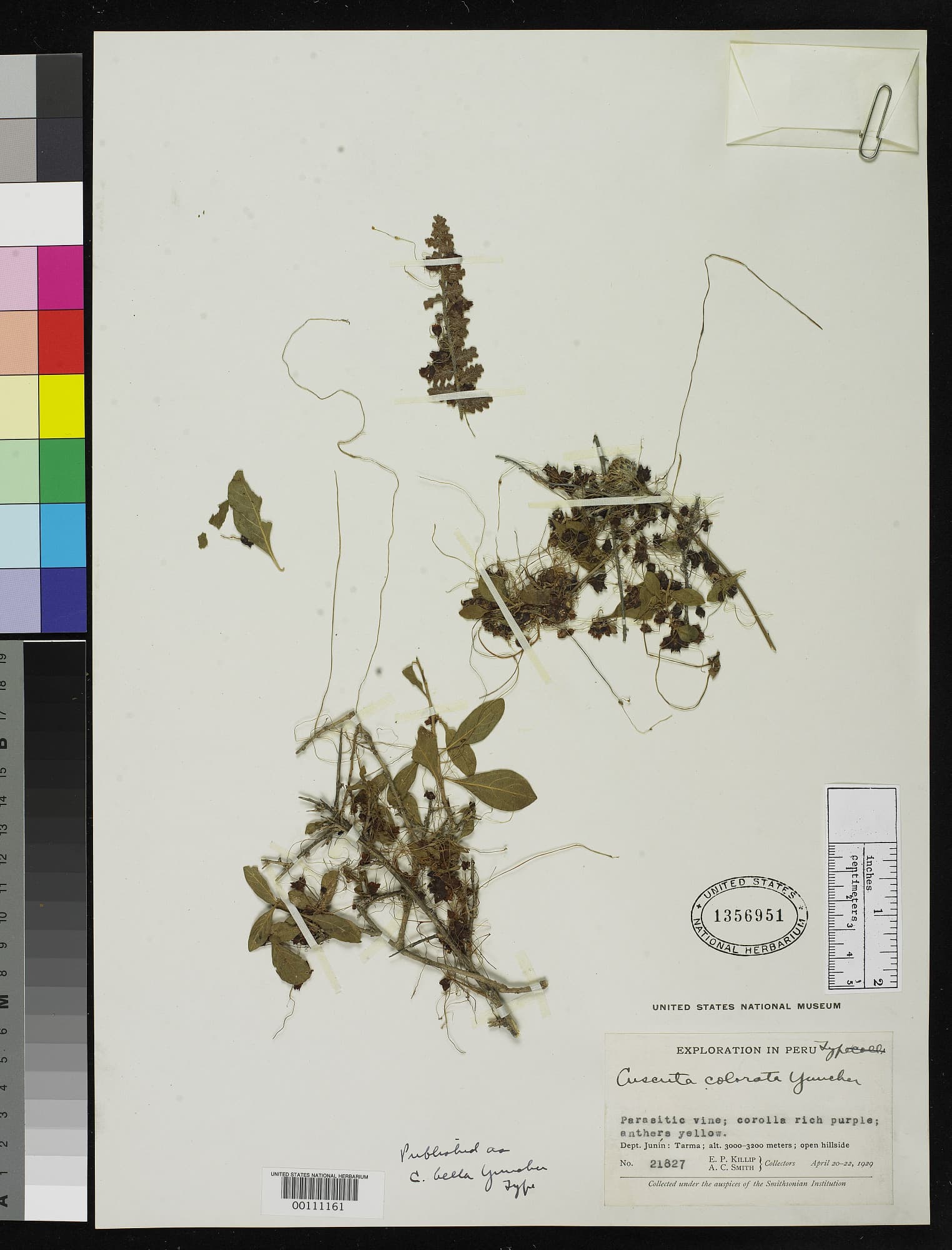
Fabiana friesii is a woody, ericoid shrub, typically growing 0.5 to 1 meter tall, characterized by numerous slender, branched stems. Its small, scale-like leaves are closely appressed to the stems, giving the plant a heath-like appearance. The specimen shows dried, brownish aerial parts, indicative of its natural state.