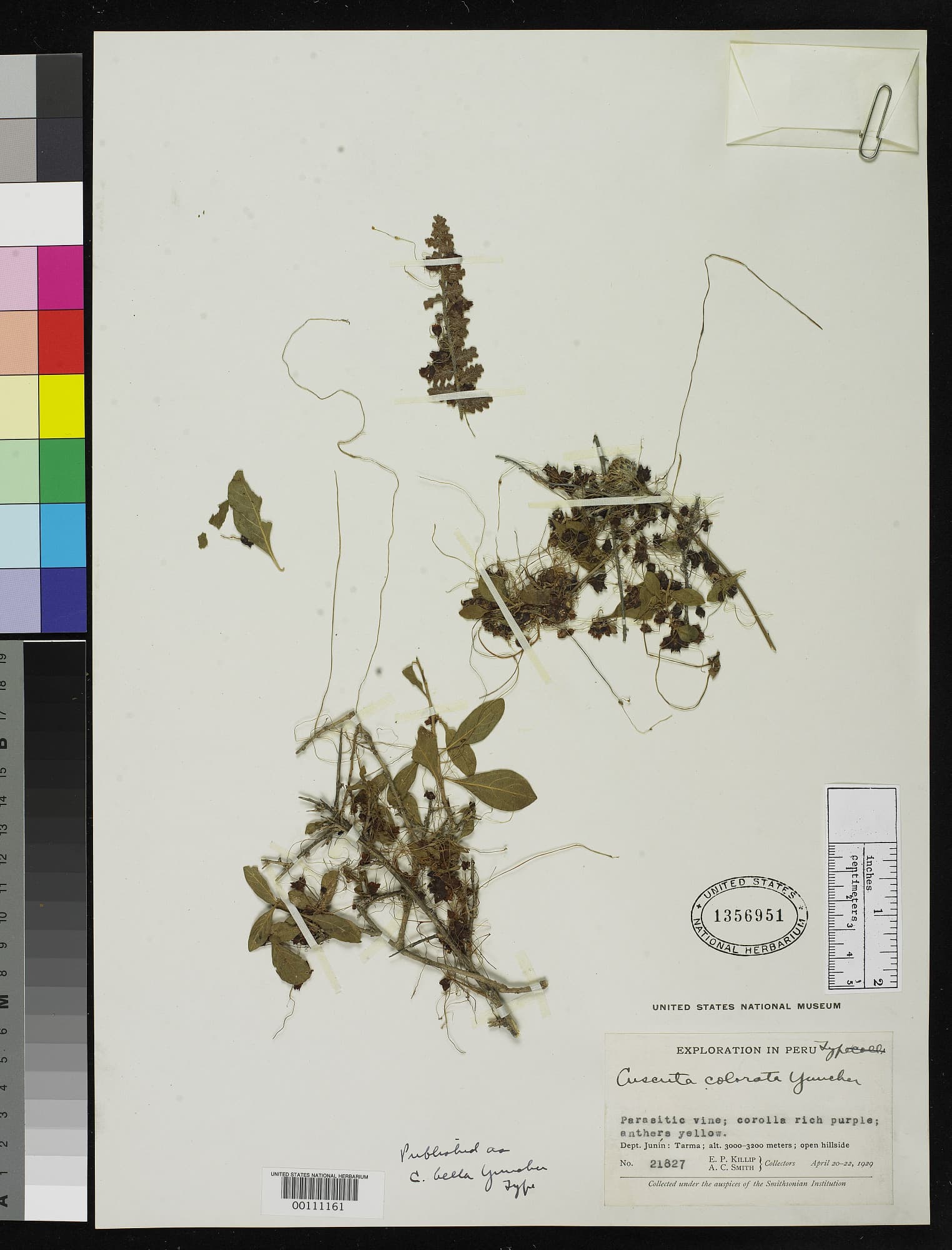
Cuscuta bella
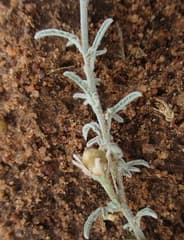
Image: Ingrid P. Lin (cc0)
NameCuscuta bella
Scientific NameCuscuta bella Yunck.
Common NamesDodder, Love Vine, Strangleweed, Fragrant Dodder
Plant FamilyConvolvulaceae
Natural HabitatParasitic on various host plants in temperate and tropical regions, particularly native to South America.
Parts Usedwhole_plant,seed
Medicinal Actionsadaptogen, antioxidant, diuretic, anti-inflammatory
Traditional UsesWhile specific traditional uses for Cuscuta bella are less extensively documented than for some Asian Cuscuta species, the seeds of the genus (e.g., C. chinensis, known as Tu Si Zi) are traditionally used as a kidney tonic, to strengthen vitality, improve vision, and treat conditions like impotence, premature ejaculation, frequent urination, and back pain. The whole plant may also be used for general tonic effects.
Active ConstituentsFlavonoids, Lignans, Polysaccharides, Coumarins
Preparation Methodsinfusion, decoction, powder, tincture
Contraindications & WarningsAvoid during pregnancy and lactation. Use with caution in individuals with qi deficiency or excessive heat. Potential for drug interactions, especially with diuretics or hormonal therapies. As a parasitic plant, it may accumulate compounds from its host, so the host plant's properties should be considered.
Cultivation NotesCuscuta bella is a parasitic plant and is not typically cultivated for medicinal purposes in a conventional garden setting. It requires a host plant to grow and thrive, propagating via seeds or stem fragments.
Raritycommon
Description
Cuscuta bella is a parasitic vine characterized by its slender, thread-like, yellowish or reddish stems that lack true leaves and chlorophyll. It attaches to host plants via haustoria to absorb nutrients, producing small, clustered flowers.