Elegant Bindweed
NameElegant Bindweed
Scientific NameConvolvulus elegantissimus
Common NamesElegant Bindweed
Plant FamilyConvolvulaceae
Natural HabitatNative to the Mediterranean region, it thrives in dry, rocky, and sandy soils, often found in coastal areas, garrigue, and disturbed ground. It is well-adapted to arid and semi-arid environments.
Parts Usedroot,whole_plant
Traditional UsesWhile many species within the Convolvulus genus have been historically used as strong purgatives due to their resin glycosides, specific traditional medicinal uses for Convolvulus elegantissimus are not widely documented in herbal traditions. It is primarily valued for its ornamental qualities.
Active ConstituentsResin glycosides
Preparation Methodspowder, decoction
Contraindications & WarningsDue to the presence of resin glycosides, which can cause strong purgative effects and potential gastrointestinal upset, it should be avoided by pregnant or breastfeeding women, individuals with intestinal obstruction, inflammatory bowel conditions, or severe dehydration. General bindweeds can be toxic in large doses.
Cultivation NotesThis drought-tolerant plant prefers full sun and well-drained, poor to moderately fertile soil. It is relatively easy to grow and can spread vigorously, making it suitable for rock gardens or ground cover in dry climates.
Raritycommon
Description
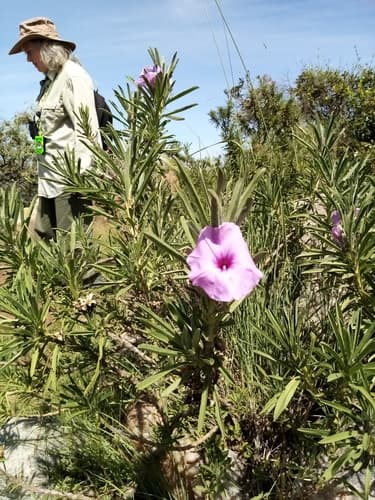
A perennial herbaceous plant characterized by its trailing or climbing stems, silvery-green, often lobed leaves, and showy, funnel-shaped pink flowers with a lighter throat. It typically forms a low-growing mat, blooming profusely in spring and early summer.