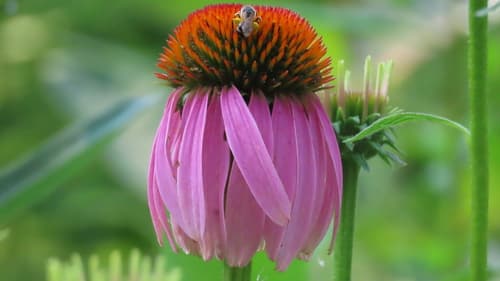
Echinacea
NameEchinacea
Scientific NameEchinacea purpurea
Common NamesPurple Coneflower, Eastern Purple Coneflower, Coneflower
Plant FamilyAsteraceae
Natural HabitatNative to eastern and central North America, it thrives in prairies, open woodlands, savannas, and disturbed areas. It prefers full sun to partial shade and well-drained soil.
Parts Usedroot,flower,leaf,whole_plant
Medicinal Actionsanti-inflammatory, antimicrobial, antioxidant
Traditional UsesTraditionally used by Native American tribes for a wide range of ailments, including colds, flu, infections, snake bites, and wounds. Modern herbalism primarily uses Echinacea to stimulate the immune system, reduce inflammation, and help fight off respiratory infections.
Active ConstituentsAlkylamides, Caffeic acid derivatives, Polysaccharides, Flavonoids
Preparation Methodsinfusion, decoction, tincture, powder, poultice
Contraindications & WarningsIndividuals with autoimmune diseases or progressive systemic diseases (e.g., tuberculosis, multiple sclerosis) should use with caution. May cause allergic reactions in individuals sensitive to plants in the Asteraceae family. Not recommended for long-term continuous use.
Cultivation NotesPrefers full sun and well-drained soil. Drought-tolerant once established. Propagated by seed or division. Deadhead spent flowers to encourage reblooming, or leave some for seed production and winter interest.
Raritycommon
Description
Echinacea purpurea is a herbaceous perennial plant characterized by its prominent, cone-shaped central disk florets, typically orange-brown, surrounded by drooping, purple-pink ray florets. It grows upright on sturdy stems, reaching heights of 2-5 feet, and features lance-shaped leaves.