Deutzia aspera
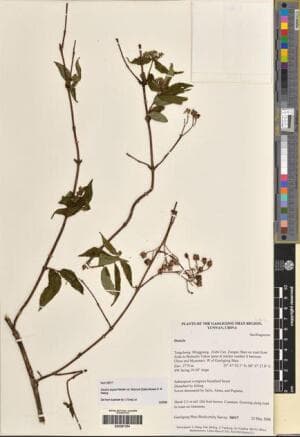
Image: Gaoligong Shan Biotic Survey Expedition - Summer 2006, (cc0)
NameDeutzia aspera
Scientific NameDeutzia aspera Rehder
Common NamesRough Deutzia
Plant FamilyHydrangeaceae
Natural HabitatNative to subtropical evergreen broadleaf forests, mixed forests (often with Tsuga, Acer, and Populus), and old fields in mountainous regions of Hunan, China. It is commonly found along roadsides and banks.
Parts Usedleaf,flower
Medicinal Actionsastringent, antioxidant, anti-inflammatory
Traditional UsesWhile specific traditional medicinal uses for Deutzia aspera are not widely documented in mainstream ethnobotanical literature, related Deutzia species have been traditionally used in East Asia. These uses often involve external applications, potentially leveraging the plant's astringent properties.
Active ConstituentsTriterpenoid saponins, Flavonoids, Tannins
Preparation Methodsinfusion, decoction, poultice
Contraindications & WarningsNo specific contraindications are widely documented for Deutzia aspera. As with many plants containing saponins, large internal doses may potentially cause gastrointestinal irritation.
Cultivation NotesDeutzia aspera is a hardy ornamental shrub that prefers full sun to partial shade and well-drained soil. It is tolerant of various soil types once established and is often cultivated for its attractive flowers.
Raritycommon
Description
Deutzia aspera is a deciduous shrub, typically growing 1-2.5 meters tall, characterized by its rough-textured, opposite leaves. It produces clusters of white to pinkish flowers, which are evident as dried inflorescences on the specimen.