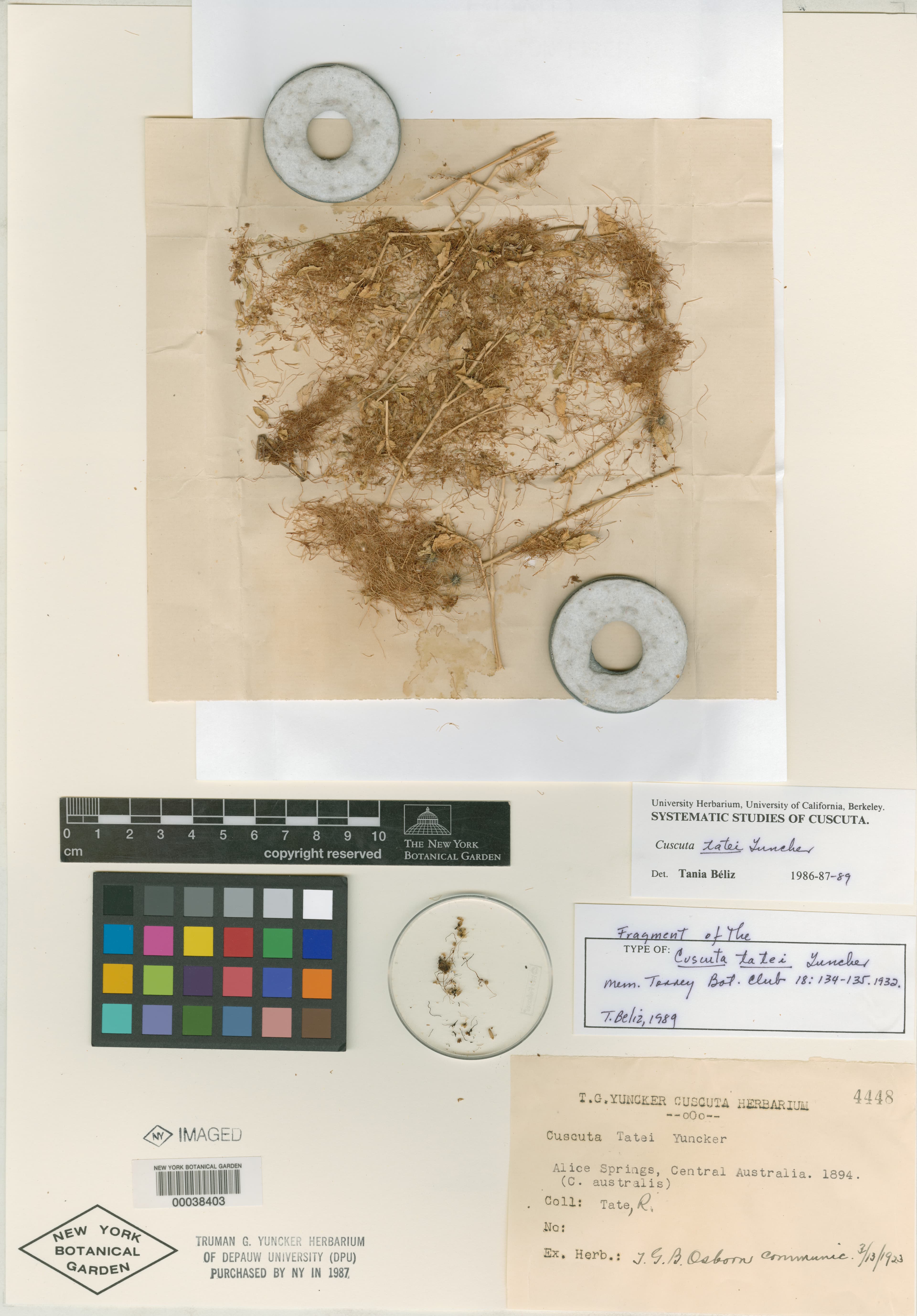
Cuscuta tatei
Image: The New York Botanical Garden (cc-by)
NameCuscuta tatei
Scientific NameCuscuta tatei Yunck.
Common NamesDodder, Love Vine
Plant FamilyConvolvulaceae
Natural HabitatNative to arid and semi-arid regions of Central Australia, such as Alice Springs, where it parasitizes various native shrubs and herbaceous plants.
Parts Usedwhole_plant,seed
Medicinal Actionsadaptogen, anti-inflammatory, antimicrobial, antioxidant, diuretic
Traditional UsesWhile specific traditional uses for Cuscuta tatei are not widely documented, other Cuscuta species (like C. chinensis) are traditionally used in herbal medicine. They are often employed as a tonic for kidney and liver health, to address issues like impotence, premature ejaculation, frequent urination, and blurred vision. They are also used to strengthen bones and tendons and to improve fertility.
Active ConstituentsFlavonoids, Lignans, Polysaccharides, Coumarins
Preparation Methodsinfusion, decoction, tincture, powder
Contraindications & WarningsGenerally, Cuscuta species are contraindicated during pregnancy and lactation. They may also interact with hormone therapies due to potential estrogenic effects and should be used with caution by individuals with specific 'heat' or 'dampness' conditions in traditional medicine systems.
Cultivation NotesAs an obligate parasitic plant, Cuscuta tatei cannot be cultivated independently. It requires a suitable host plant to germinate and grow, making it challenging to cultivate intentionally for medicinal purposes. It is often considered a noxious weed in agricultural settings.
Rarityuncommon
Description
Cuscuta tatei is an obligate parasitic plant characterized by its thread-like, leafless, yellowish to orange stems that twine around host plants. It lacks true roots and leaves, absorbing nutrients directly from its host via specialized structures called haustoria.