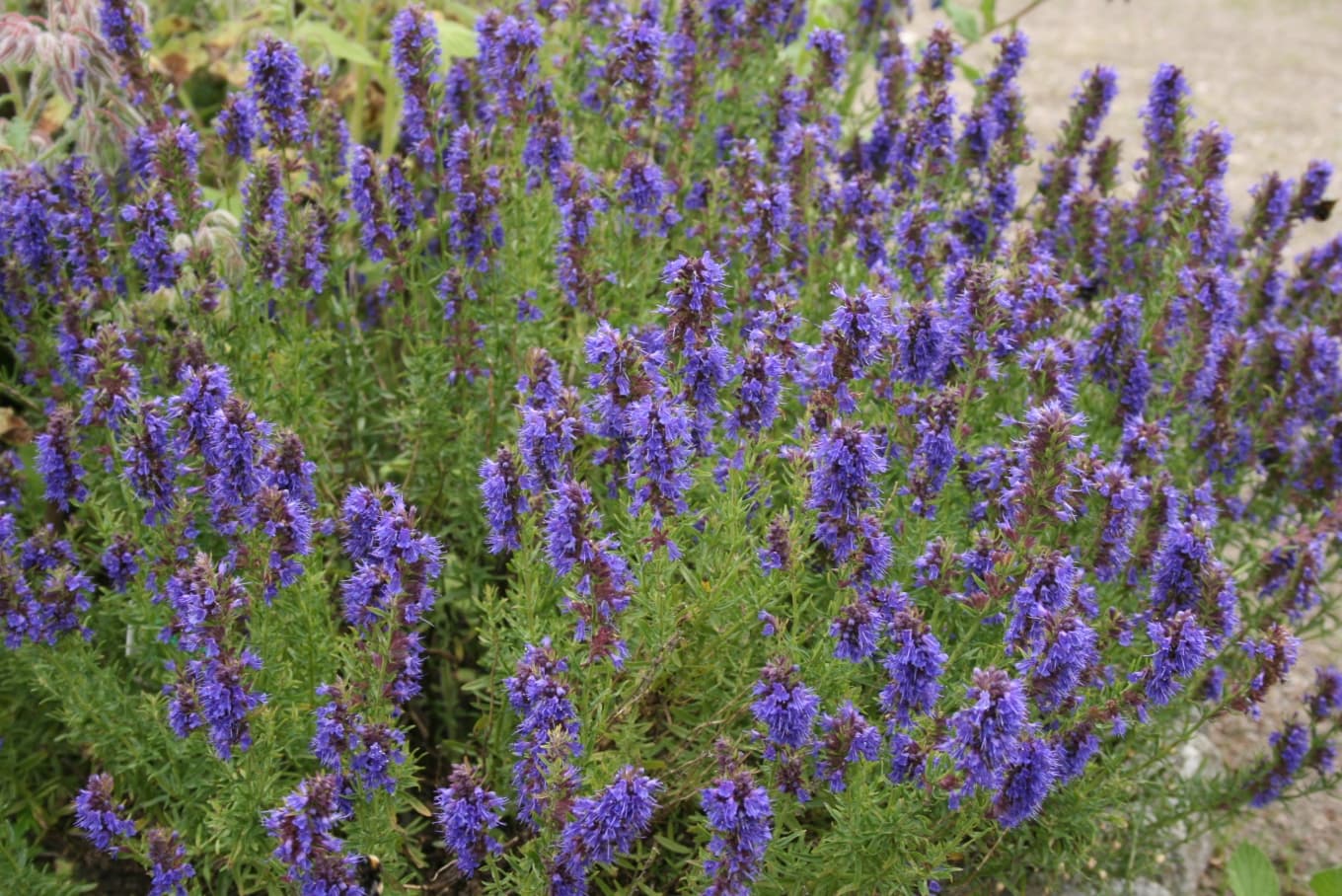
Hyssop
Image: Sten Porse (CC BY-SA 3.0)
NameHyssop
Scientific NameHyssopus officinalis
Common NamesHyssop, Common Hyssop, Garden Hyssop
Plant FamilyLamiaceae
Natural HabitatNative to Southern Europe, the Middle East, and the Caspian Sea region. It thrives in dry, rocky, and sunny habitats, often found on hillsides and in garrigue.
Parts Usedflower,leaf,whole_plant
Medicinal Actionsexpectorant, antimicrobial, anti-inflammatory, carminative, antioxidant
Traditional UsesTraditionally used for respiratory conditions like coughs, colds, and bronchitis due to its expectorant properties. It has also been used to aid digestion, reduce flatulence, and as a general tonic.
Active ConstituentsVolatile oil (pinocamphone, isopinocamphone, alpha-pinene, camphene), flavonoids, tannins, marrubiin
Preparation Methodsinfusion, decoction, tincture, essential oil
Contraindications & WarningsHyssop essential oil should not be ingested due to its neurotoxic compounds (pinocamphone, isopinocamphone) which can cause seizures, especially in children or individuals with epilepsy. Pregnant and breastfeeding women should avoid hyssop.
Cultivation NotesPrefers full sun and well-drained, alkaline to neutral soil. It is drought-tolerant once established and can be grown from seed or cuttings. Pruning after flowering encourages bushier growth.
Raritycommon
Description
Hyssop is a semi-evergreen subshrub growing up to 60 cm tall, characterized by its erect, woody stems and small, linear-lanceolate green leaves. It produces dense spikes of aromatic, vibrant blue-purple flowers in late summer, as seen in the image.