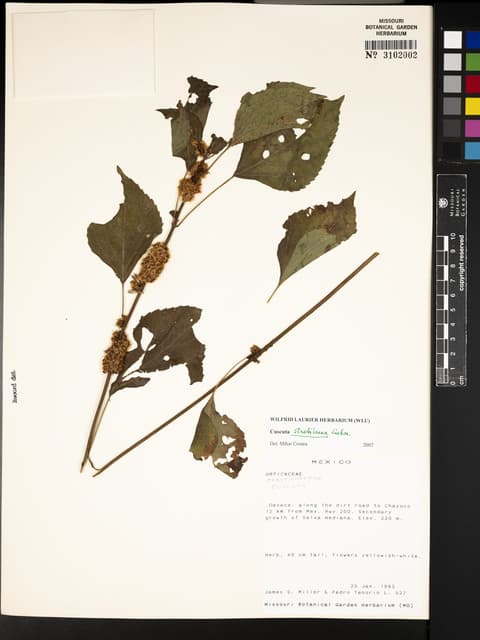
Cuscuta strobilacea
Image: MBG (cc-by-nc)
NameCuscuta strobilacea
Scientific NameCuscuta strobilacea Liebm.
Common NamesDodder, Love Vine, Strangleweed
Plant FamilyConvolvulaceae
Natural HabitatThis species is found in various habitats where suitable host plants are present. The specimen was collected in Oaxaca, Mexico, along a dirt road in secondary growth of 'Selva mediana' (medium-stature forest) at an elevation of 220 meters.
Parts Usedwhole_plant,seed
Medicinal Actionsantioxidant, anti-inflammatory, diuretic, astringent
Traditional UsesTraditionally, various Cuscuta species, including their seeds (Semen Cuscutae), have been used in herbal medicine to tonify the kidneys and liver, improve vision, and treat conditions such as impotence, premature ejaculation, and frequent urination. It is also used as a general tonic and for its purported anti-aging properties.
Active Constituentsflavonoids, lignans, polysaccharides, coumarins
Preparation Methodsinfusion, decoction, powder, tincture
Contraindications & WarningsDue to its parasitic nature, Cuscuta can accumulate compounds from its host, which may pose risks if the host plant is toxic. It is generally advised to avoid during pregnancy and lactation. Individuals with yin deficiency with heat signs or those on blood-thinning medications should exercise caution due to potential coumarin content.
Cultivation NotesCuscuta species are obligate parasites and cannot be cultivated conventionally without a host plant. They are often considered agricultural weeds, making intentional cultivation for medicinal purposes challenging and uncommon.
Rarityuncommon
Description
Cuscuta strobilacea is an obligate parasitic plant, characterized by its slender, thread-like, yellowish to orange stems that twine tightly around host plants. It lacks true leaves and chlorophyll, relying entirely on its host for nutrients, and produces small, clustered, yellowish-white flowers along its stems.