Cuscuta scandens
NameCuscuta scandens
Scientific NameCuscuta scandens
Common NamesClimbing Dodder, Dodder, Love Vine, Strangleweed
Plant FamilyConvolvulaceae
Natural HabitatNative to the Americas, Cuscuta scandens thrives in warm, temperate to tropical regions. It parasitizes a wide range of herbaceous and woody plants in disturbed areas, fields, roadsides, gardens, and along watercourses.
Parts Usedwhole_plant,seed
Medicinal Actionsadaptogen, antioxidant, anti-inflammatory, diuretic
Traditional UsesTraditionally, Cuscuta scandens and other Cuscuta species have been used in various folk medicine systems. It is often employed for liver and kidney ailments, to improve vision, and as a general tonic or adaptogen. Some traditions use it for reproductive health and to strengthen bones.
Active ConstituentsFlavonoids, Lignans, Polysaccharides, Saponins
Preparation Methodsinfusion, decoction, powder, tincture
Contraindications & WarningsPregnant and breastfeeding women should avoid use. Individuals with qi deficiency or constipation should use with caution. Potential interactions with medications affecting blood sugar or hormones.
Cultivation NotesCuscuta scandens is a parasitic plant and is generally considered a noxious weed in agricultural settings, not typically cultivated. It germinates from seed and must find a host plant quickly to survive, attaching via haustoria.
Raritycommon
Description
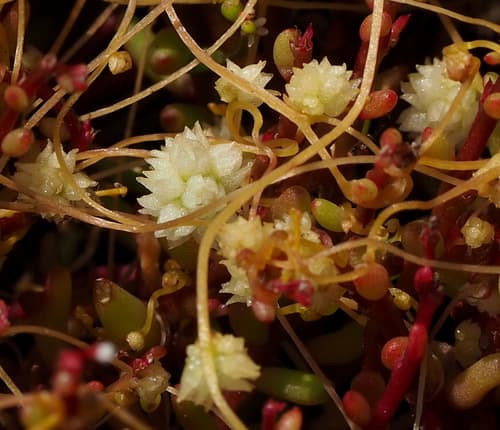
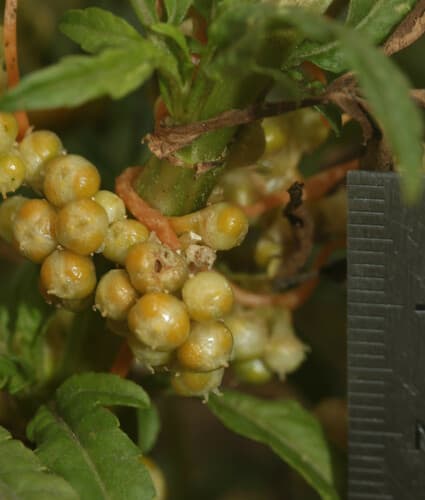
Cuscuta scandens is a parasitic annual vine characterized by its slender, yellowish-orange, leafless stems that twine tightly around host plants. It produces clusters of small, spherical, yellowish-white flowers or fruits, as seen in the image, which are typically inconspicuous. The plant lacks chlorophyll and obtains all its nutrients from its host via haustoria.