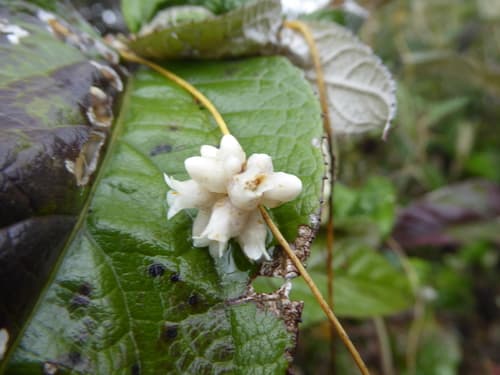
Cuscuta odorata
NameCuscuta odorata
Scientific NameCuscuta odorata
Common NamesDodder, Love Vine, Fragrant Dodder
Plant FamilyConvolvulaceae
Natural HabitatNative to South America, this parasitic plant attaches to various herbaceous and woody host plants. It is commonly found in disturbed areas, fields, and along roadsides.
Parts Usedwhole_plant,seed
Medicinal Actionsantioxidant, anti-inflammatory, adaptogen
Traditional UsesTraditionally, species of Cuscuta, particularly their seeds (known as Tu Si Zi in TCM), have been used to tonify kidney yang and yin, benefit the liver, and improve vision. They are employed for conditions such as impotence, premature ejaculation, frequent urination, lower back pain, and blurred vision.
Active ConstituentsFlavonoids, Lignans, Polysaccharides, Saponins
Preparation Methodsinfusion, decoction, powder
Contraindications & WarningsGenerally considered safe in traditional doses, but caution is advised during pregnancy. Avoid in cases of excess heat or damp-heat conditions. May potentially interact with blood-thinning medications.
Cultivation NotesAs an obligate parasitic plant, Cuscuta odorata cannot be cultivated independently. It requires a suitable host plant to survive and is often considered an agricultural weed.
Raritycommon
Description
Cuscuta odorata is a parasitic vine characterized by its thin, yellowish-orange, leafless stems that twine around host plants. It produces small, fragrant, whitish to cream-colored flowers in dense clusters along its stems.