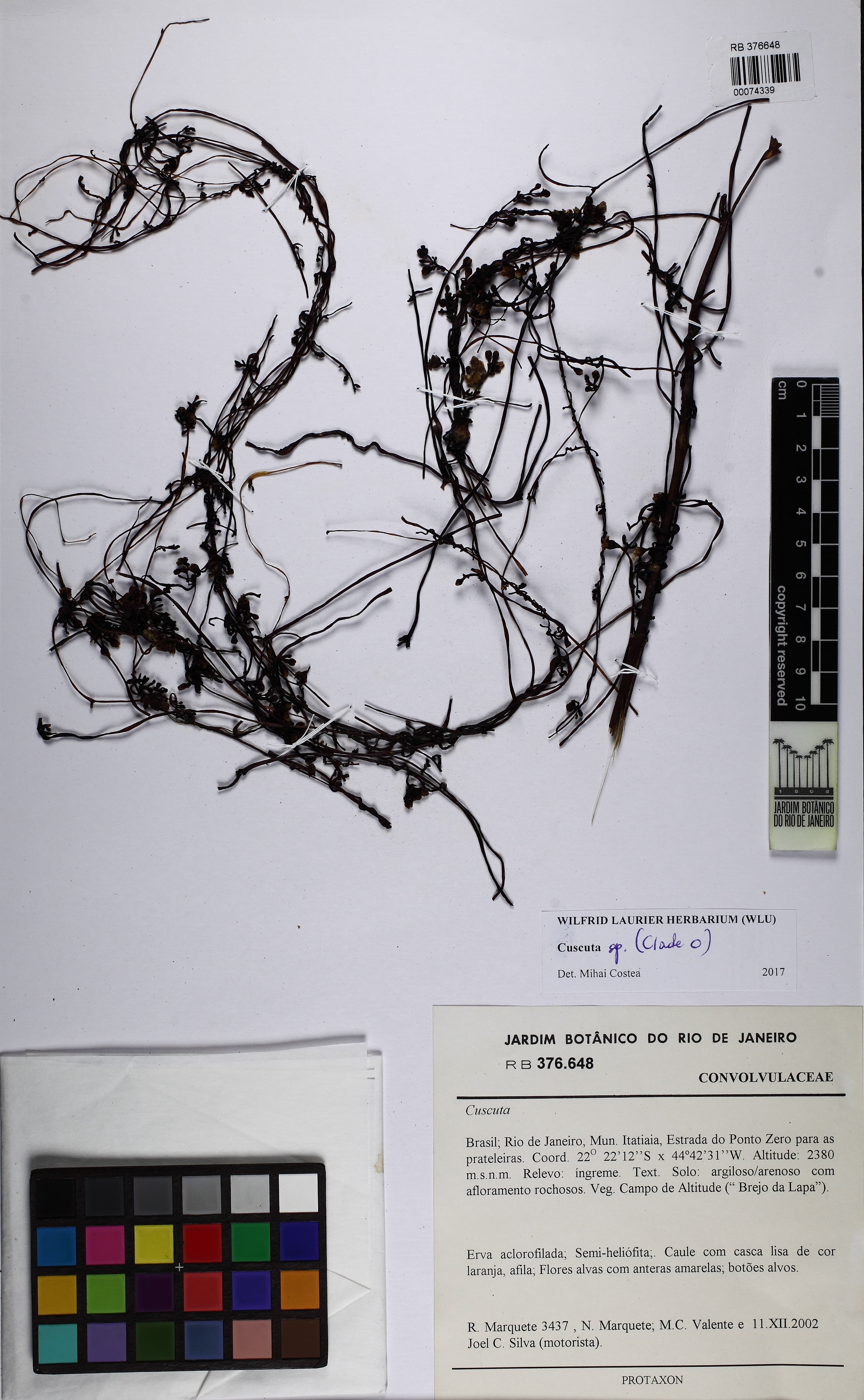
Cuscuta mantiqueirana
Image: R. Marquete; N. Marquete, M.C. Valente & J.C. Silva(motorista) (cc-by)
NameCuscuta mantiqueirana
Scientific NameCuscuta mantiqueirana Costea, S.S.Silva & Sim.-Bianch.
Plant FamilyConvolvulaceae
Natural HabitatNative to the high-altitude fields of the Itatiaia municipality in Rio de Janeiro, Brazil, specifically found at elevations around 2380 meters above sea level. It thrives in steep, clayey-sandy soils with rocky outcrops, characteristic of the 'Campo de Altitude' vegetation.
Parts Usedwhole_plant,seed
Medicinal Actionsantioxidant, anti-inflammatory, diuretic, astringent
Traditional UsesWhile specific traditional uses for Cuscuta mantiqueirana are not widely documented, other species within the Cuscuta genus (dodder) are traditionally used in various herbal systems. These uses often include kidney and liver tonification, improving vision, and addressing conditions like impotence, premature ejaculation, frequent urination, and diarrhea. Some species are also applied topically for skin conditions.
Active Constituentsflavonoids, lignans, polysaccharides, alkaloids
Preparation Methodsinfusion, decoction, powder, tincture
Contraindications & WarningsGeneral contraindications for Cuscuta species include pregnancy and lactation. Due to their astringent properties, they should be used with caution in individuals with certain digestive issues or those taking medications that may interact with liver function or blood clotting.
Cultivation NotesAs a parasitic, achlorophyllous plant, Cuscuta mantiqueirana is extremely difficult to cultivate intentionally. It requires a specific host plant to survive and obtain nutrients, making it unsuitable for typical garden cultivation.
Rarityrare
Description
This achlorophyllous, parasitic herb features slender stems with smooth, orange-colored bark. Its flowers are typically white with yellow anthers, and it produces white buds, as observed in collected specimens.