Cuscuta friesii
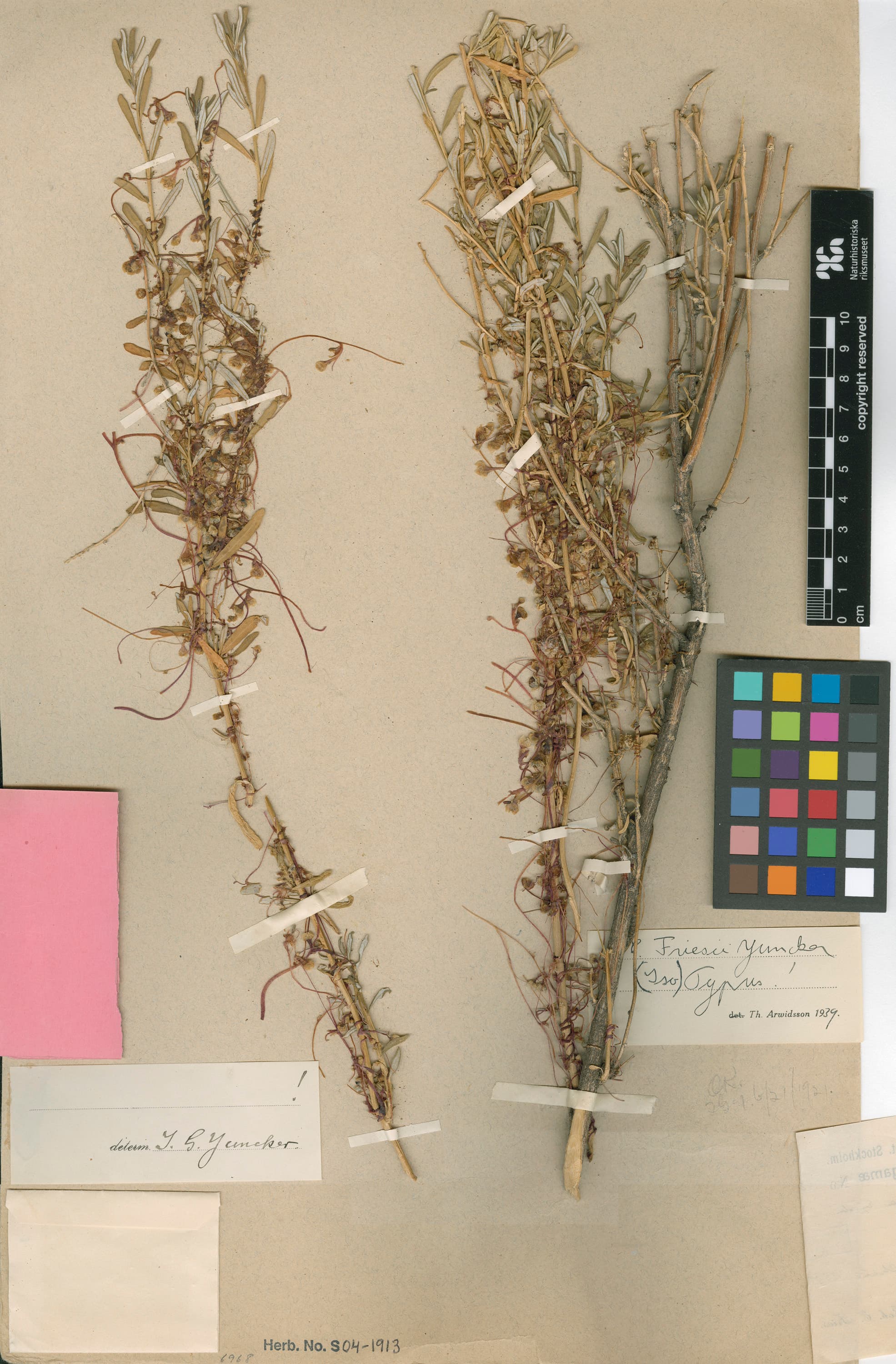
Image: Gunilla Dahlerus Lehman (S) (cc-by)
NameCuscuta friesii
Scientific NameCuscuta friesii Yunck.
Common NamesDodder, Love Vine, Strangleweed
Plant FamilyConvolvulaceae
Natural HabitatAs a parasitic plant, it is found growing on various host plants in disturbed areas, fields, and along roadsides. Species of Cuscuta are widespread globally, with specific distribution for C. friesii including regions like Cyprus.
Parts Usedwhole_plant,seed
Medicinal Actionsadaptogen, anti-inflammatory, antioxidant, diuretic, astringent
Traditional UsesTraditionally, species of Cuscuta, including C. friesii, have been used in various herbal medicine systems (e.g., TCM, Ayurveda) to support kidney and liver function, improve vision, strengthen bones, and address issues like impotence and premature ejaculation. It is also used as a general tonic and for certain skin conditions.
Active Constituentsflavonoids, lignans, polysaccharides, coumarins
Preparation Methodsinfusion, decoction, powder, tincture
Contraindications & WarningsAvoid during pregnancy and lactation. May interact with medications for diabetes or blood thinners due to potential effects on blood sugar and clotting. Consult a healthcare professional before use, especially if you have underlying health conditions or are on medication.
Cultivation NotesCuscuta friesii is a parasitic plant and cannot be cultivated independently. It requires a suitable host plant to grow and thrive, making it challenging to cultivate intentionally for medicinal purposes. It is often considered an agricultural weed.
Raritycommon
Description
Cuscuta friesii is a parasitic annual plant characterized by its slender, leafless, thread-like stems that twine around host plants. It lacks chlorophyll and obtains nutrients via haustoria that penetrate the host's vascular system. Small, often clustered flowers and fruits develop along the stems.