Solanum castaneum
NameSolanum castaneum
Scientific NameSolanum castaneum
Plant FamilySolanaceae
Natural HabitatNative to the Andean regions of South America, including Peru, Bolivia, Ecuador, and Colombia, typically found in montane forests, cloud forests, and forest edges at higher elevations.
Parts Used
Traditional UsesThere are no widely documented traditional medicinal uses for Solanum castaneum in available ethnobotanical literature. Many species within the Solanum genus are known to be toxic.
Contraindications & WarningsAs a member of the Solanum genus, Solanum castaneum is presumed to contain steroidal glycoalkaloids, which can be toxic if ingested. There is no documented safe use for this species, and internal consumption should be avoided.
Cultivation NotesPrefers cool, moist conditions with well-drained soil, typical of its native montane forest habitat. May require partial shade, especially in warmer climates, and protection from frost.
Rarityuncommon
Description
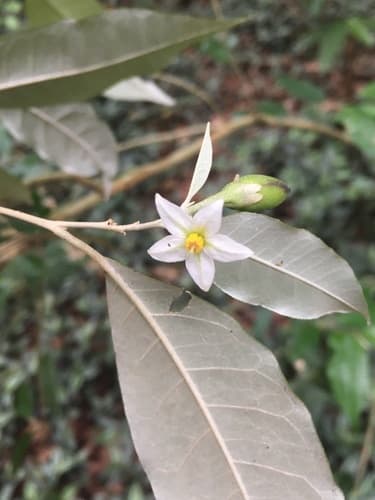
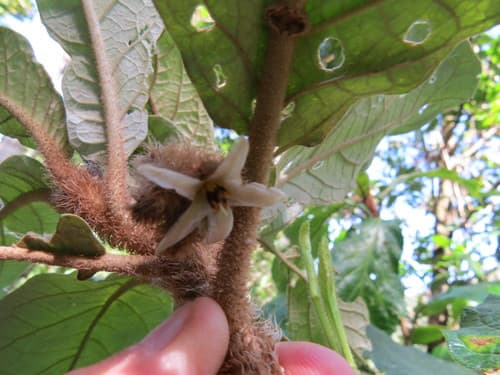
Solanum castaneum is a shrub or small tree characterized by dense, rusty-brown stellate hairs covering its young stems, petioles, and leaf undersides. Its leaves are ovate to elliptic with prominent venation, and it produces small, star-shaped, whitish-cream flowers with yellow anthers.