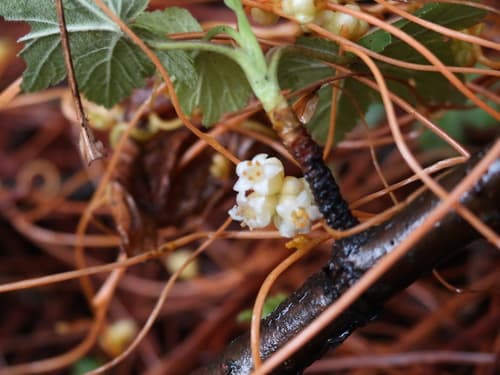
Cuscuta draconella
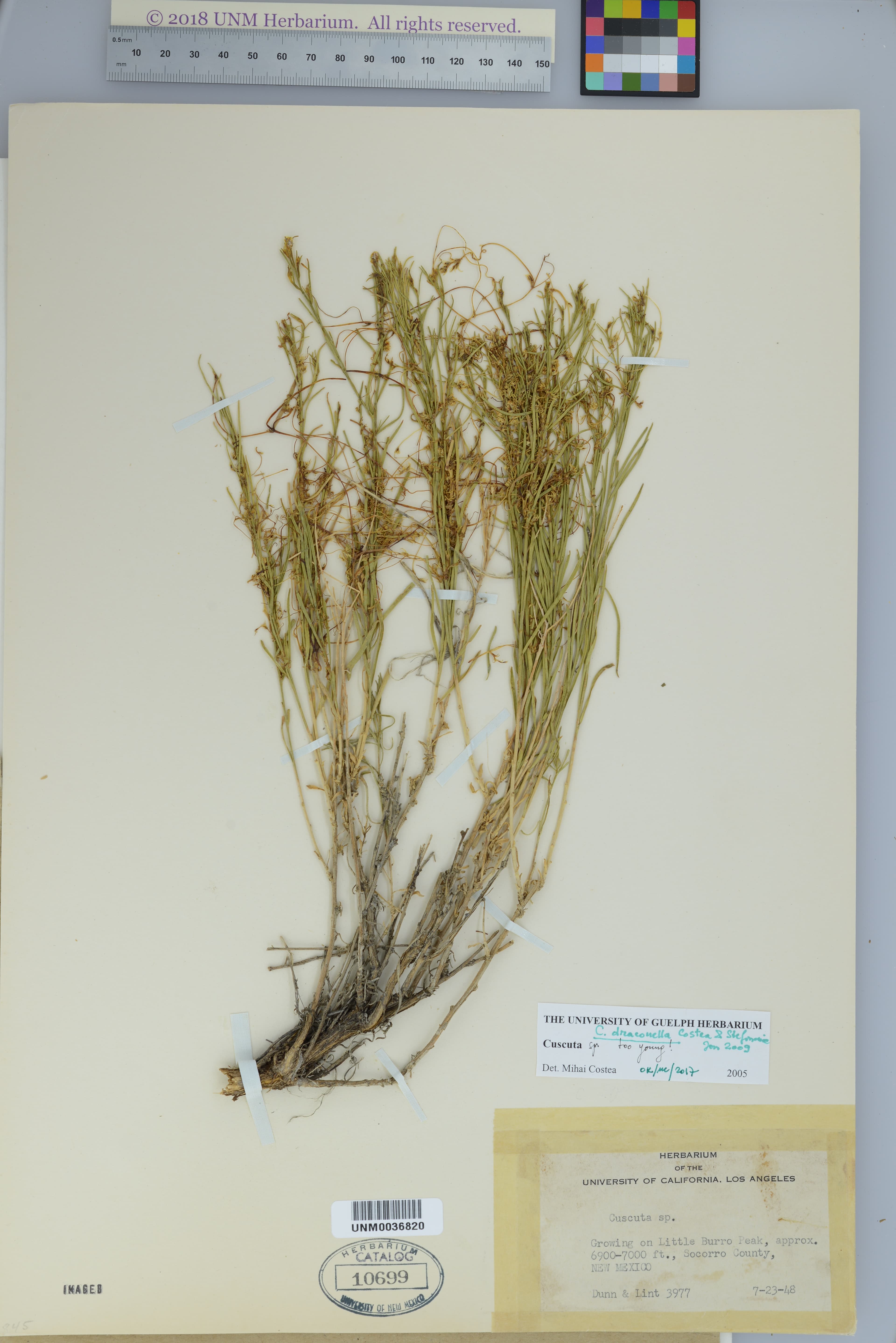
Image: D.B. Dunn; H. Lint (cc-by-nc)
NameCuscuta draconella
Scientific NameCuscuta draconella Costea & Stefanovic
Common NamesDodder
Plant FamilyConvolvulaceae
Natural HabitatCollected from Little Burro Peak, Socorro County, New Mexico, at approximately 6900-7000 ft elevation. This suggests a habitat in mountainous, possibly arid or semi-arid regions, where it parasitizes suitable host plants.
Parts Usedwhole_plant,seed
Medicinal Actionsantioxidant, anti-inflammatory, adaptogen
Traditional UsesWhile specific traditional uses for *Cuscuta draconella* are not widely documented, other *Cuscuta* species (like *C. chinensis*) are traditionally used in herbal medicine to tonify the kidney and liver, improve vision, strengthen bones, and address issues related to reproductive health and urinary function.
Active Constituentsflavonoids, lignans, polysaccharides
Preparation Methodsinfusion, decoction, powder, tincture
Contraindications & WarningsGeneral contraindications for *Cuscuta* species include pregnancy, individuals with yin deficiency with heat signs, or those experiencing constipation. It may interact with certain medications, so consultation with a healthcare professional is advised.
Cultivation NotesAs an obligate parasitic plant, *Cuscuta draconella* cannot be cultivated independently. It requires a suitable host plant to germinate, attach, and derive nutrients for its growth and survival.
Rarityuncommon
Description
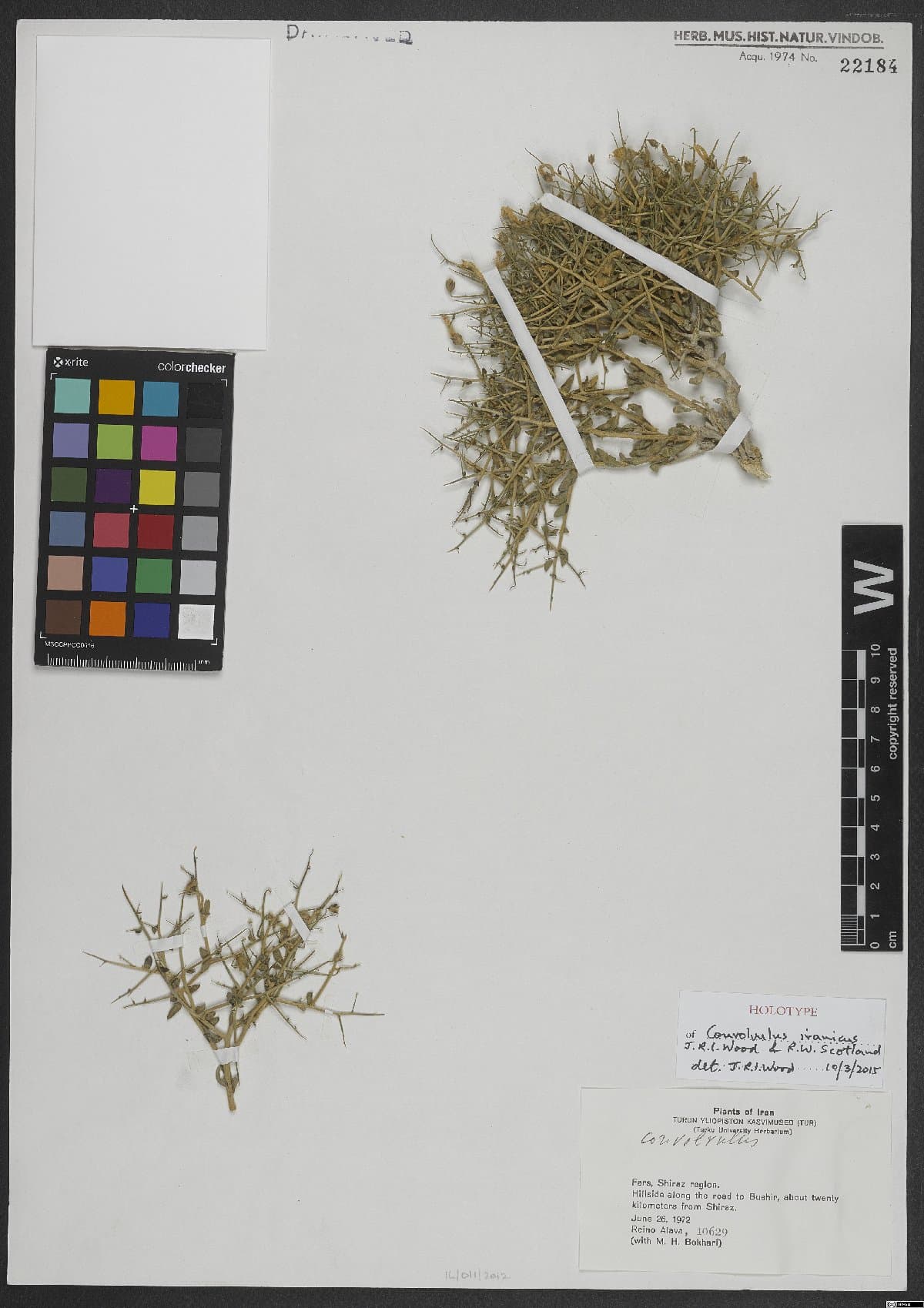
Cuscuta draconella is a parasitic vine characterized by its slender, thread-like, yellowish-brown stems that twine around host plants. The herbarium specimen shows a dense mass of these stems with small, inconspicuous flowers or fruits along their length, indicative of its obligate parasitic nature.