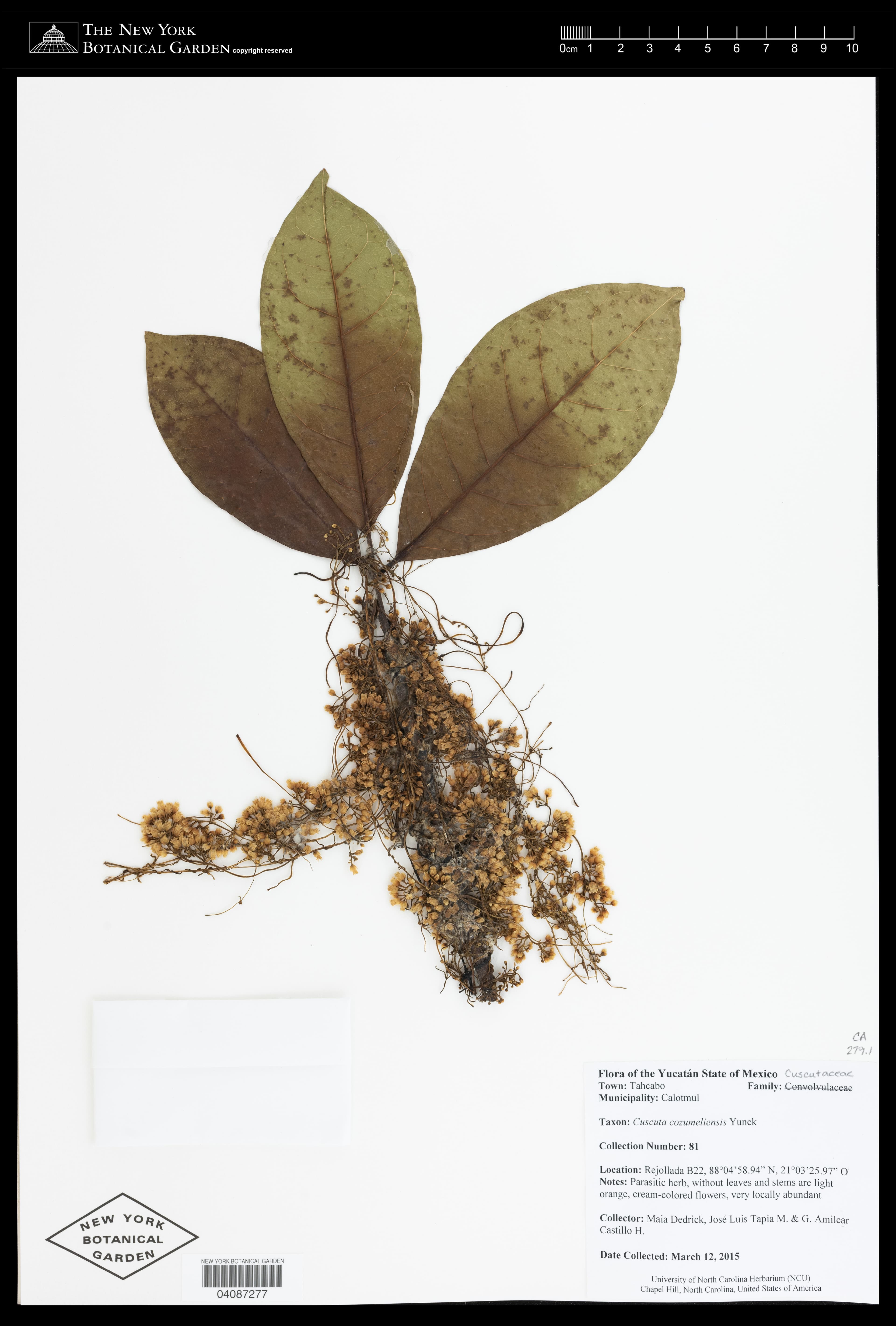
Cuscuta cozumeliensis
Image: The New York Botanical Garden (cc-by)
NameCuscuta cozumeliensis
Scientific NameCuscuta cozumeliensis Yunck.
Common NamesDodder, Love Vine
Plant FamilyConvolvulaceae
Natural HabitatThis species is found in the Yucatán State of Mexico, specifically noted as "very locally abundant" in areas like Rejollada B22. It thrives by parasitizing other plants in its specific tropical or subtropical environment.
Parts Usedflower,whole_plant,seed
Medicinal Actionsantioxidant, anti-inflammatory, diuretic
Traditional UsesWhile specific traditional uses for *Cuscuta cozumeliensis* are not widely documented, other *Cuscuta* species (like *Cuscuta chinensis*) are traditionally used in herbal medicine for kidney and liver support, improving vision, and addressing issues related to reproductive health and urinary problems. These uses often leverage the plant's diuretic and tonic properties.
Active ConstituentsFlavonoids, Lignans, Polysaccharides, Coumarins
Preparation Methodsinfusion, decoction, powder
Contraindications & WarningsAs with many *Cuscuta* species, it is generally advised against during pregnancy and lactation. Due to its potential effects on various bodily systems, it may interact with certain medications, particularly those affecting blood clotting or hormone levels. Consultation with a healthcare professional is recommended.
Cultivation NotesAs an obligate parasitic plant, *Cuscuta cozumeliensis* cannot be cultivated independently. It requires a suitable host plant to grow, attaching via specialized structures called haustoria to extract water and nutrients. Cultivation would involve propagating it on a compatible host.
Rarityuncommon
Description
Cuscuta cozumeliensis is a parasitic herbaceous plant characterized by its lack of true leaves and chlorophyll. It features slender, light orange stems that twine around host plants, producing clusters of small, cream-colored flowers.