Convolvulus pseudocantabrica
NameConvolvulus pseudocantabrica
Scientific NameConvolvulus pseudocantabrica
Common NamesFalse Cantabrian Bindweed, Bindweed
Plant FamilyConvolvulaceae
Natural HabitatTypically found in dry, stony, or rocky grasslands, open woodlands, and disturbed areas, often on calcareous soils. Native to parts of Southern Europe and the Balkans.
Parts Usedroot,whole_plant
Medicinal Actionsdiuretic
Traditional UsesTraditionally, some Convolvulus species, particularly their roots, have been used as strong purgatives and laxatives to treat constipation and as a 'cleansing' agent. Specific traditional uses for C. pseudocantabrica are not widely documented, but it likely shares similar properties within the genus.
Active ConstituentsResin glycosides, Alkaloids, Tannins
Preparation Methodsdecoction, powder
Contraindications & WarningsPregnancy, breastfeeding, gastrointestinal obstruction, inflammatory bowel disease, and severe dehydration. Due to its strong purgative action and potential toxicity, internal use should be avoided without expert guidance.
Cultivation NotesPrefers full sun and well-drained, often calcareous, soil. It is drought-tolerant and can be grown in rock gardens or naturalized areas. Can spread readily.
Rarityuncommon
Description
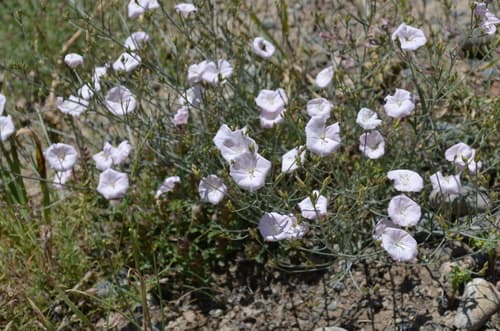
A herbaceous perennial plant characterized by slender, often sprawling stems and numerous pale pink to white, funnel-shaped flowers. Its leaves are typically linear to narrowly lanceolate, giving the plant a delicate appearance.