Cilantro / Coriander
NameCilantro / Coriander
Scientific NameCoriandrum sativum
Common NamesCilantro, Coriander, Chinese Parsley, Dhania
Plant FamilyApiaceae
Natural HabitatNative to regions spanning Southern Europe and Western Asia, it is widely cultivated globally and can sometimes be found naturalized in disturbed areas. It thrives in well-drained soil and full sun.
Parts Usedleaf,flower,seed,whole_plant
Medicinal Actionsantimicrobial, antioxidant, carminative, anti-inflammatory, analgesic, diuretic
Traditional UsesTraditionally used to aid digestion, relieve flatulence, and soothe stomach discomfort. It has also been employed for its antimicrobial properties, to reduce inflammation, and as a mild diuretic. In some cultures, it's used to help detoxify heavy metals.
Active ConstituentsLinalool, Geraniol, Borneol, Coriandrin, Flavonoids, Phenolic acids, Petroselinic acid
Preparation Methodsinfusion, decoction, tincture, powder, essential oil
Contraindications & WarningsGenerally safe, but some individuals may experience allergic reactions (skin rash, itching). May interact with anticoagulant medications due to vitamin K content, though typically in large quantities. Can cause photosensitivity in some individuals.
Cultivation NotesPrefers full sun and well-drained soil. Sow seeds directly in spring after the last frost. Requires consistent moisture but avoids waterlogging. Bolts quickly in hot weather, so succession planting is recommended for continuous leaf harvest.
Raritycommon
Description
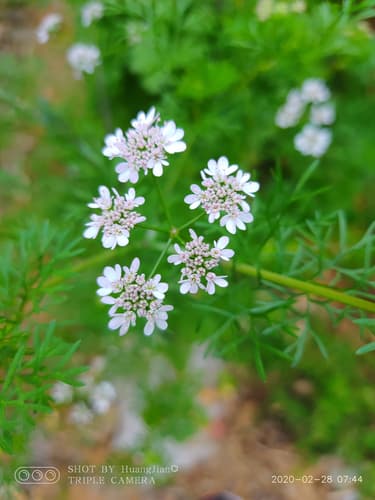
Coriander is an annual herb growing up to 50 cm tall, featuring finely divided leaves and small white to pale pink flowers arranged in compound umbels. Both its fresh leaves (cilantro) and dried seeds (coriander) are widely used in culinary and medicinal applications.