Prostrate Bindweed
NameProstrate Bindweed
Scientific NameConvolvulus scindicus
Common NamesProstrate Bindweed, Sind Bindweed
Plant FamilyConvolvulaceae
Natural HabitatNative to arid and semi-arid regions of North Africa, the Middle East, and parts of Asia, it thrives in sandy soils, disturbed areas, roadsides, and desert margins.
Parts Usedwhole_plant,leaf,root
Medicinal Actionsanti-inflammatory, antioxidant, diuretic
Traditional UsesTraditionally, Convolvulus scindicus has been used in folk medicine, particularly in its native regions, primarily as a purgative and laxative. It is also sometimes applied topically for various skin conditions and internally for its purported anti-inflammatory properties.
Active Constituentsresin glycosides, flavonoids, phenolic compounds
Preparation Methodsinfusion, decoction, powder
Contraindications & WarningsDue to its strong purgative effects, it should not be used by pregnant or nursing women, young children, or individuals with gastrointestinal disorders such as Crohn's disease, ulcerative colitis, or intestinal obstruction. Prolonged use may lead to electrolyte imbalance.
Cultivation NotesThis hardy plant thrives in full sun and well-drained, often sandy or gravelly soils. It is highly drought-tolerant and can be considered a weed in many agricultural settings due to its vigorous, prostrate growth habit.
Raritycommon
Description
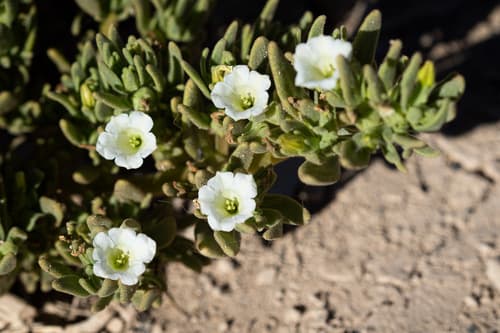
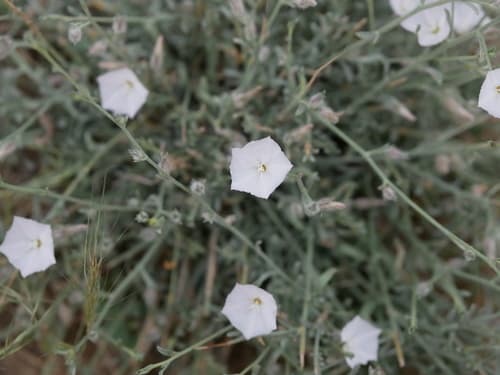
Convolvulus scindicus is a prostrate or ascending perennial herb, typically covered in silvery hairs, giving it a grayish appearance. It features small, funnel-shaped white flowers, usually solitary or in small clusters, emerging from the leaf axils, and its leaves are generally linear to oblong-spathulate.