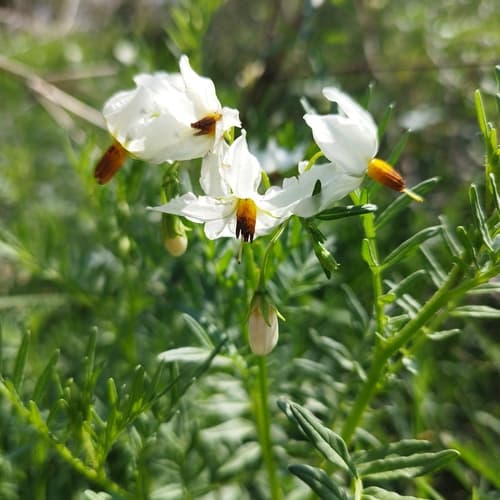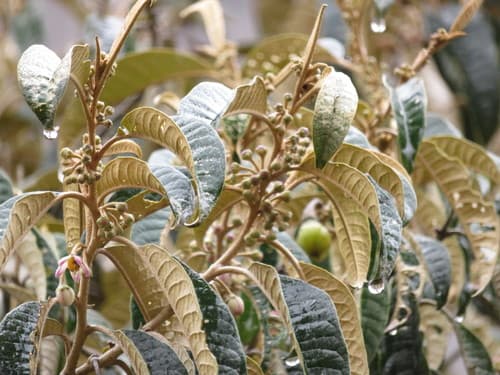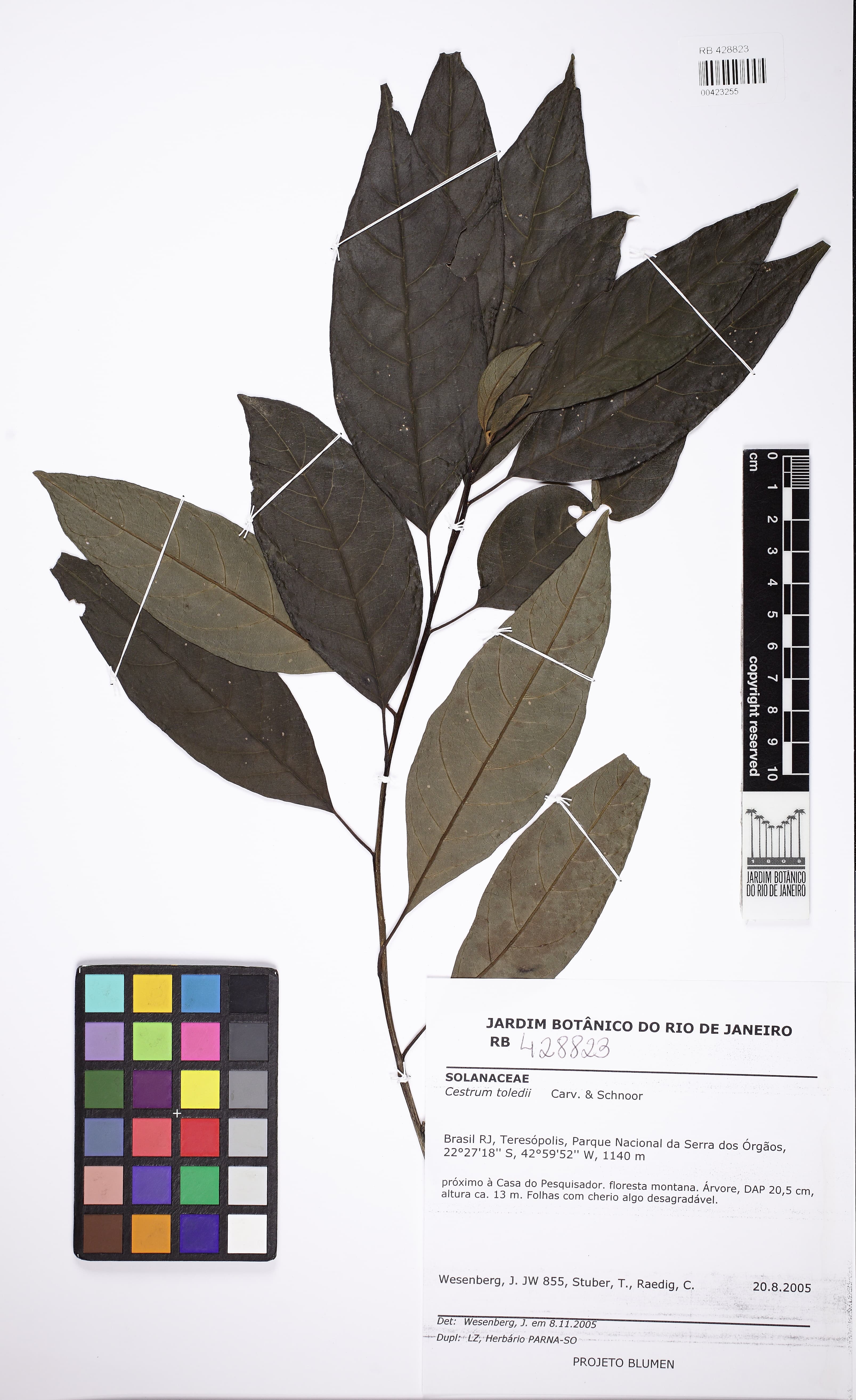
Cestrum toledii
Image: J. Wesenberg JW; T. Stuber & C. Raedig (cc-by)
NameCestrum toledii
Scientific NameCestrum toledii Carvalho & Schnoor
Plant FamilySolanaceae
Natural HabitatThis species is found in montane forests, specifically recorded in the Parque Nacional da Serra dos Órgãos, Teresópolis, Rio de Janeiro, Brazil, at an altitude of 1140 meters.
Parts Used
Traditional UsesThere are no widely documented traditional medicinal uses for Cestrum toledii. The genus Cestrum is generally known for containing toxic compounds, and many species are considered poisonous, especially to livestock.
Active ConstituentsSteroidal glycoalkaloids (e.g., solasodine, solamargine, solasonine)
Contraindications & WarningsAll parts of Cestrum species, including Cestrum toledii, are generally considered toxic due to the presence of steroidal glycoalkaloids. Ingestion can cause severe poisoning, leading to gastrointestinal distress, neurological symptoms, and potentially death. It should not be used medicinally.
Cultivation NotesAs a montane forest tree from a specific region in Brazil, Cestrum toledii would likely require conditions mimicking its natural habitat, including well-drained soil, moderate temperatures, and high humidity. It is a tree reaching significant height (ca. 13m).
Rarityuncommon
Description
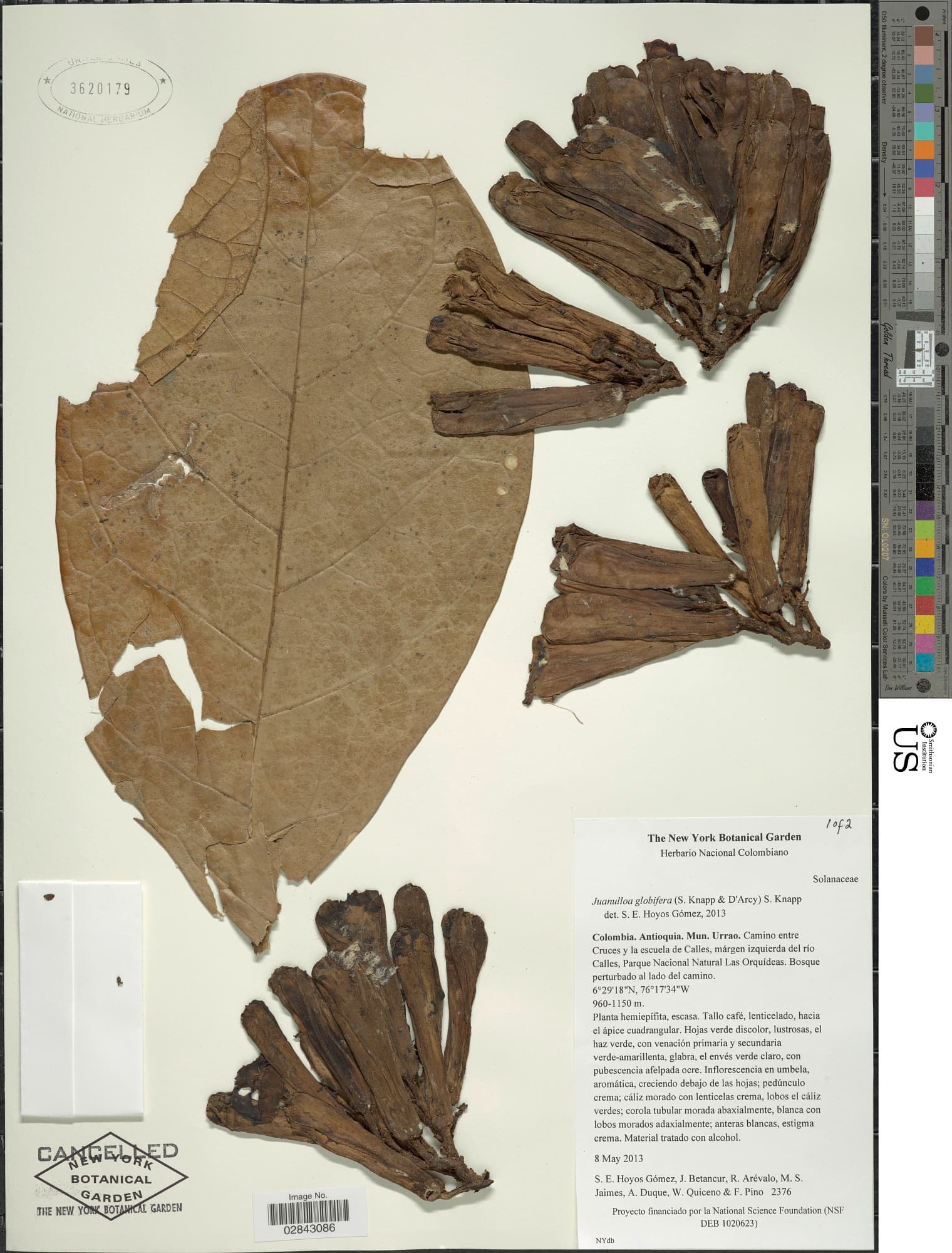
Cestrum toledii is a tree species, reaching approximately 13 meters in height, characterized by leaves that emit a somewhat unpleasant smell. The specimen shows robust stems and ovate to lanceolate leaves with prominent venation. It is a member of the nightshade family, Solanaceae.