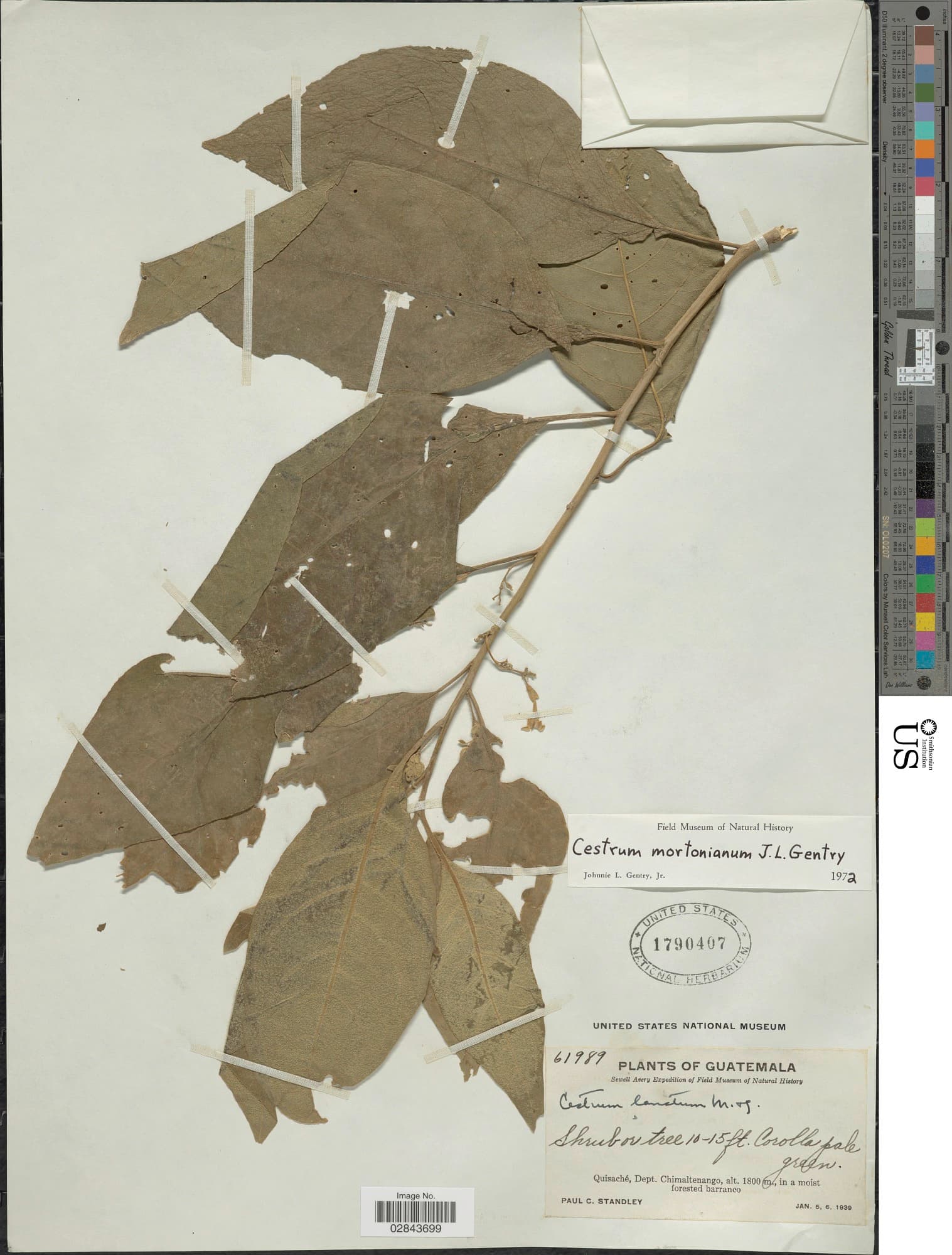
Cestrum mortonianum
Image: Conveyor Belt (cc0)
NameCestrum mortonianum
Scientific NameCestrum mortonianum J.L.Gentry
Plant FamilySolanaceae
Natural HabitatThis species is native to moist forested ravines (barrancos) in the mountainous regions of Guatemala, typically found at altitudes around 1800 meters.
Parts Usedleaf
Medicinal Actionsanalgesic, anti-inflammatory
Traditional UsesSpecific traditional medicinal uses for Cestrum mortonianum are not well-documented. However, other species within the Cestrum genus have been traditionally used in some cultures for conditions such as pain and inflammation, often applied externally or taken internally with extreme caution due to the genus's known toxicity.
Active Constituentssteroidal saponins, alkaloids
Preparation Methodsinfusion, poultice
Contraindications & WarningsThe Cestrum genus is known to contain toxic compounds. Internal use of Cestrum mortonianum should be avoided or approached with extreme caution due to potential toxicity, which can cause gastrointestinal upset or more severe symptoms. Not recommended for pregnant or nursing individuals, children, or those with liver or kidney conditions.
Cultivation NotesAs a tropical shrub/small tree, Cestrum mortonianum likely thrives in moist, well-drained soil and prefers full sun to partial shade. It would require a warm, humid climate, typical of its native Guatemalan habitat.
Rarityuncommon
Description
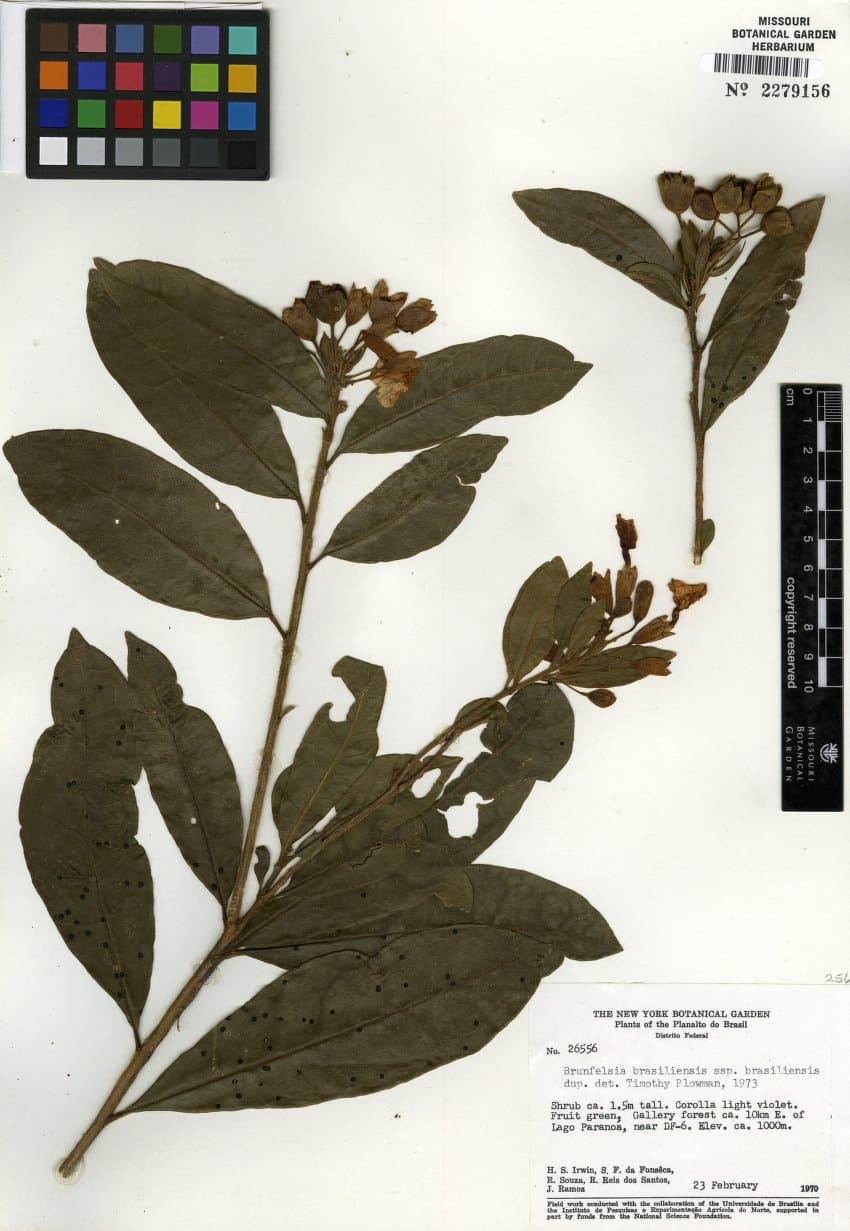
Cestrum mortonianum is a shrub or small tree, typically reaching 10-15 feet in height. It features simple, alternate leaves and produces pale green flowers, though these are not visible in the provided herbarium specimen.