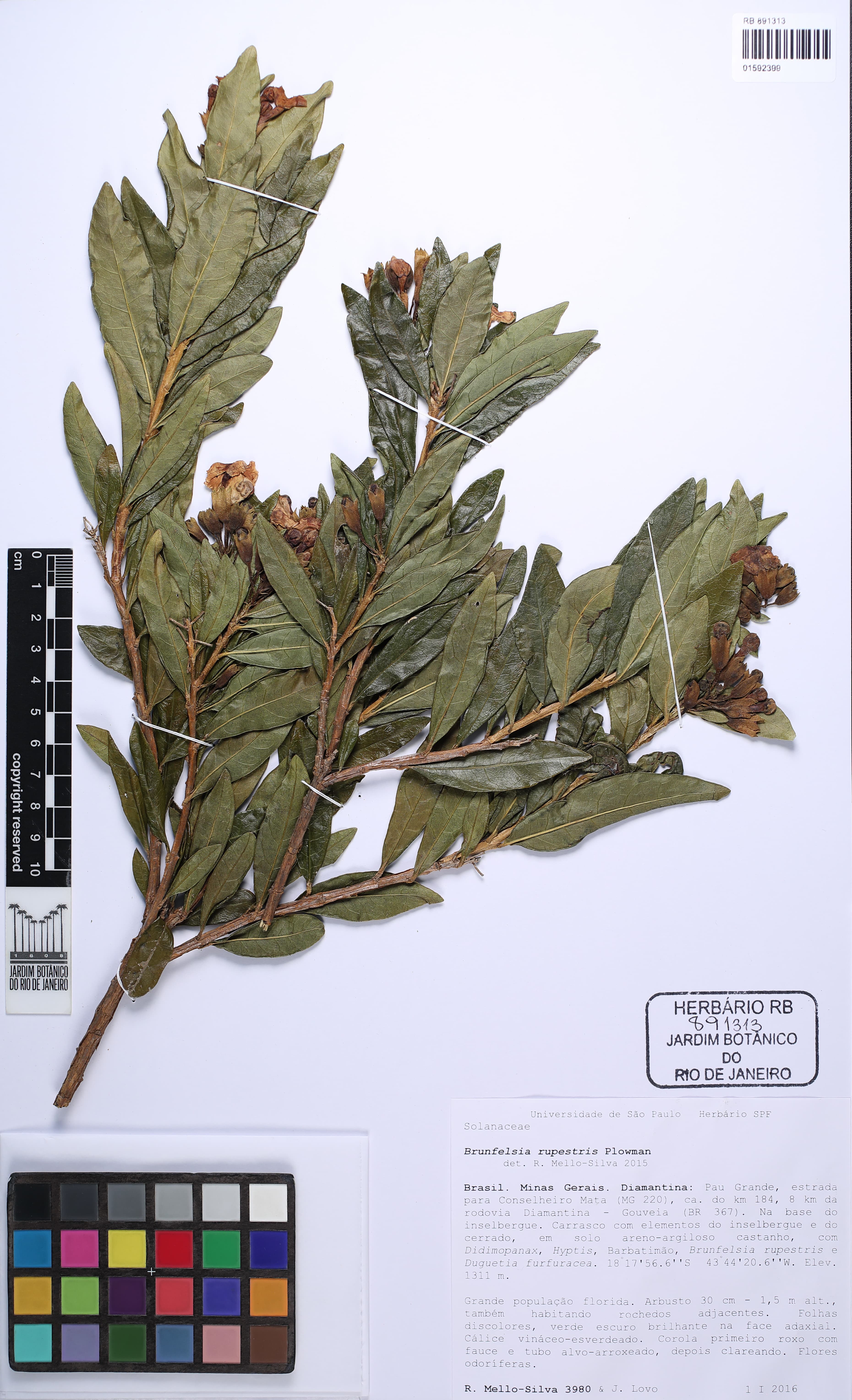
Brunfelsia rupestris
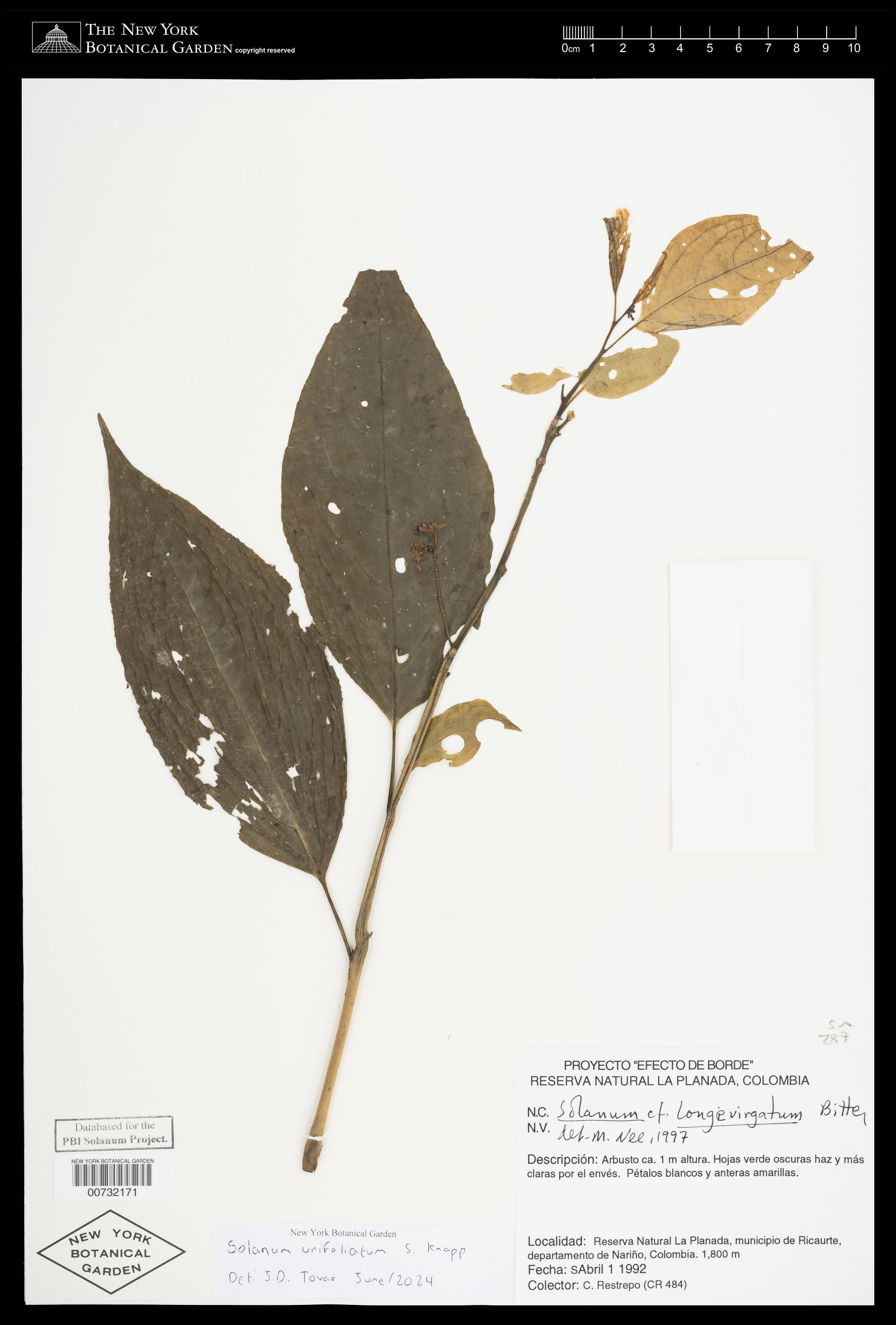
Image: R. Mello-Silva; J. Lovo (cc-by)
NameBrunfelsia rupestris
Scientific NameBrunfelsia rupestris Plowman
Common NamesManacá
Plant FamilySolanaceae
Natural HabitatNative to Brazil, specifically Minas Gerais, where it grows in sandy-clay brown soil at the base of inselbergs and in scrubland (carrasco) with elements of cerrado vegetation.
Parts Usedroot,bark,leaf
Medicinal Actionsanalgesic, anti-inflammatory, sedative
Traditional UsesTraditionally, species within the Brunfelsia genus have been used by indigenous groups for fevers, rheumatism, and as purgatives or emetics. They are also employed in shamanic rituals for their psychoactive properties, though their use requires extreme caution due to high toxicity.
Active ConstituentsScopoletin, Scopolamine, Hyoscyamine
Preparation Methodsdecoction, tincture
Contraindications & WarningsThis plant is highly toxic and should not be used internally without expert medical supervision. It is contraindicated in pregnancy, lactation, children, and individuals with heart conditions, glaucoma, or prostate enlargement. It may interact with anticholinergic medications.
Cultivation NotesThrives in warm climates with well-drained, sandy-clay soils. Prefers conditions similar to its native cerrado and scrubland habitats in Brazil.
Rarityuncommon
Description
Brunfelsia rupestris is a shrub typically growing 30 cm to 1.5 m tall. It features dark green, shiny leaves on the adaxial surface and flowers that are initially purple, transitioning to a whitish-purple as they age, encased in a vinaceous-green calyx.