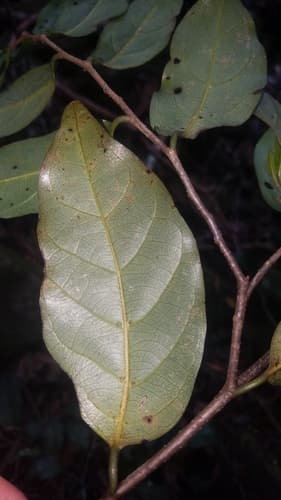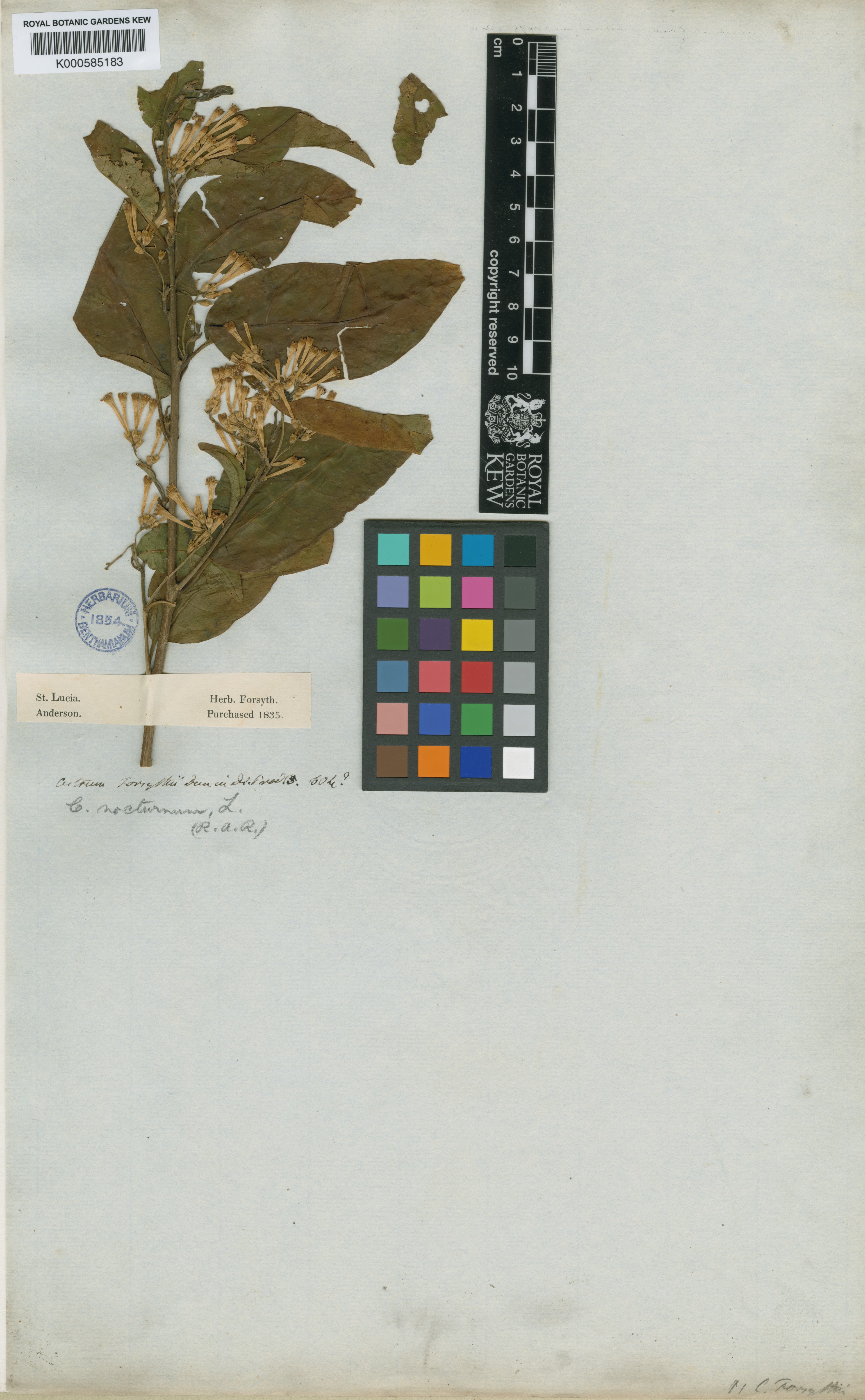
Cestrum forsythii
Image: Anderson (cc-by)
NameCestrum forsythii
Scientific NameCestrum forsythii Dunal
Plant FamilySolanaceae
Natural HabitatNative to the Caribbean region, including islands like St. Lucia, where it grows in tropical and subtropical environments. It can be found in forests, along roadsides, and in disturbed areas.
Parts Usedleaf,flower
Medicinal Actionsantimicrobial, antioxidant, anti-inflammatory
Traditional UsesWhile some Cestrum species have been investigated for potential antimicrobial, antioxidant, or anti-inflammatory properties in laboratory settings, Cestrum forsythii, like many plants in its genus, is generally considered toxic. There are no widely documented safe traditional medicinal uses for internal consumption due to the presence of toxic compounds. Any traditional use would be highly localized, external, and with extreme caution, often for conditions like skin ailments or as an insect repellent.
Active Constituentssteroidal glycoalkaloids, saponins
Contraindications & WarningsAll parts of Cestrum forsythii are considered toxic and should not be ingested. Ingestion can lead to severe gastrointestinal upset, neurological symptoms (such as dizziness, confusion, and convulsions), and can be fatal. Skin contact with sap may cause irritation or dermatitis. This plant is not recommended for self-medication or internal use.
Cultivation NotesPrefers tropical to subtropical climates with well-drained soil and full sun to partial shade. It can be propagated from seeds or cuttings and requires consistent moisture, especially during dry periods. Due to its toxicity, it should be handled with care and kept away from children and pets.
Raritycommon
Description
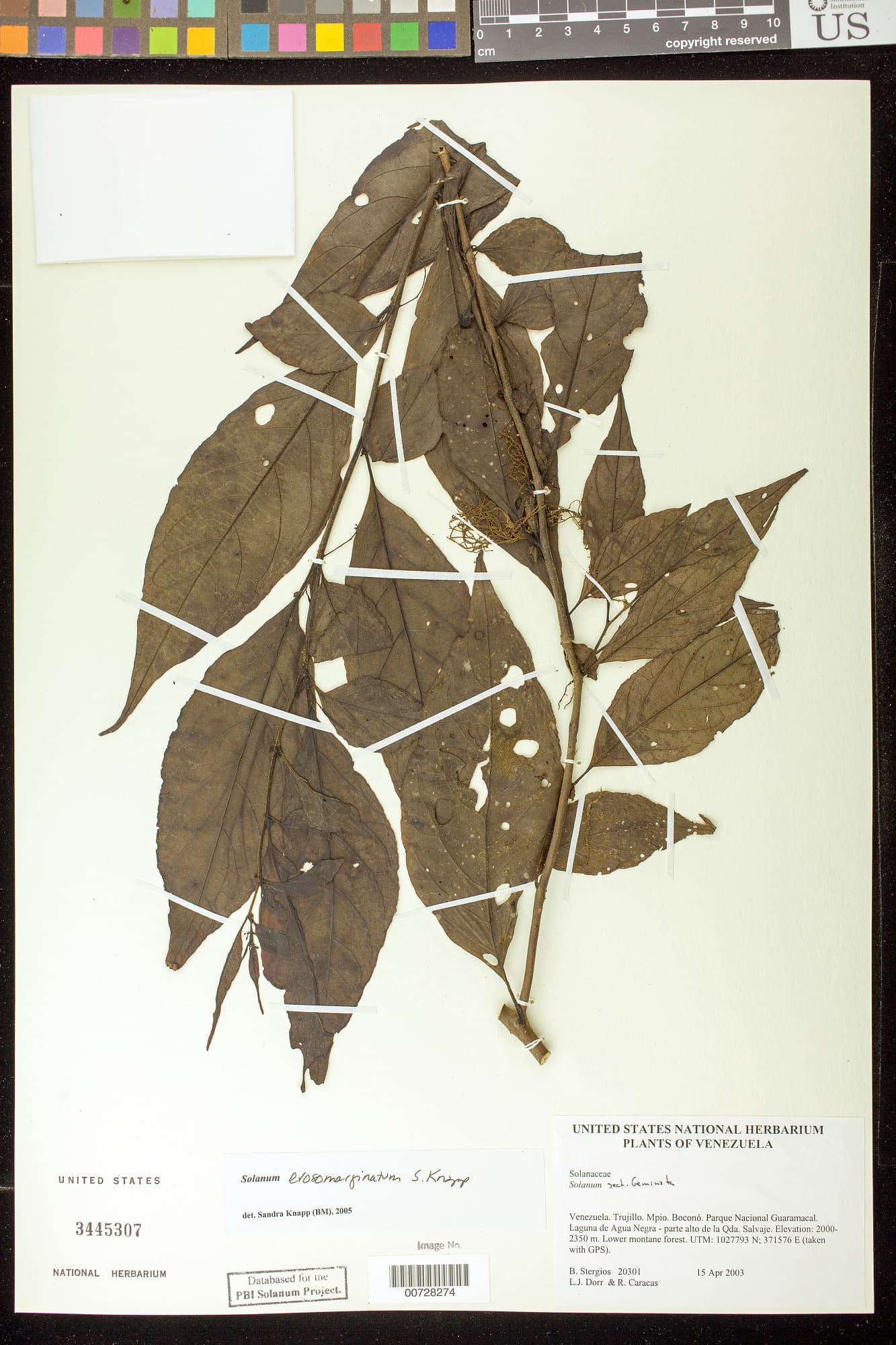
Cestrum forsythii is a shrub or small tree characterized by its simple, alternate leaves and clusters of tubular, often yellowish or greenish-white flowers. The plant typically produces small berries after flowering, though these are not visible in the dried specimen.