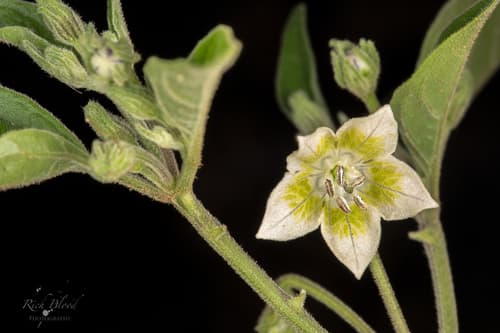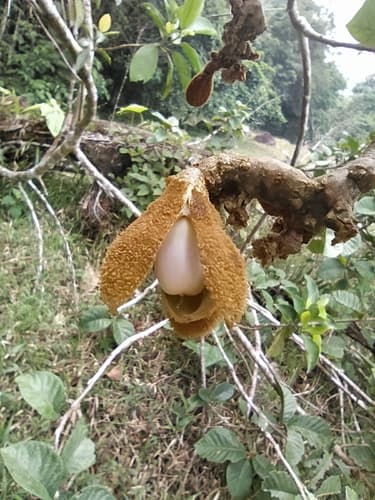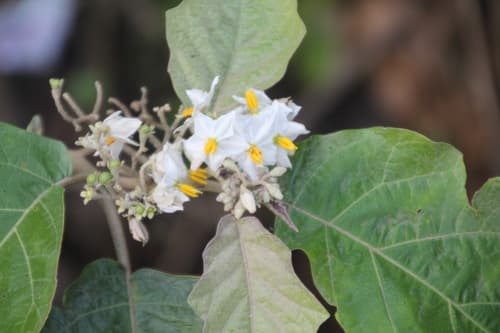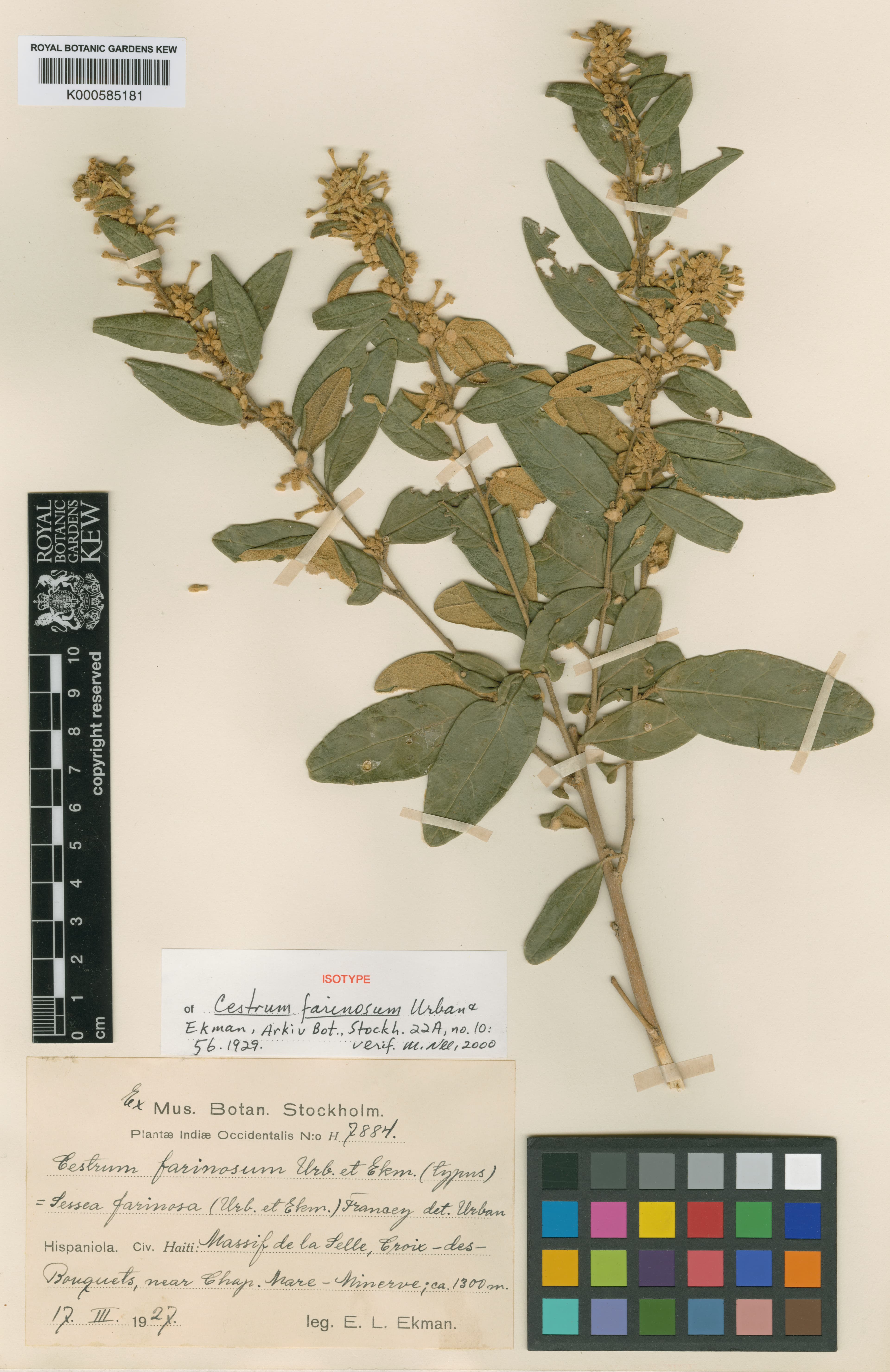
Cestrum farinosum
Image: Ekman, E.L. (cc-by)
NameCestrum farinosum
Scientific NameCestrum farinosum Urb. & Ekman
Plant FamilySolanaceae
Natural HabitatNative to Hispaniola, specifically documented from the Massif de la Selle region in Haiti, at elevations around 1300 meters. It thrives in montane, tropical environments.
Parts Used
Traditional UsesNo specific traditional medicinal uses are widely documented for Cestrum farinosum. The genus Cestrum is generally known for its toxicity, though some related species have limited traditional folk medicine applications, often with significant caution and primarily for external use due to the presence of toxic compounds.
Active ConstituentsSteroidal glycoalkaloids, Saponins
Contraindications & WarningsAll parts of Cestrum species are generally considered toxic due to the presence of steroidal glycoalkaloids and saponins. Ingestion can cause severe gastrointestinal upset, neurological symptoms, and cardiac issues. This plant is not recommended for internal use and should be handled with extreme caution.
Cultivation NotesAs a member of the Cestrum genus, it likely prefers tropical to subtropical climates, well-drained soil, and can tolerate a range of light conditions. Propagation is typically by seeds or cuttings. Specific cultivation details for Cestrum farinosum are not widely documented.
Rarityuncommon
Description
Cestrum farinosum is a shrub or small tree characterized by simple, alternate leaves and dense clusters of small, yellowish flowers. The species name 'farinosum' suggests a mealy or powdery texture, likely referring to the indumentum on its parts. The specimen shows a woody stem with leaves and inflorescences.