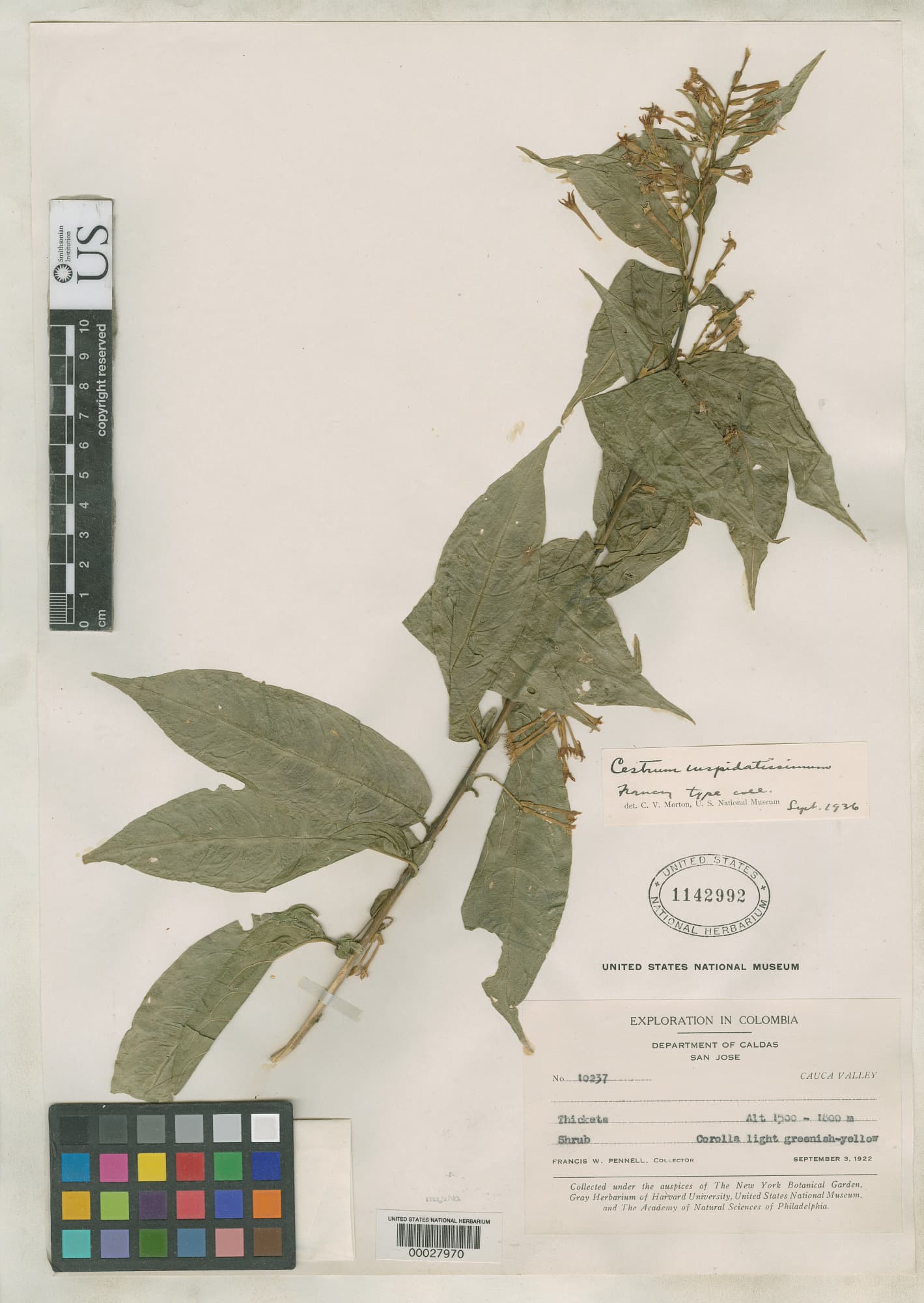
Cestrum cuspidatissimum
Image: Ingrid P. Lin (cc0)
NameCestrum cuspidatissimum
Scientific NameCestrum cuspidatissimum Francey
Common NamesJessamine, Night Jessamine
Plant FamilySolanaceae
Natural HabitatNative to mountainous regions of South America, specifically found in Colombia (Cauca Valley, Department of Caldas) at altitudes between 1500 and 1800 meters, often growing in thickets.
Parts Usedleaf,flower
Medicinal Actionsanalgesic, anti-inflammatory, antimicrobial
Traditional UsesWhile specific traditional uses for Cestrum cuspidatissimum are not widely documented, other Cestrum species are traditionally used for their anti-inflammatory and analgesic properties, often applied externally as poultices for pain, fevers, and skin conditions. Internal use is generally avoided due to toxicity.
Active Constituentssteroidal saponins, steroidal alkaloids, flavonoids
Preparation Methodspoultice, decoction
Contraindications & WarningsAll Cestrum species are generally considered toxic due to the presence of steroidal alkaloids and saponins. Ingestion can cause gastrointestinal upset, neurological symptoms, and cardiac issues. Not recommended for internal use; external use should be with extreme caution and under expert guidance. Avoid during pregnancy and lactation.
Cultivation NotesThis tropical to subtropical shrub prefers well-drained soil and can tolerate full sun to partial shade. It is typically found in its native high-altitude thicket habitats.
Rarityuncommon
Description
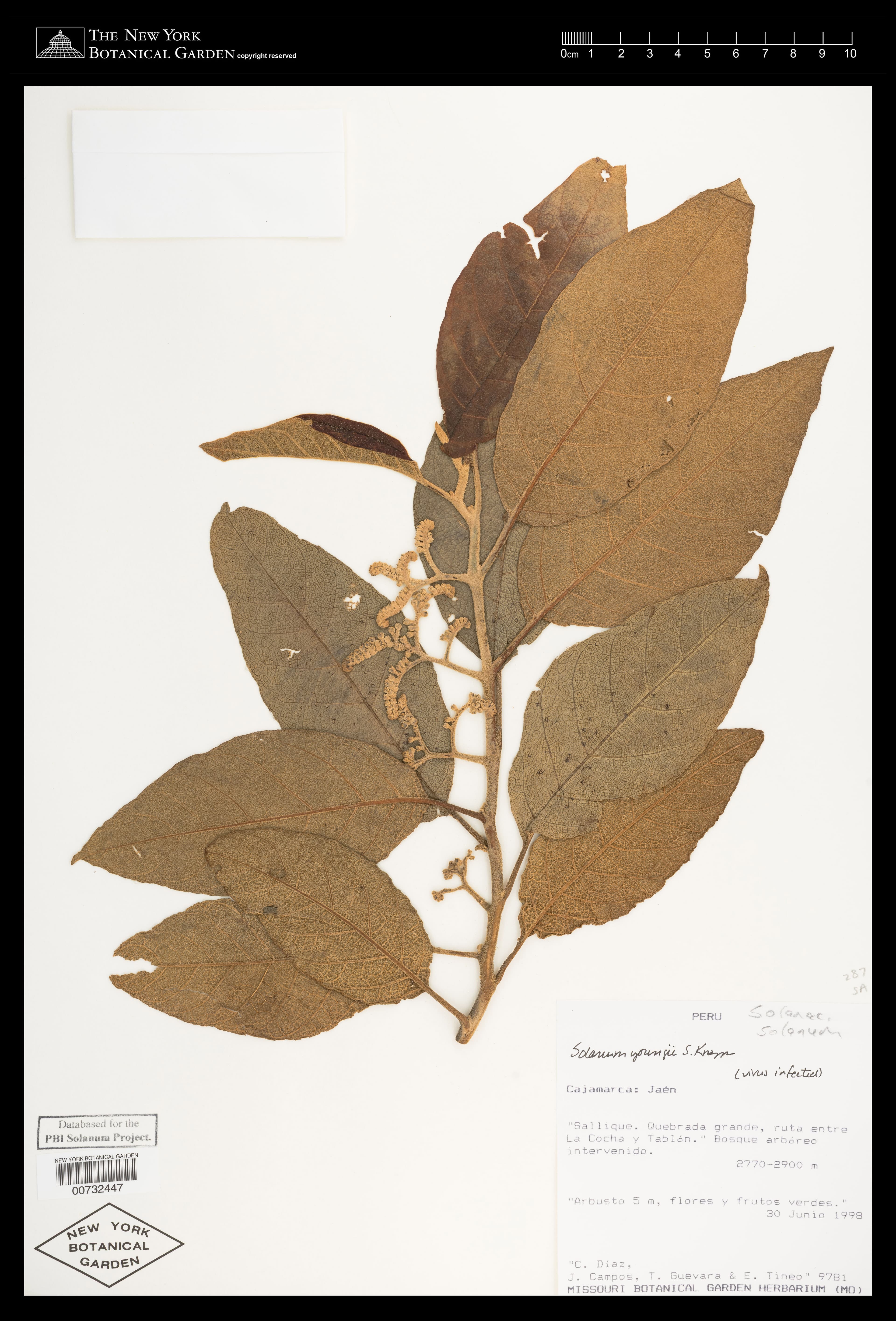
Cestrum cuspidatissimum is a shrub species characterized by simple, alternate leaves and terminal or axillary inflorescences bearing tubular, light greenish-yellow flowers. The plant typically grows in thickets and is native to South America.