Cestrum chiapense
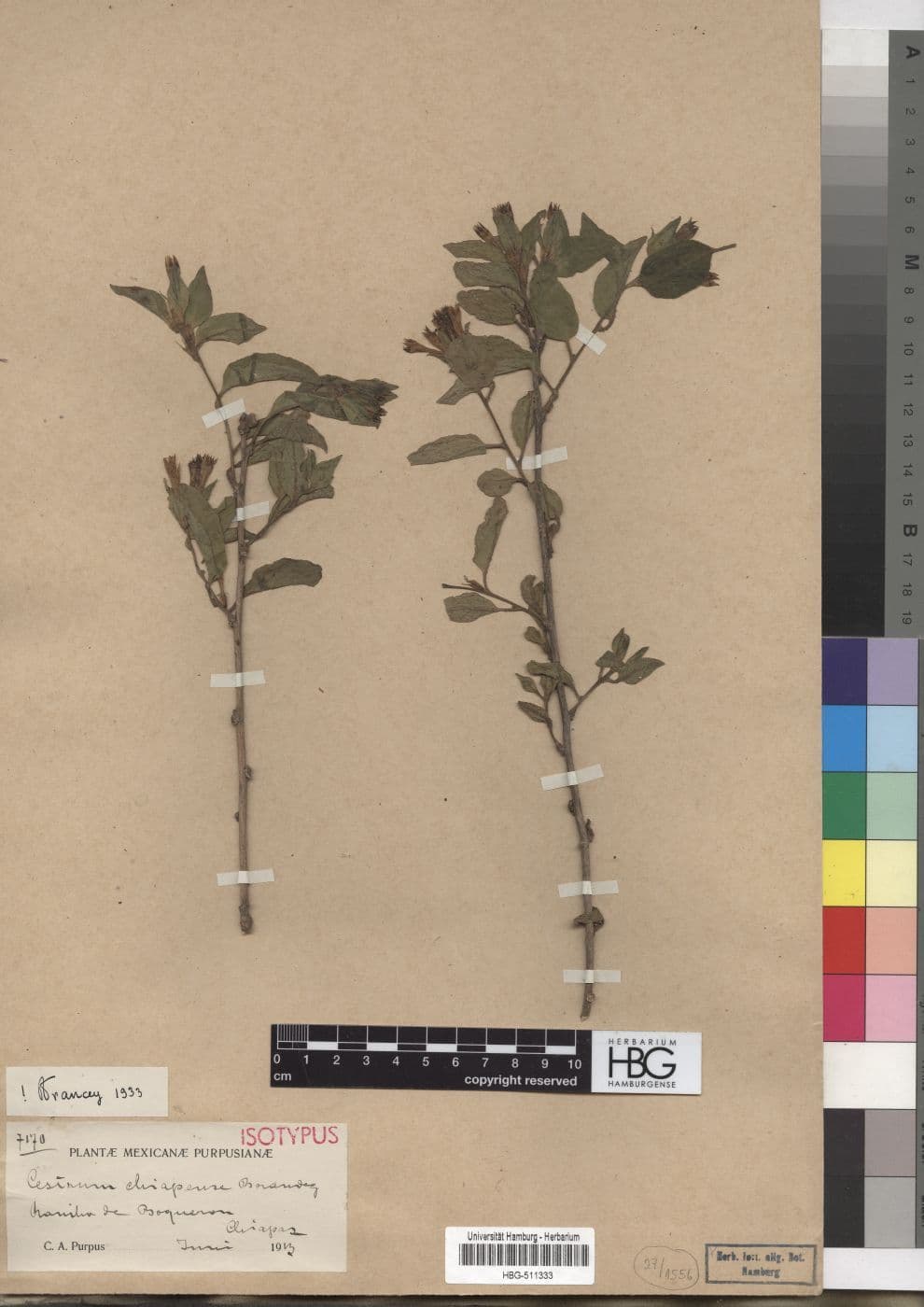
Image: Purpus, C.A. (cc-by-sa)
NameCestrum chiapense
Scientific NameCestrum chiapense Brandegee
Plant FamilySolanaceae
Natural HabitatNative to tropical and subtropical regions of Mexico and Central America, typically found in forests, disturbed areas, or along roadsides.
Parts Usedleaf,flower,fruit
Medicinal Actionsanalgesic, anti-inflammatory, sedative
Traditional UsesSpecific traditional medicinal uses for Cestrum chiapense are not widely documented. However, other species within the Cestrum genus are known to be highly toxic due to steroidal glycoalkaloids, and any traditional uses (e.g., for pain relief, inflammation, or as a sedative) are typically external or involve extremely cautious, highly diluted preparations due to the risk of severe poisoning.
Active Constituentssteroidal glycoalkaloids, saponins, alkaloids
Preparation Methodspoultice, salve
Contraindications & WarningsHighly toxic; ingestion can cause severe gastrointestinal upset, neurological symptoms, and cardiac issues. Not recommended for internal use without expert supervision due to the presence of poisonous compounds. Pregnant or breastfeeding women, children, and individuals with liver or kidney conditions should strictly avoid contact or use.
Cultivation NotesPrefers full sun to partial shade and well-drained soil. Requires warm climates and is sensitive to frost. Can be propagated from seeds or cuttings.
Rarityuncommon
Description
A shrub or small tree native to Mexico, characterized by simple, alternate leaves and clusters of tubular flowers, often followed by berries. The herbarium specimen shows dried leaves and flower clusters on woody stems.