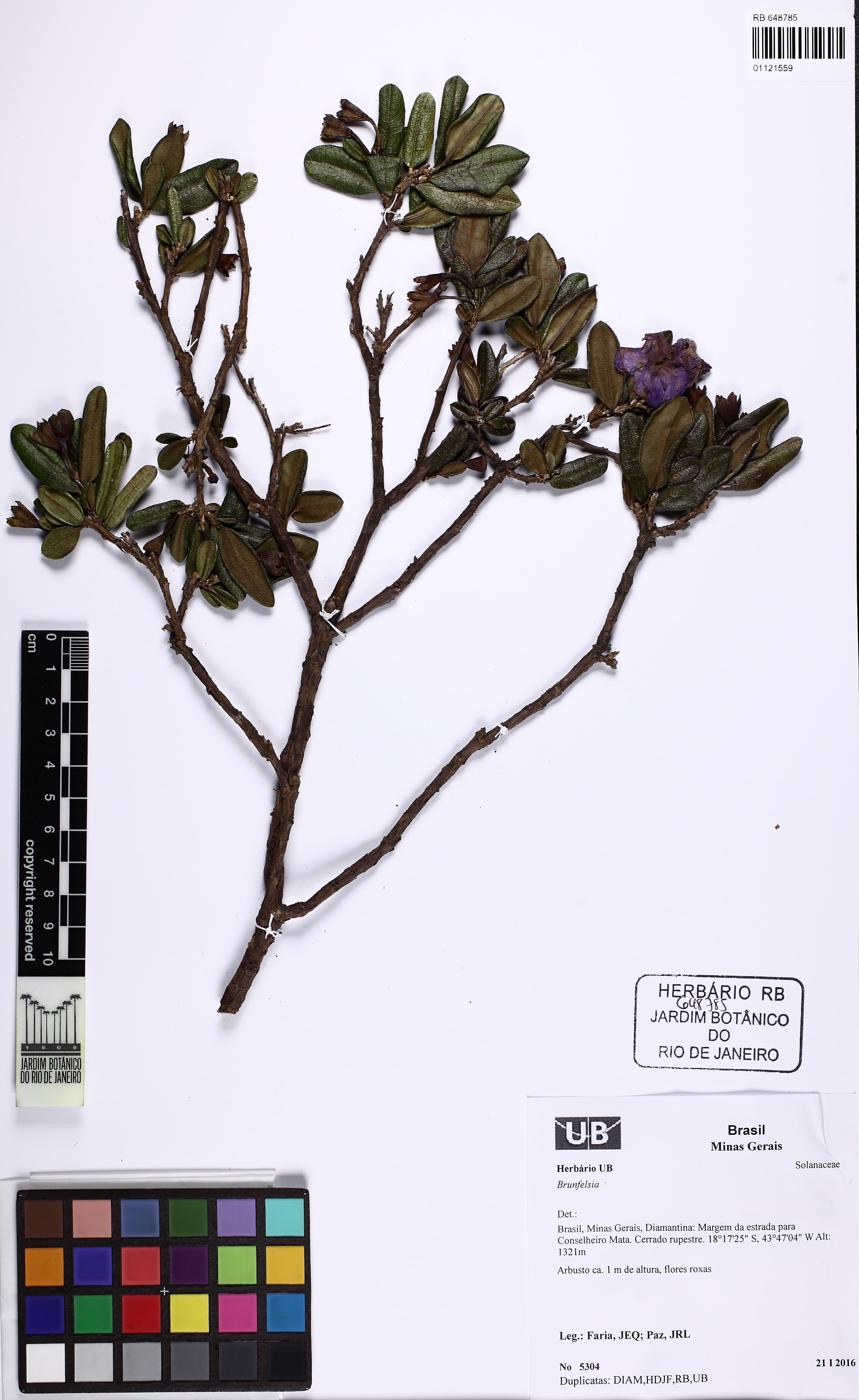
Brunfelsia rupestris
Image: J.E.Q. Faria; J.R.L. Paz (cc-by)
NameBrunfelsia rupestris
Scientific NameBrunfelsia rupestris
Plant FamilySolanaceae
Natural HabitatThis species is found in Brazil, specifically in Minas Gerais, near Diamantina, growing along roadsides in rocky Cerrado environments (Cerrado rupestre).
Parts Usedleaf,flower,bark
Medicinal Actionsanalgesic, anti-inflammatory, diuretic, nervine, sedative
Traditional UsesWhile specific traditional uses for Brunfelsia rupestris are not detailed in the metadata, species within the Brunfelsia genus are traditionally used for treating fevers, rheumatism, and syphilis. They are also employed as purgatives, diaphoretics, and diuretics, and some species are known for their psychoactive properties, used as nervines or sedatives.
Active Constituentsindole alkaloids, brunfelsamidine, manacine, scopoletin
Preparation Methodsinfusion, decoction, tincture
Contraindications & WarningsBrunfelsia species are generally considered toxic and can cause adverse effects such as nausea, vomiting, diarrhea, and neurological symptoms. Use is contraindicated in pregnancy, lactation, and for individuals with certain medical conditions or taking specific medications. Professional guidance is essential due to potential toxicity.
Cultivation NotesThis plant thrives in rocky, well-drained soils characteristic of the Cerrado rupestre habitat. It prefers tropical to subtropical climates and may require specific conditions to mimic its natural environment.
Rarityuncommon
Description
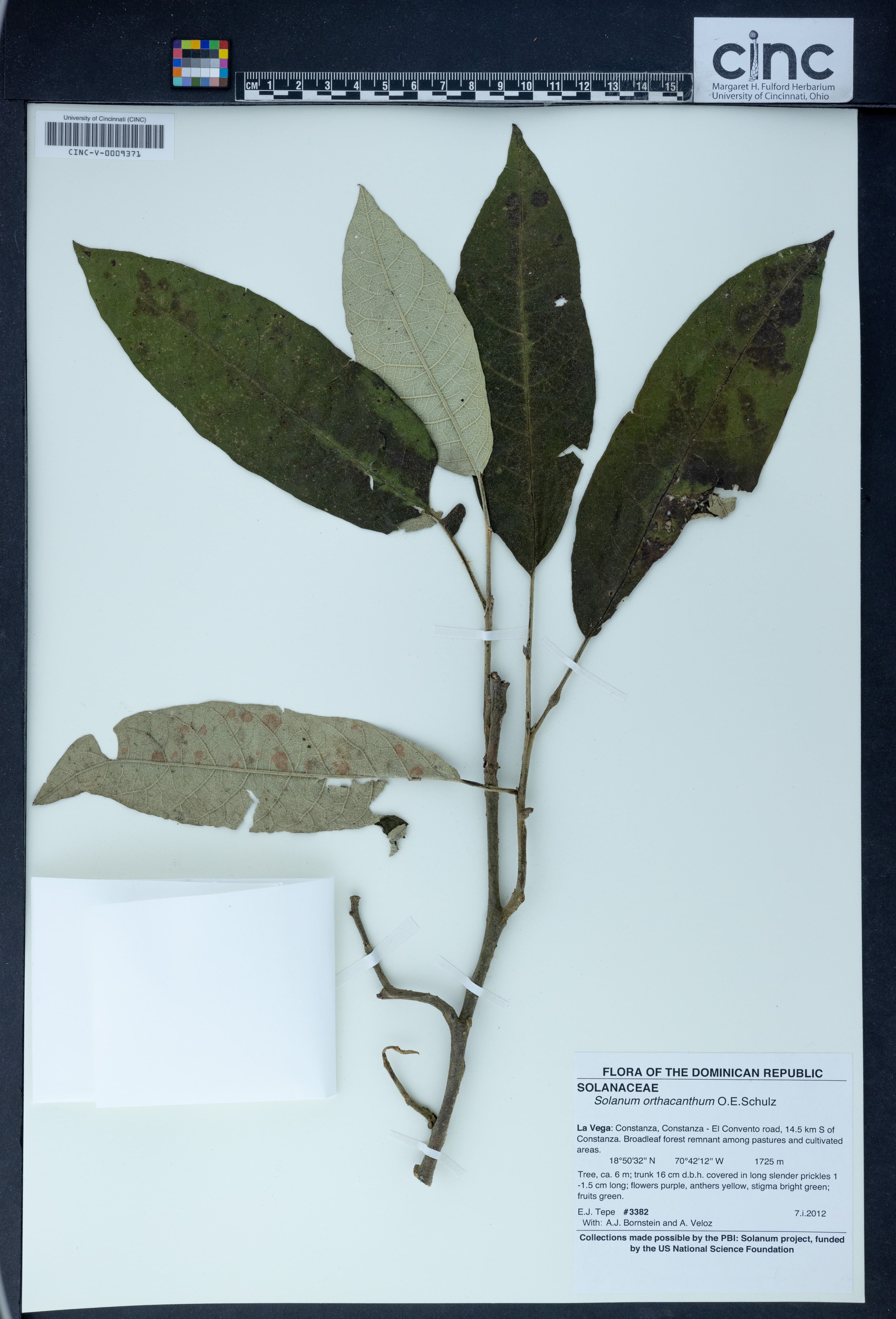
Brunfelsia rupestris is a shrub, typically growing to about 1 meter in height, characterized by its woody stems, ovate to elliptic leaves, and purple flowers. The specimen shows dried leaves and flowers, indicative of its natural form.