Brunfelsia pluriflora
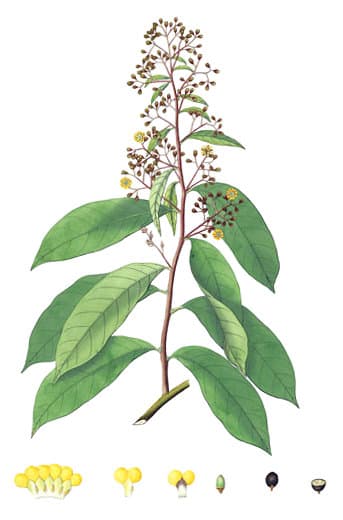
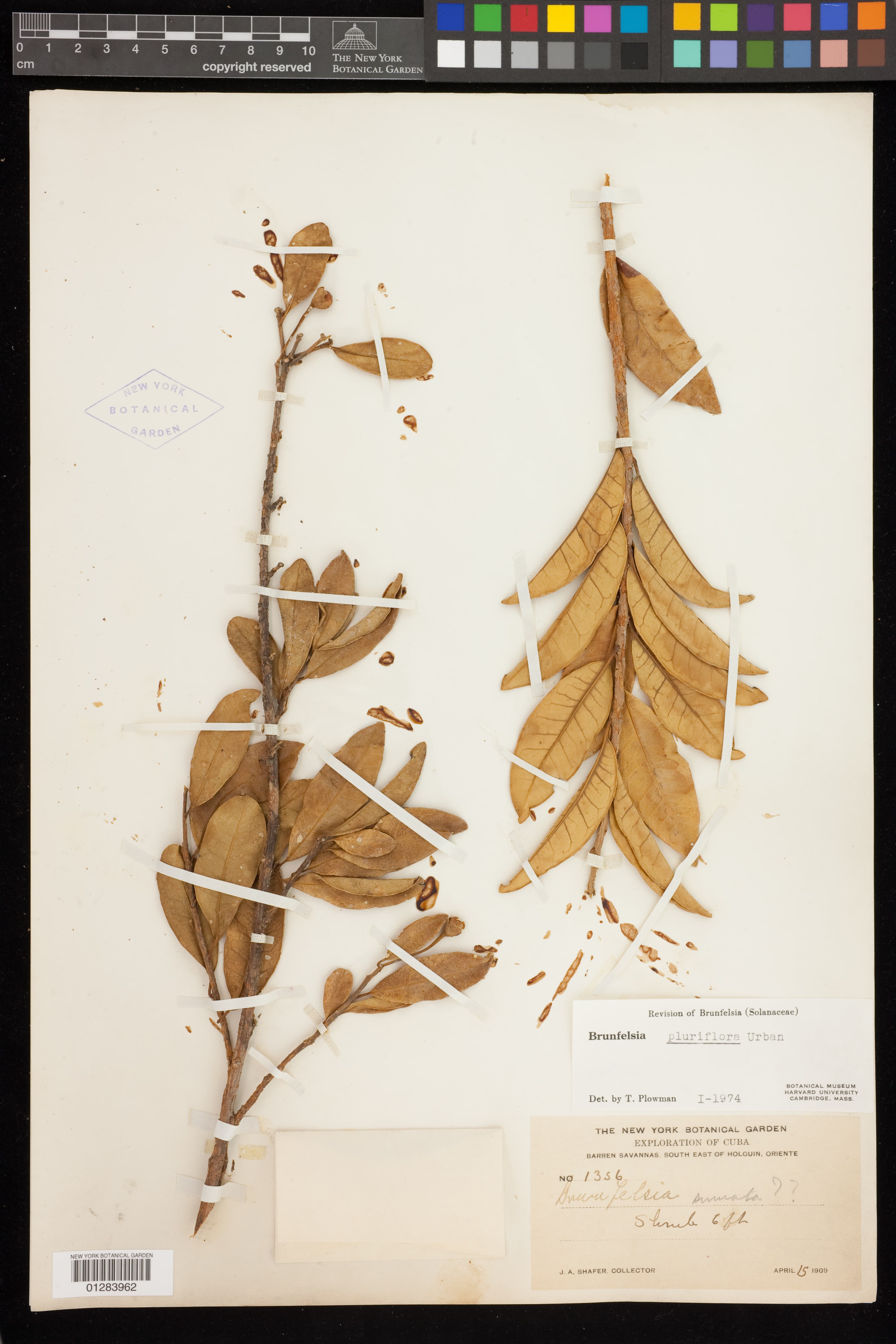
Image: The New York Botanical Garden (cc-by)
NameBrunfelsia pluriflora
Scientific NameBrunfelsia pluriflora Urb.
Common NamesManaca, Kiss-Me-Quick
Plant FamilySolanaceae
Natural HabitatNative to tropical and subtropical regions, particularly found in barren savannas and open woodlands. The specimen was collected in savannas southeast of Holguin, Oriente, Cuba.
Parts Usedleaf,root,bark
Medicinal Actionsanalgesic, anti-inflammatory, diuretic, nervine, sedative
Traditional UsesTraditionally, various parts of Brunfelsia species, including B. pluriflora, have been used in folk medicine as a purgative, diuretic, and diaphoretic. It has also been employed for treating rheumatism, syphilis, and fevers. Due to its potent psychoactive alkaloids, it has been used by some indigenous cultures as an entheogen or hallucinogen.
Active ConstituentsBrunfelsamidine, Scopoletin, Manacine, Manaceine, Aesculetin, Coumarins, Alkaloids
Preparation Methodsinfusion, decoction, tincture, powder
Contraindications & WarningsBrunfelsia pluriflora is highly toxic, especially the roots and fruits. Ingestion can cause severe symptoms including nausea, vomiting, diarrhea, tremors, paralysis, and convulsions. It should not be used internally without expert supervision. Avoid during pregnancy, lactation, and in individuals with neurological or cardiac conditions. May interact with central nervous system depressants.
Cultivation NotesThis tropical shrub thrives in warm, humid climates with well-drained, acidic to neutral soil. It prefers partial shade but can tolerate full sun in some conditions. Requires consistent moisture and protection from frost.
Rarityuncommon
Description
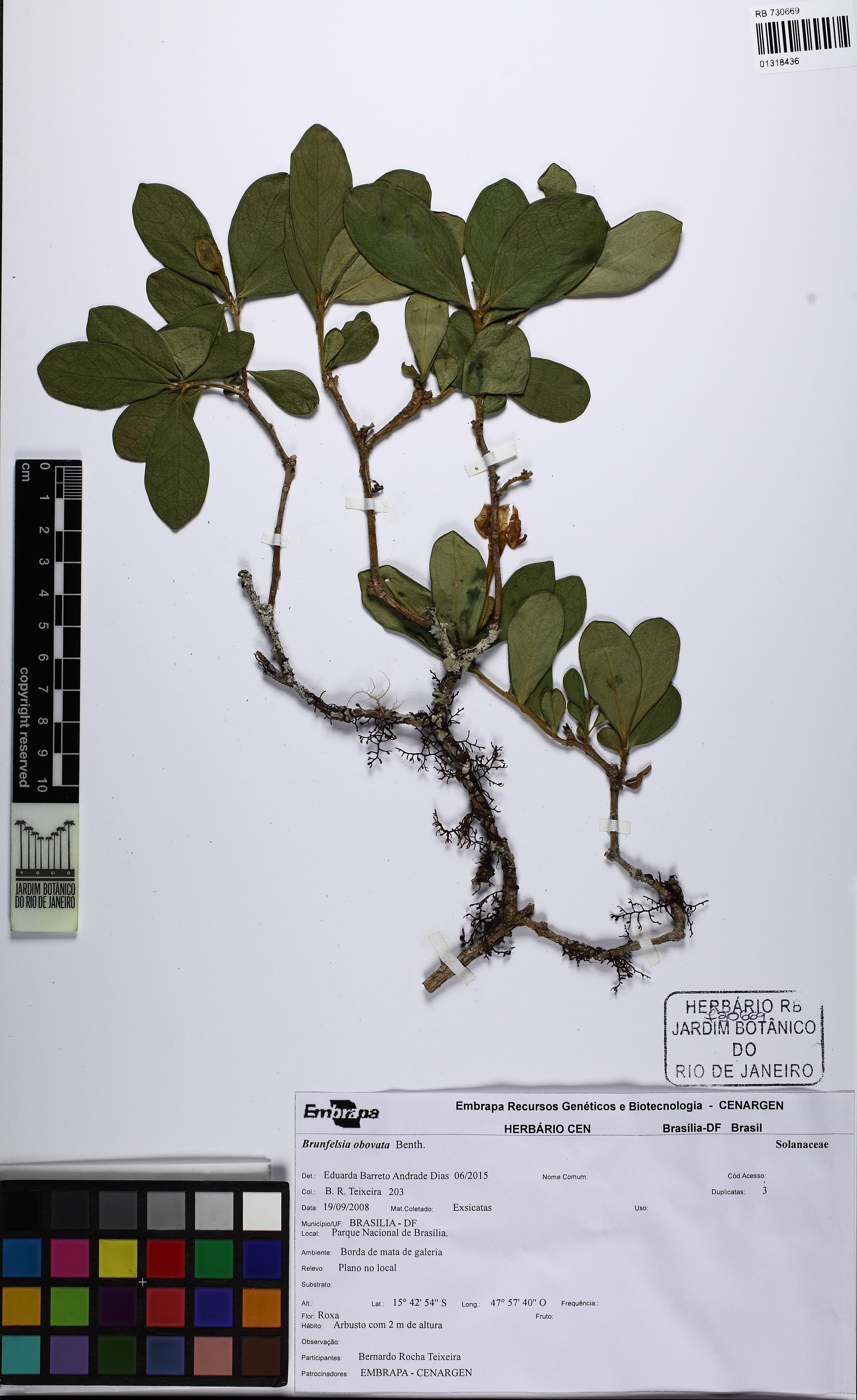
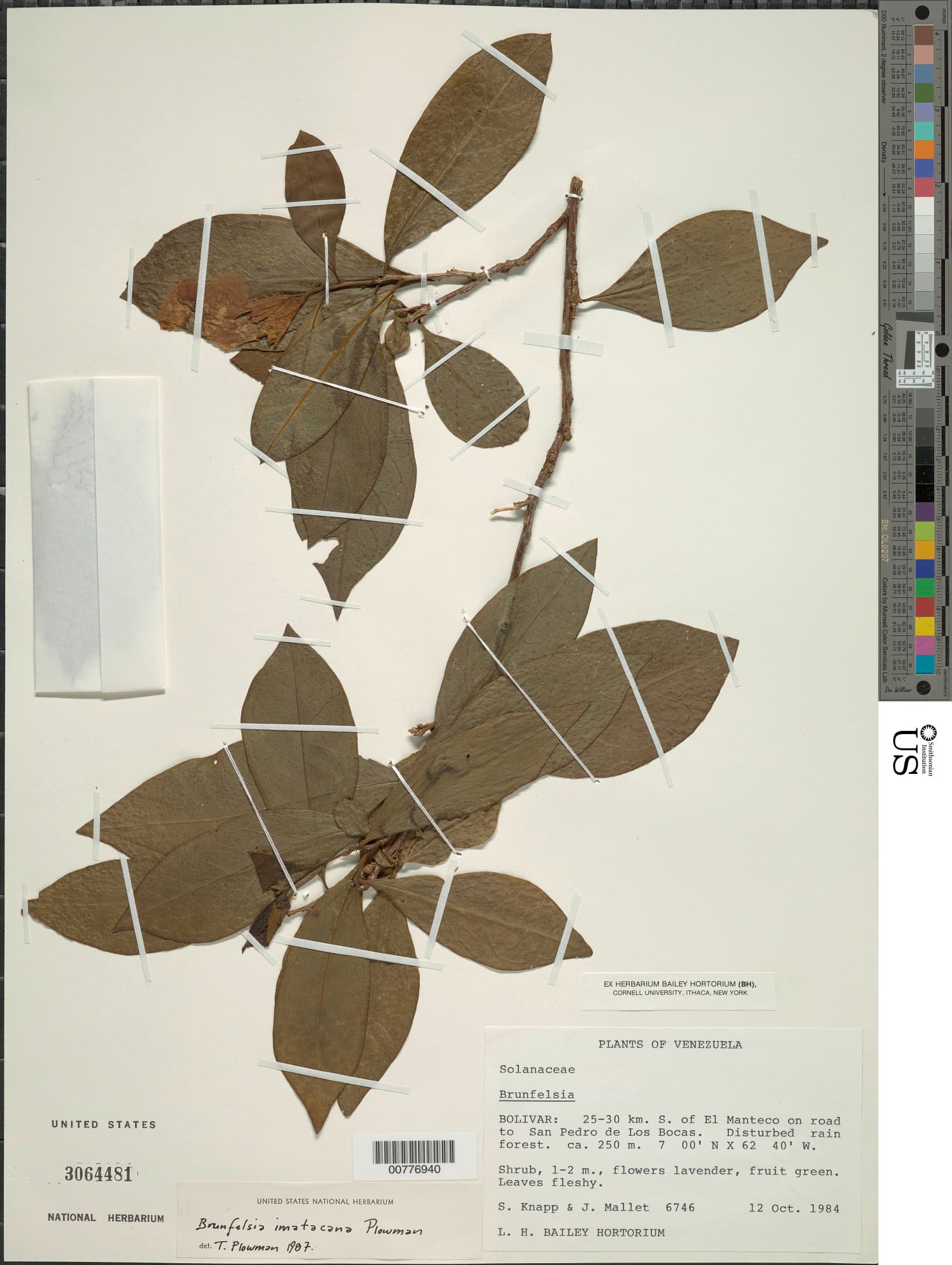
Brunfelsia pluriflora is a woody shrub or small tree, typically growing up to 6 feet tall, characterized by its simple, alternate, entire, and somewhat leathery leaves. The herbarium specimen shows dried branches with persistent leaves, indicative of its shrubby habit.