bigibbous cestrum
Image: Conveyor Belt (cc0)
Namebigibbous cestrum
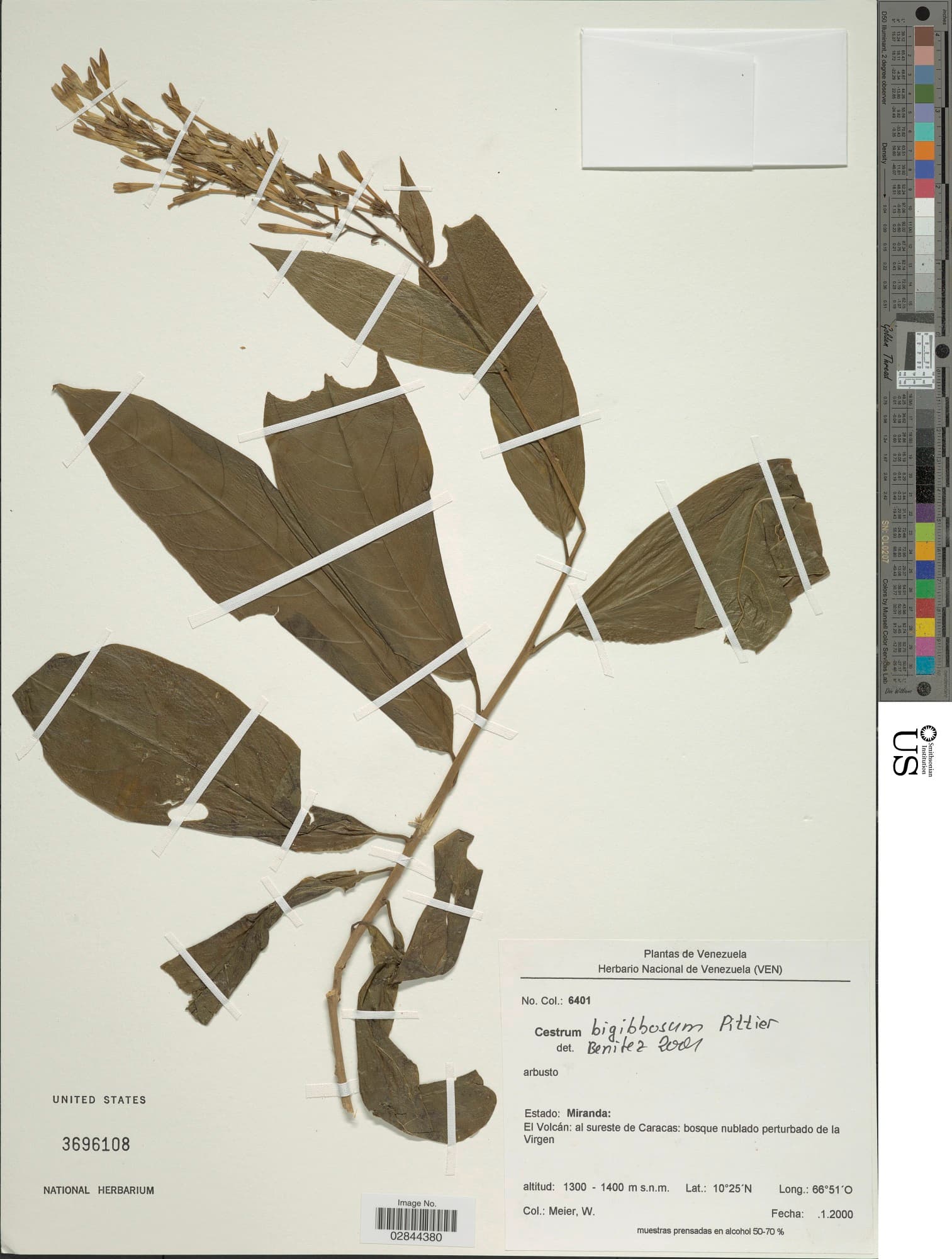
Scientific NameCestrum bigibbosum Pittier
Common Namesbigibbous cestrum
Plant FamilySolanaceae
Natural HabitatNative to Venezuela, specifically found in disturbed cloud forests at altitudes between 1300 and 1400 meters above sea level, such as in the Miranda State, southeast of Caracas.
Parts Usedleaf,flower,fruit
Traditional UsesSpecific traditional medicinal uses for Cestrum bigibbosum are not widely documented in ethnobotanical literature. The genus Cestrum is generally known for containing toxic compounds, and while some species have limited traditional applications, they are often used with extreme caution or externally due to potential toxicity.
Contraindications & WarningsThe genus Cestrum is widely recognized for containing toxic steroidal glycoalkaloids and saponins, which can cause severe gastrointestinal and neurological symptoms if ingested. All parts of Cestrum plants are generally considered poisonous, and specific contraindications for Cestrum bigibbosum would likely include internal use and contact with broken skin.
Cultivation NotesAs a tropical shrub, it likely prefers warm, humid conditions with well-drained soil, typical of its cloud forest habitat. It would require protection from frost and may thrive in partial shade to full sun.
Rarityuncommon
Description
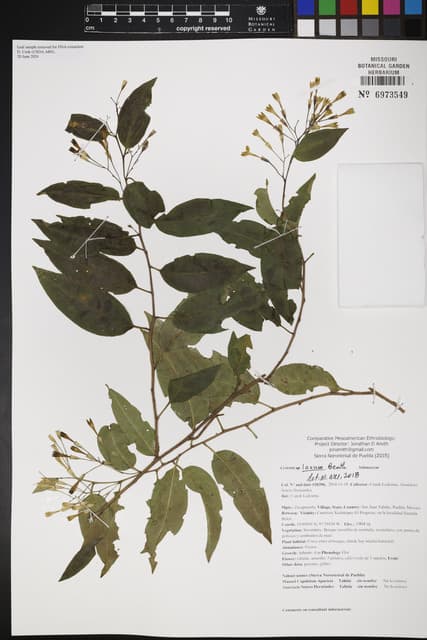
Cestrum bigibbosum is a shrub characterized by its alternate, simple leaves and terminal inflorescences. The specimen displays dried flowers or developing fruits, typical of a plant collected for botanical study.