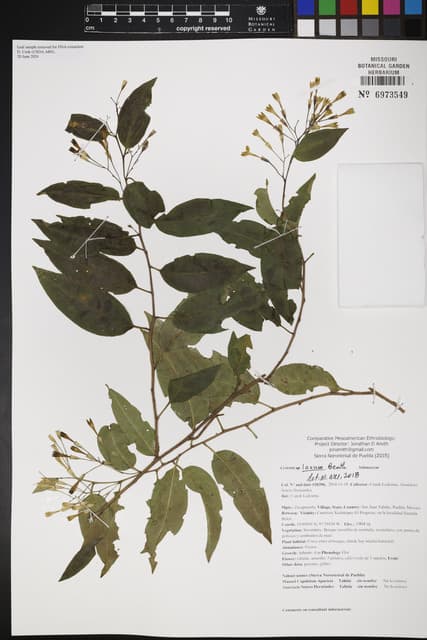
Cestrum laxum
Image: MBG (cc-by-nc)
NameCestrum laxum
Scientific NameCestrum laxum Benth.
Plant FamilySolanaceae
Natural HabitatFound in secondary mountain mesophyll forests, often in humid areas, including disturbed sites with patches of pastures and cornfields. It prefers growing within the forest where humidity is high.
Parts Usedleaf,flower
Medicinal Actionsanti-inflammatory, analgesic, antimicrobial
Traditional UsesWhile specific traditional uses for Cestrum laxum are not detailed on this specimen, other species within the Cestrum genus are traditionally used externally for pain relief, such as rheumatic pain, reducing inflammation, and treating various skin conditions. Internal use is generally cautioned due to potential toxicity.
Active Constituentssteroidal saponins, glycoalkaloids, flavonoids
Preparation Methodsinfusion, poultice, decoction
Contraindications & WarningsThe Cestrum genus is known to contain toxic compounds, including steroidal saponins and glycoalkaloids, which can be poisonous if ingested. Internal use is highly discouraged and potentially dangerous. Not recommended for pregnant or nursing women, children, or individuals with liver or kidney conditions.
Cultivation NotesThis species prefers humid environments and likely thrives in well-drained soils. It is typically found in secondary forest edges, suggesting it can tolerate a range from partial shade to full sun.
Rarityuncommon
Description
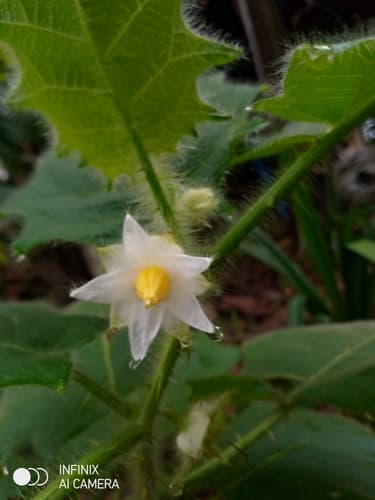
A woody shrub or small tree, this plant features simple, alternate leaves and produces terminal or axillary inflorescences. Its flowers are tubular and typically yellowish-white, appearing in clusters.