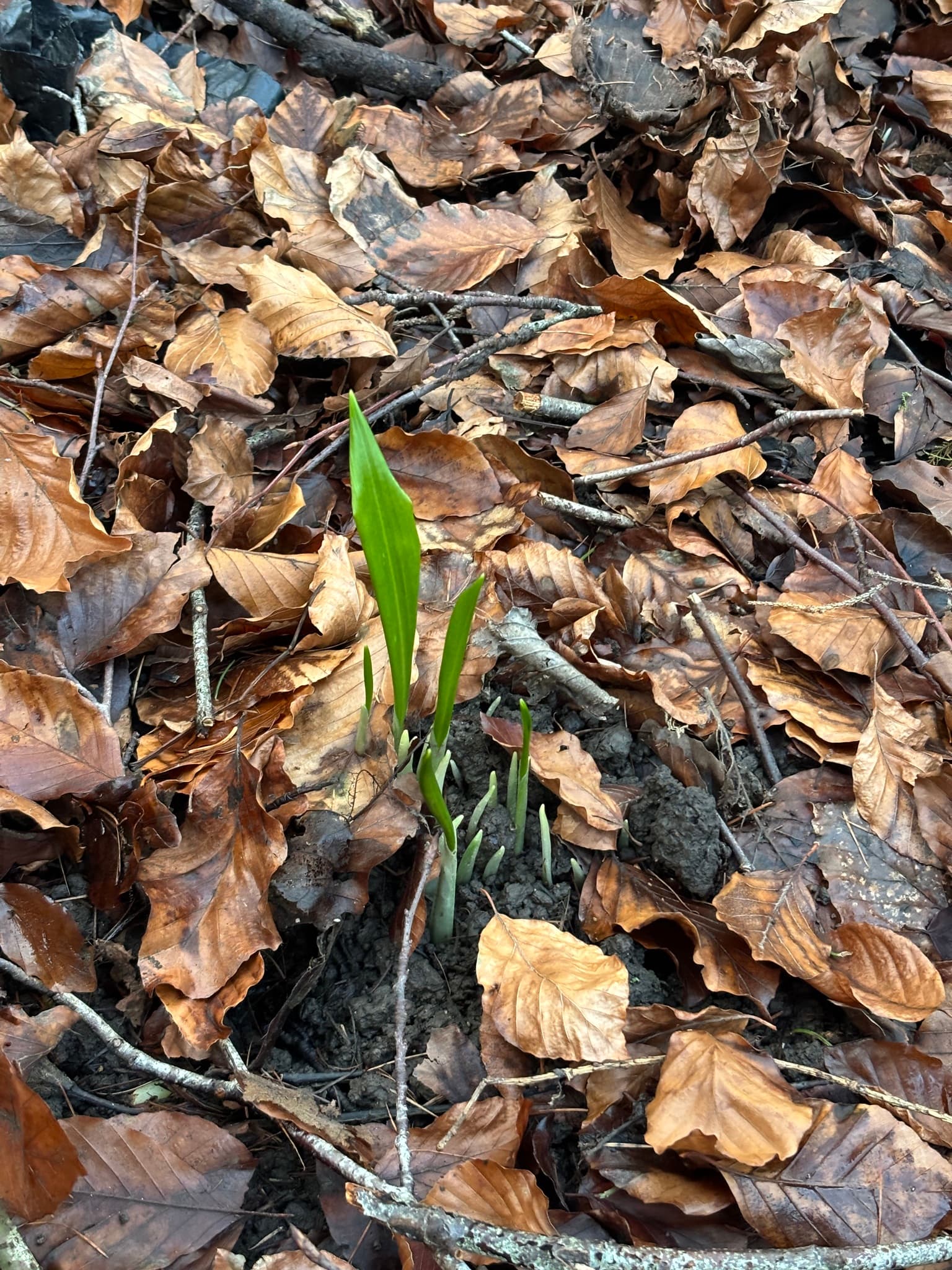
Ramsons (Wild Garlic)
Image: Martin Wood-Weatherill (cc-by)
NameRamsons (Wild Garlic)
Scientific NameAllium ursinum
Common NamesRamsons, Wild Garlic, Bear Garlic, Broad-leaved Garlic
Plant FamilyAmaryllidaceae
Natural HabitatNative to Europe and Asia, Allium ursinum thrives in damp, shady deciduous woodlands, riverbanks, and hedgerows. It prefers moist, humus-rich soil and often forms dense carpets across the forest floor.
Parts Usedleaf,flower,root
Medicinal Actionsanti-inflammatory, antimicrobial, antioxidant, carminative, diuretic, expectorant
Traditional UsesTraditionally used as a spring tonic to cleanse the blood and detoxify the body. It has been employed to support cardiovascular health, lower blood pressure and cholesterol, and aid digestion. Its antimicrobial properties make it useful for combating colds, flu, and other infections.
Active ConstituentsOrganosulfur compounds (alliin, allicin, ajoene), Flavonoids, Saponins, Vitamin C
Preparation Methodsinfusion, tincture, powder
Contraindications & WarningsLarge quantities may cause gastrointestinal upset in some individuals. Due to potential blood-thinning effects, caution is advised for those on anticoagulant medication. Allergic reactions, though rare, are possible.
Cultivation NotesRamsons are easily grown from seed or bulbils in moist, shady conditions. They naturalize readily and can become quite invasive in suitable environments, forming extensive colonies. Prefers rich, well-drained soil.
Raritycommon
Description
A perennial herbaceous plant characterized by its broad, lanceolate leaves that emerge in early spring, followed by clusters of star-like white flowers. The entire plant emits a distinct garlic-like aroma when crushed, distinguishing it from similar-looking but toxic plants.