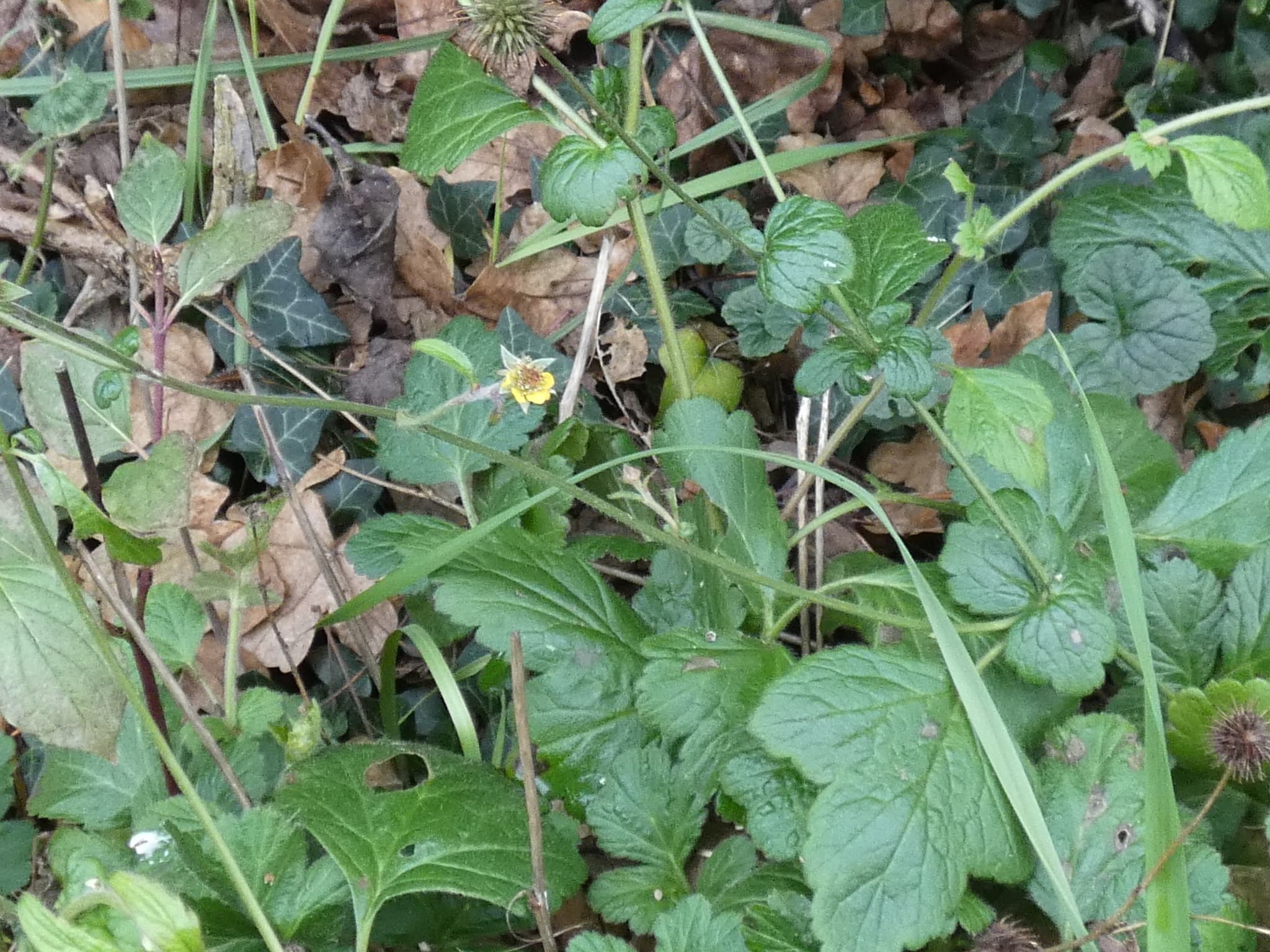
Avens
Image: Bethany Milam (cc-by)
NameAvens
Scientific NameGeum urbanum
Common NamesWood Avens, Herb Bennet, Clove Root, St. Benedict's Herb
Plant FamilyRosaceae
Natural HabitatCommonly found in woodlands, hedgerows, shady banks, and disturbed ground across Europe, North Africa, and parts of Asia. It thrives in moist, nitrogen-rich soils.
Parts Usedroot,whole_plant
Medicinal Actionsastringent, anti-inflammatory, antimicrobial, analgesic, antioxidant
Traditional UsesTraditionally, the root and aerial parts of Avens were used to treat digestive complaints such as diarrhea and dysentery due to their strong astringent properties. It was also employed as a gargle for sore throats, a mouthwash for gum inflammation, and applied topically to aid in wound healing and soothe skin irritations. The clove-scented root was sometimes used to flavor beverages.
Active ConstituentsTannins, Eugenol, Flavonoids, Volatile oils
Preparation Methodsinfusion, decoction, tincture, powder
Contraindications & WarningsGenerally considered safe, but high doses may cause stomach upset due to tannin content. Pregnant or breastfeeding individuals should consult a healthcare professional before use.
Cultivation NotesAvens is easily cultivated from seed or by division in moist, well-drained soil. It prefers partial shade but can tolerate full sun in cooler climates and is quite adaptable, often naturalizing in suitable garden conditions.
Raritycommon
Description
Geum urbanum is a perennial herbaceous plant growing up to 60 cm tall, characterized by hairy stems and basal leaves divided into three to five leaflets. It produces small, solitary, five-petaled yellow flowers, followed by distinctive burr-like seed heads.