Nelson's Horsenettle
NameNelson's Horsenettle
Scientific NameSolanum nelsonii
Common NamesNelson's Horsenettle, Popolo
Plant FamilySolanaceae
Natural HabitatEndemic to the Hawaiian Islands, this plant thrives in dry, exposed, coastal environments, including lava flows, rocky shores, and open shrublands, often at low elevations. It is well-adapted to arid conditions and saline environments.
Parts Usedleaf,fruit
Medicinal Actionsanti-inflammatory, analgesic
Traditional UsesIn traditional Hawaiian medicine (laʻau lapaʻau), related Solanum species (often referred to as 'Popolo') were used for various ailments. While specific documentation for S. nelsonii is less common than for S. americanum, general uses for 'Popolo' included treating respiratory issues, skin conditions (e.g., boils, rashes), and as a general tonic. The leaves were often crushed and applied topically or taken internally in infusions.
Active Constituentssteroidal glycoalkaloids, flavonoids, phenolic compounds
Preparation Methodsinfusion, poultice
Contraindications & WarningsAll parts of Solanum nelsonii, especially unripe fruits, contain steroidal glycoalkaloids which can be toxic if ingested in large quantities. Internal use should be approached with extreme caution and under expert guidance due to potential toxicity. Avoid during pregnancy, lactation, and in individuals with liver or kidney conditions.
Cultivation NotesThis plant prefers full sun and well-drained, often rocky or sandy soils. It is drought-tolerant and adapted to coastal conditions. Propagation can be achieved through seeds or cuttings.
Rarityuncommon
Description
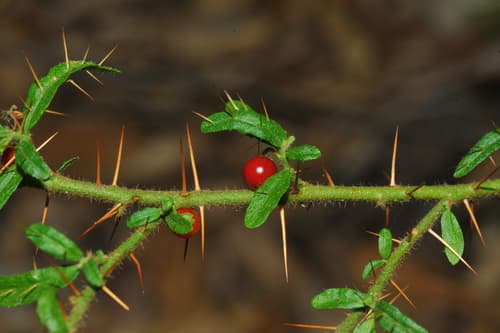
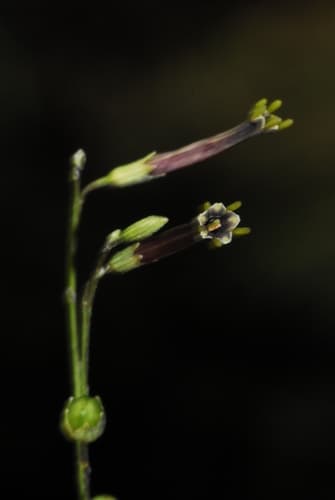
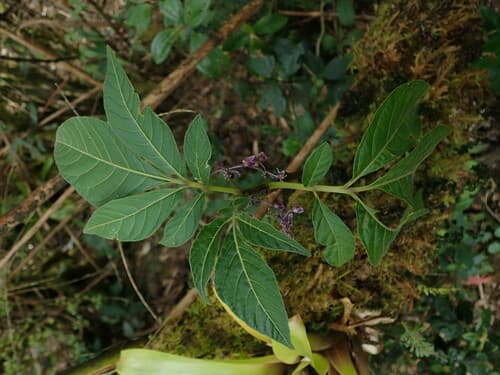
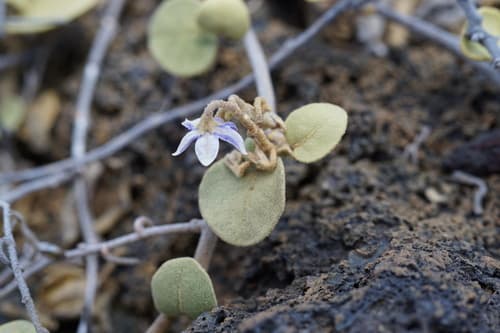
Solanum nelsonii is a prostrate to sprawling subshrub characterized by its small, ovate to orbicular leaves covered in dense, soft, stellate hairs, giving them a grayish-green, velvety appearance. It produces small, star-shaped flowers, typically pale lavender to white, often solitary or in small clusters, followed by small, spherical berries.