Arnica
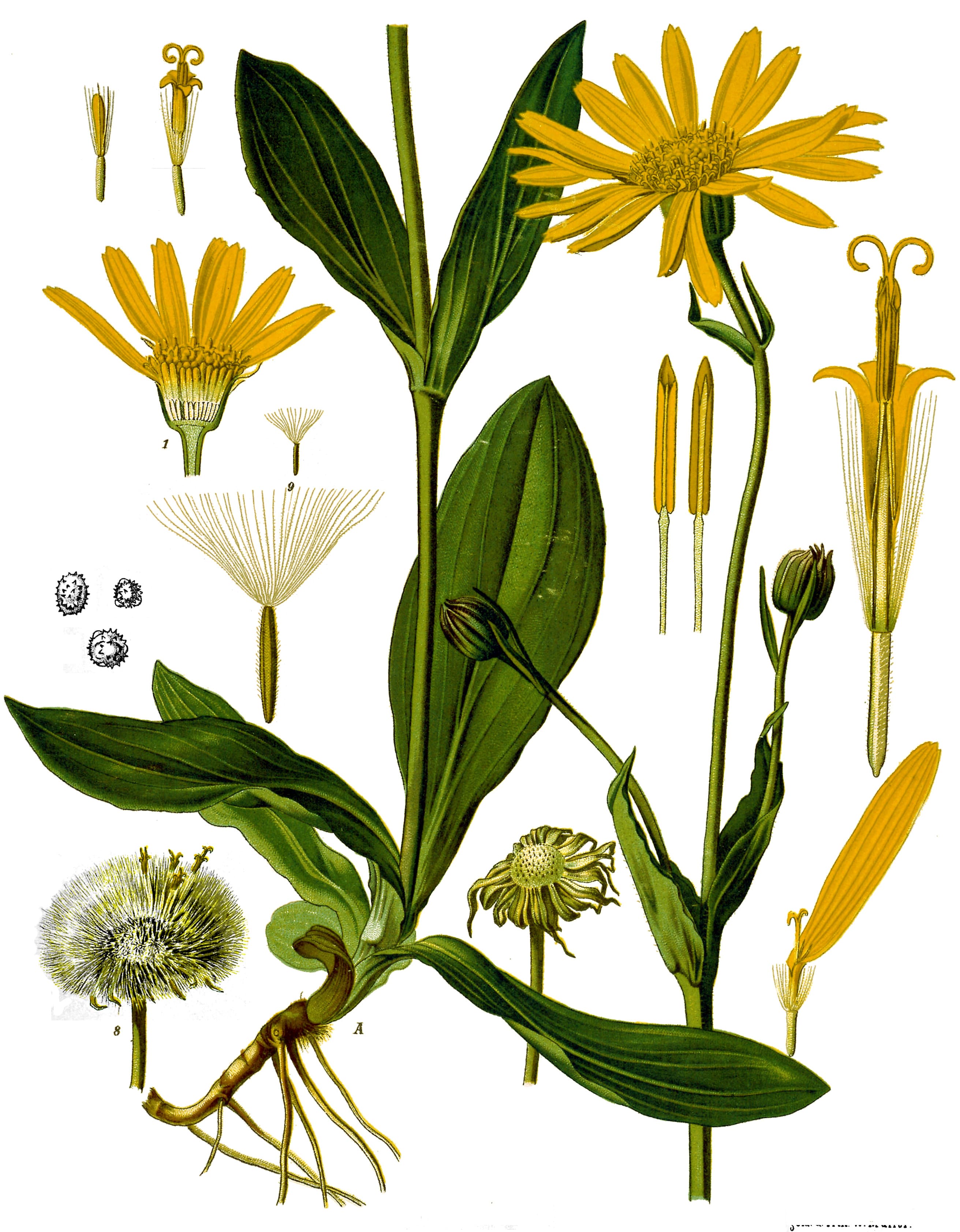
Image: Franz Eugen Köhler, Köhlers Medizinal-Pflanzen (Public domain)
NameArnica
Scientific NameArnica montana
Common NamesArnica, Mountain Arnica, Leopard's Bane, Wolf's Bane, Mountain Tobacco
Plant FamilyAsteraceae
Natural HabitatNative to subalpine and alpine meadows, pastures, and open woodlands in mountainous regions of Europe and Siberia. It thrives in acidic, nutrient-poor soils and prefers cool, moist conditions.
Parts Usedflower,root,whole_plant
Medicinal Actionsanti-inflammatory, analgesic, antimicrobial, antioxidant
Traditional UsesTraditionally, Arnica is used topically to treat bruises, sprains, muscle aches, joint pain, and swelling associated with trauma. It is highly valued for its ability to reduce pain and inflammation when applied externally. Historically, it was used internally, but this practice is now strongly discouraged due to its toxicity.
Active Constituentshelenalin, dihydrohelenalin, sesquiterpene lactones, flavonoids, coumarins, volatile oils
Preparation Methodstincture, poultice, salve, essential oil, infusion
Contraindications & WarningsArnica montana is toxic and should NOT be taken internally, as it can cause severe gastrointestinal upset, heart problems, and even death. Avoid applying to broken skin or open wounds. Individuals with allergies to plants in the Asteraceae family (e.g., ragweed, marigolds) may experience allergic reactions. Not recommended for use during pregnancy or breastfeeding.
Cultivation NotesPrefers full sun to partial shade and well-drained, acidic soil. It can be propagated by seed or division of rhizomes. Requires cool temperatures and consistent moisture, making it challenging to cultivate in warmer climates. Wild populations are often protected due to over-harvesting.
Rarityuncommon
Description
Arnica montana is a perennial herb characterized by its bright yellow, daisy-like flowers, typically solitary or in clusters of 2-3. It grows from a basal rosette of ovate leaves, with a few smaller, opposite leaves ascending the hairy stem. The plant features a creeping rhizome and produces fluffy seed heads similar to dandelions.