Cuscuta glabrior
NameCuscuta glabrior
Scientific NameCuscuta glabrior
Common NamesDodder, Smooth Dodder, Love Vine, Strangleweed
Plant FamilyConvolvulaceae
Natural HabitatThis parasitic vine is found growing on various herbaceous and woody host plants in disturbed areas, fields, roadsides, and natural ecosystems. It requires a host for survival, drawing nutrients directly from its host.
Parts Usedwhole_plant,seed
Medicinal Actionsadaptogen, antioxidant, diuretic, astringent, anti-inflammatory
Traditional UsesTraditionally, species of Cuscuta, including related ones, have been used as a kidney and liver tonic, addressing issues like impotence, premature ejaculation, frequent urination, blurred vision, and lower back pain. It is also employed to strengthen bones and muscles, and as a general tonic for vitality and reproductive health.
Active ConstituentsFlavonoids, Lignans, Polysaccharides, Saponins
Preparation Methodsinfusion, decoction, powder, tincture
Contraindications & WarningsAvoid during pregnancy, in cases of qi stagnation, or damp-heat conditions. May interact with medications for diabetes or blood thinners. Consult a healthcare professional before use, especially if on other medications.
Cultivation NotesAs an obligate parasitic plant, Cuscuta glabrior cannot be cultivated independently. It requires a suitable host plant to germinate and attach to for survival, making it generally considered a weed in agricultural settings.
Raritycommon
Description
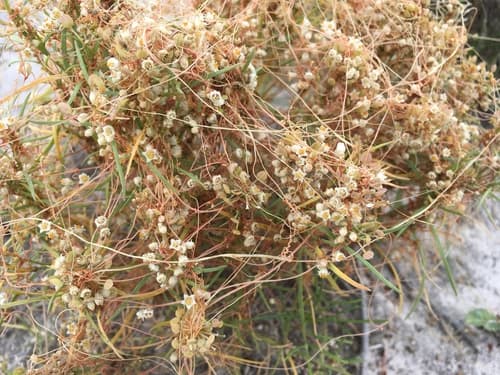
Cuscuta glabrior is an obligate parasitic plant characterized by its slender, thread-like, yellowish-orange stems that twine around host plants. Lacking true leaves and chlorophyll, it produces dense clusters of small, pale, bell-shaped flowers, which develop into small capsular fruits containing seeds.