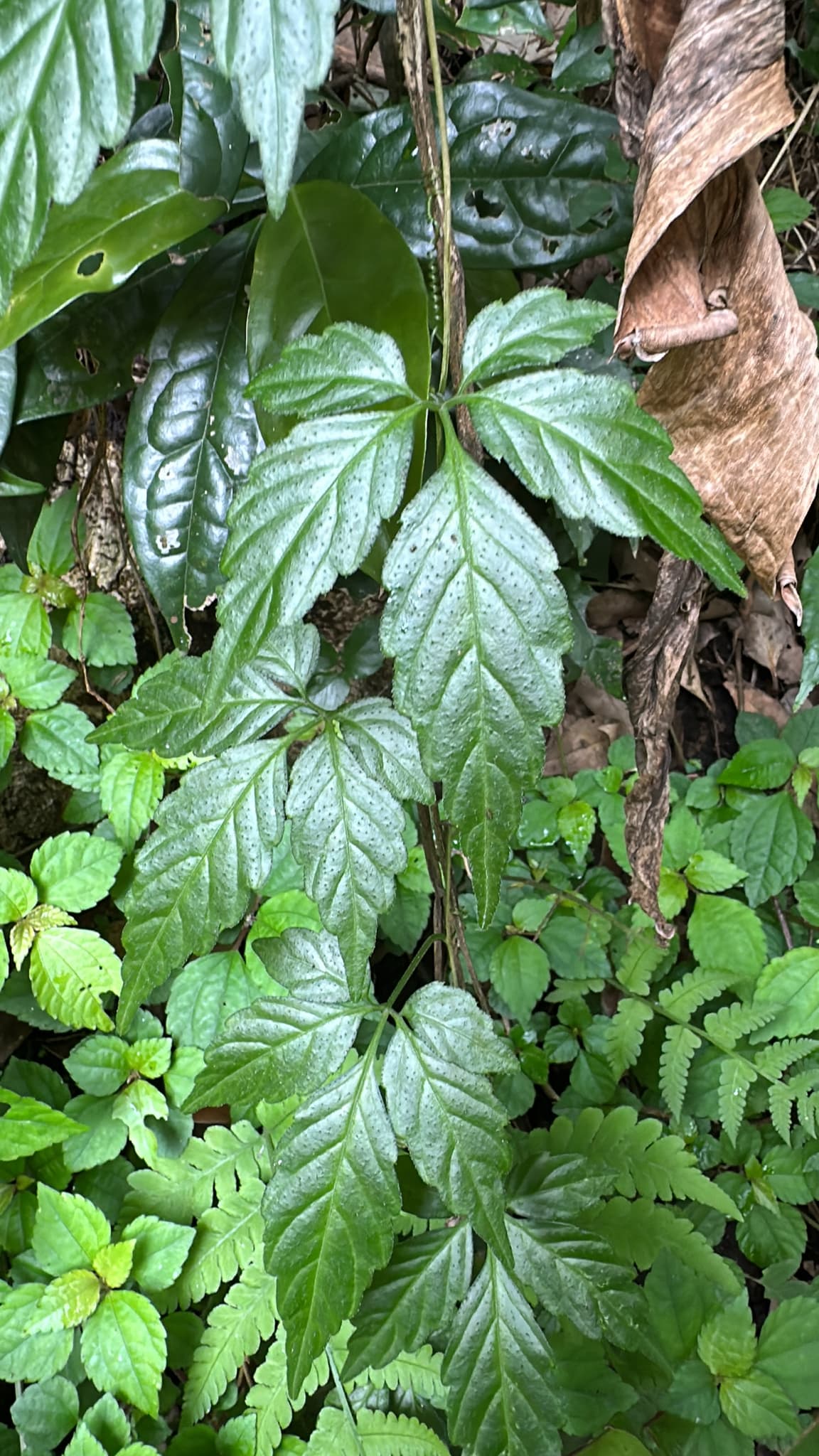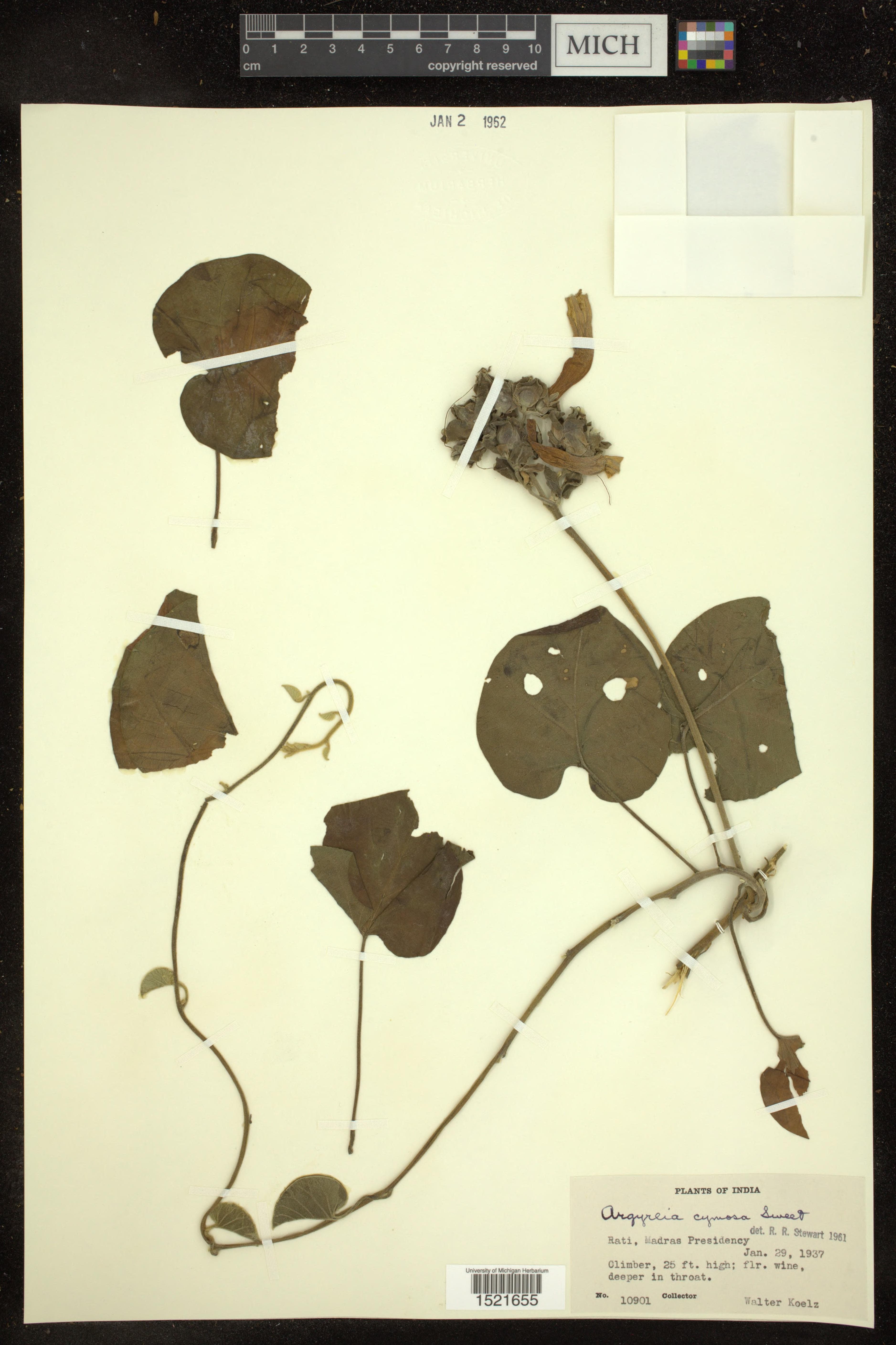
Argyreia cymosa
Image: Walter N. Koelz (cc-by-nc)
NameArgyreia cymosa
Scientific NameArgyreia cymosa Roxb. ex Sweet
Common NamesClimbing Wood Rose, Tropical Morning Glory
Plant FamilyConvolvulaceae
Natural HabitatNative to tropical and subtropical regions of India and Southeast Asia, it thrives in open forests, forest edges, and disturbed areas. It prefers moist, well-drained soils and warm, humid climates.
Parts Usedleaf,root
Medicinal Actionsanti-inflammatory, analgesic, antimicrobial, astringent, demulcent
Traditional UsesTraditionally, the leaves of Argyreia cymosa are used externally as a poultice to treat wounds, boils, skin infections, and to alleviate rheumatic pain. Roots may also be employed for similar external applications or, with caution, internally for conditions such as fever or dysentery. Local observations suggest its use for soothing throat ailments, possibly due to a demulcent or numbing effect.
Active Constituentsalkaloids, flavonoids, phenolic compounds, triterpenes, steroids
Preparation Methodsinfusion, decoction, poultice, powder
Contraindications & WarningsCaution is advised for internal use, especially during pregnancy, lactation, and in young children, due to potential alkaloid content. It may interact with sedatives or other medications. External use is generally considered safer.
Cultivation NotesThis climbing vine prefers full sun to partial shade, well-drained soil, and warm, humid conditions. It requires a sturdy support structure for its vigorous growth and can be propagated from seeds or stem cuttings.
Raritycommon
Description
Argyreia cymosa is a vigorous perennial climbing vine, capable of reaching significant heights, characterized by large, cordate (heart-shaped) leaves that may have a silvery pubescence on the underside. It produces cymose inflorescences with funnel-shaped flowers, often described as wine-colored with a deeper hue in the throat.