Angelica
NameAngelica
Scientific NameAngelica archangelica
Common NamesAngelica, Garden Angelica, Wild Celery, Norwegian Angelica
Plant FamilyApiaceae
Natural HabitatNative to northern Europe and Asia, Angelica thrives in damp meadows, along riverbanks, and in coastal regions. It prefers cool, moist, and fertile soil, often found in partial shade.
Parts Usedroot,seed,leaf
Medicinal Actionscarminative, expectorant, diuretic, anti-inflammatory, antimicrobial, nervine
Traditional UsesTraditionally, Angelica has been employed to aid digestion, relieve flatulence, and stimulate appetite. It is also used for respiratory conditions like coughs and bronchitis, as a diaphoretic for colds and flu, and topically for rheumatic pains.
Active ConstituentsFuranocoumarins, Volatile oils, Coumarins, Flavonoids
Preparation Methodsinfusion, decoction, tincture, powder, essential oil
Contraindications & WarningsNot recommended for pregnant or breastfeeding women. May increase photosensitivity, especially in fair-skinned individuals. Use with caution in diabetics or those on anticoagulant medication.
Cultivation NotesPrefers moist, fertile soil and partial shade. Propagate from fresh seeds, which have a short viability. It is a biennial plant, typically flowering in its second year before dying back.
Raritycommon
Description
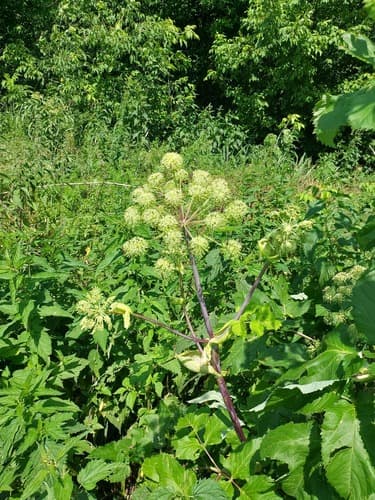
Angelica is a robust biennial herb characterized by its large, deeply divided leaves, a stout, hollow, purplish stem, and impressive terminal umbels of greenish-white flowers. It emits a distinctive aromatic fragrance from all its parts.