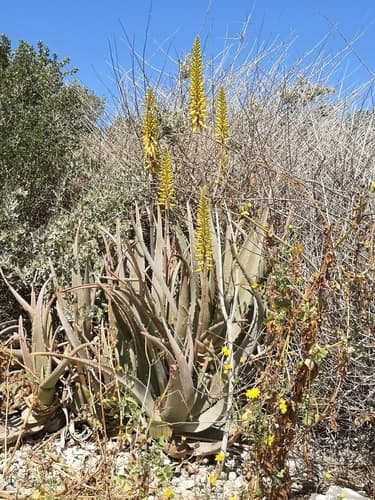
Aloe Vera
NameAloe Vera
Scientific NameAloe barbadensis Miller
Common NamesAloe Vera, Burn Plant, Medicine Plant, True Aloe
Plant FamilyAsphodelaceae
Natural HabitatNative to arid and semi-arid regions of the Arabian Peninsula, Aloe vera is now widely cultivated globally. It thrives in dry, well-drained soils and warm climates, often found in rocky or sandy areas.
Parts Usedleaf
Medicinal Actionsanti-inflammatory, antimicrobial, antioxidant, demulcent
Traditional UsesTraditionally, the gel from Aloe vera leaves is used topically for skin conditions such as burns, wounds, sunburns, and irritations due to its soothing and healing properties. Internally, the gel has been consumed for digestive health, while the latex (aloe 'juice') has been used as a laxative.
Active ConstituentsPolysaccharides (e.g., acemannan), Anthraquinones (e.g., aloin), Vitamins (A, C, E, B12), Minerals, Enzymes, Amino acids
Preparation Methodspoultice, salve, infusion, powder
Contraindications & WarningsOral consumption of aloe latex can cause abdominal cramps and diarrhea, and may interact with certain medications (e.g., diuretics, corticosteroids, digoxin). Pregnant or breastfeeding women, children, and individuals with kidney problems should avoid internal use. Topical use is generally safe but can cause allergic reactions in some individuals.
Cultivation NotesPrefers full sun to partial shade and well-drained soil. It is drought-tolerant and sensitive to frost. Propagated easily from offsets (pups) that grow around the base of the mature plant.
Raritycommon
Description
Aloe vera is a succulent plant species characterized by thick, fleshy, lance-shaped leaves arranged in a rosette. The leaves are typically green to grey-green, often with white flecks, and serrated margins. It produces tall flower stalks with dense racemes of yellow, tubular flowers.