Yellow-Throated Morning Glory
NameYellow-Throated Morning Glory
Scientific NameIpomoea tricolor
Common NamesYellow-Throated Morning Glory, Morning Glory, Heavenly Blue Morning Glory, Tlilxochitl
Plant FamilyConvolvulaceae
Natural HabitatNative to tropical and subtropical regions of Central and South America, it thrives in warm climates and is often found in disturbed areas, roadsides, and cultivated gardens worldwide.
Parts Usedseed
Medicinal Actionsnervine
Traditional UsesThe seeds have a long history of use by indigenous Mesoamerican cultures, such as the Aztecs and Zapotecs, for their entheogenic properties in spiritual, divinatory, and ceremonial rituals. They were traditionally consumed to induce visions and altered states of consciousness.
Active ConstituentsD-lysergic acid amide (LSA), isoergine, elymoclavine
Preparation Methodspowder, infusion
Contraindications & WarningsHighly psychoactive and potentially dangerous. Not for recreational use. Can cause severe nausea, vomiting, confusion, anxiety, paranoia, and intense hallucinations. Contraindicated for individuals with mental health conditions, pregnant or breastfeeding women, and children. May interact dangerously with other medications or psychoactive substances.
Cultivation NotesAn easily grown annual vine that prefers full sun and well-drained soil. It requires a trellis or other support for its climbing habit and is known to readily self-seed, potentially becoming invasive in suitable climates.
Raritycommon
Description
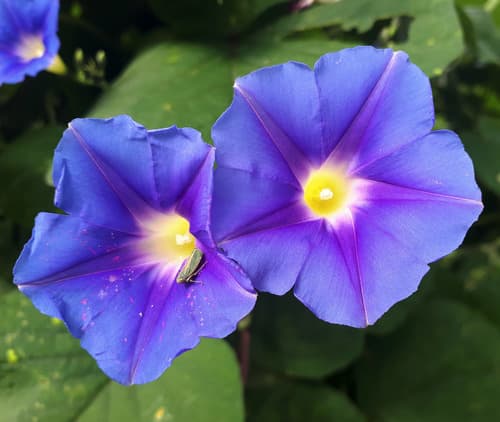
A vigorous climbing annual vine known for its large, trumpet-shaped flowers that display a vibrant blue hue with a distinct yellow or white throat. The heart-shaped leaves grow alternately along the stems, and the flowers typically open in the morning, closing by afternoon.