Yellow Morning Glory
NameYellow Morning Glory
Scientific NameMerremia umbellata
Common NamesYellow Morning Glory, Yellow Woodrose, Hogvine
Plant FamilyConvolvulaceae
Natural HabitatCommonly found in tropical and subtropical regions, thriving in disturbed areas, forest edges, clearings, roadsides, and coastal thickets. It prefers full sun to partial shade.
Parts Usedleaf,root,whole_plant
Medicinal Actionsanalgesic, anti-inflammatory, antimicrobial, astringent, diuretic
Traditional UsesTraditionally, the leaves are applied externally as a poultice for treating wounds, ulcers, skin infections, and various inflammatory conditions. Internally, infusions of the leaves or decoctions of the roots have been used to alleviate fevers, coughs, and as a diuretic. Some systems also employ it for general pain relief.
Active Constituentsflavonoids, triterpenes, steroids, phenolic compounds, resin glycosides
Preparation Methodsinfusion, decoction, poultice, powder
Contraindications & WarningsSpecific contraindications for Merremia umbellata are not extensively documented, but as with many plants in the Convolvulaceae family, caution is advised. Pregnant or breastfeeding individuals should avoid use. Due to potential diuretic or mild laxative effects, it may interact with medications affecting fluid balance or gastrointestinal motility.
Cultivation NotesThis vigorous vine grows well in full sun to partial shade and prefers well-drained soil, tolerating a variety of soil types. It can be propagated easily from seeds or stem cuttings and is known for its fast-growing nature.
Raritycommon
Description
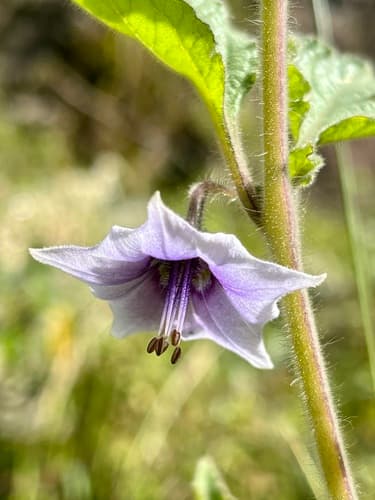
A perennial, herbaceous to woody vine characterized by its twining stems and vibrant, funnel-shaped yellow flowers. The blossoms often feature a reddish-purple throat and prominent white stamens, typically appearing in clusters.