Merremia emarginata
NameMerremia emarginata
Scientific NameMerremia emarginata
Common NamesKidney-leaf Morning Glory, Mouse-ear Morning Glory, Rat-ear Morning Glory, Akhuparni
Plant FamilyConvolvulaceae
Natural HabitatCommonly found in tropical and subtropical regions of Asia and Africa, thriving in moist, open, and disturbed areas such as roadsides, fields, grasslands, and riverbanks.
Parts Usedwhole_plant,leaf
Medicinal Actionsanti-inflammatory, diuretic, antimicrobial, antioxidant, analgesic
Traditional UsesTraditionally used in Ayurvedic and other traditional medicine systems for various ailments. It is employed to treat urinary disorders, inflammation, fever, cough, headaches, and neuralgia. The leaves are often applied externally as a poultice for wounds, skin conditions, and swellings.
Active ConstituentsFlavonoids, Phenolic compounds, Alkaloids, Triterpenes, Steroids, Coumarins
Preparation Methodsinfusion, decoction, poultice, powder
Contraindications & WarningsGenerally considered safe for traditional use, but pregnant and lactating women should exercise caution. No severe drug interactions are widely reported, but consultation with a healthcare professional is advised, especially if on medication.
Cultivation NotesPrefers moist, well-drained soil and thrives in full sun to partial shade. It is a vigorous creeper that can spread rapidly, making it easy to cultivate in suitable tropical or subtropical climates.
Raritycommon
Description
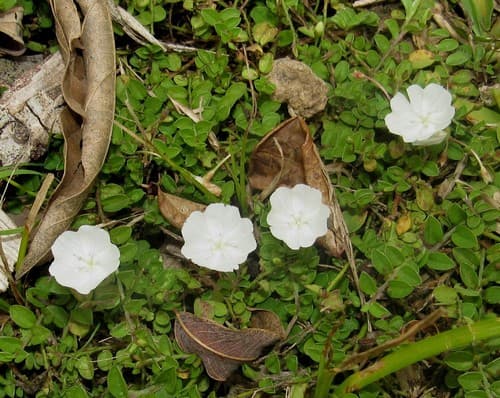
A prostrate, perennial, creeping herb with slender stems that root at the nodes. It is characterized by its distinctive kidney-shaped or reniform leaves with a notched apex, and small, pale yellow, funnel-shaped flowers that appear solitary or in few-flowered cymes.