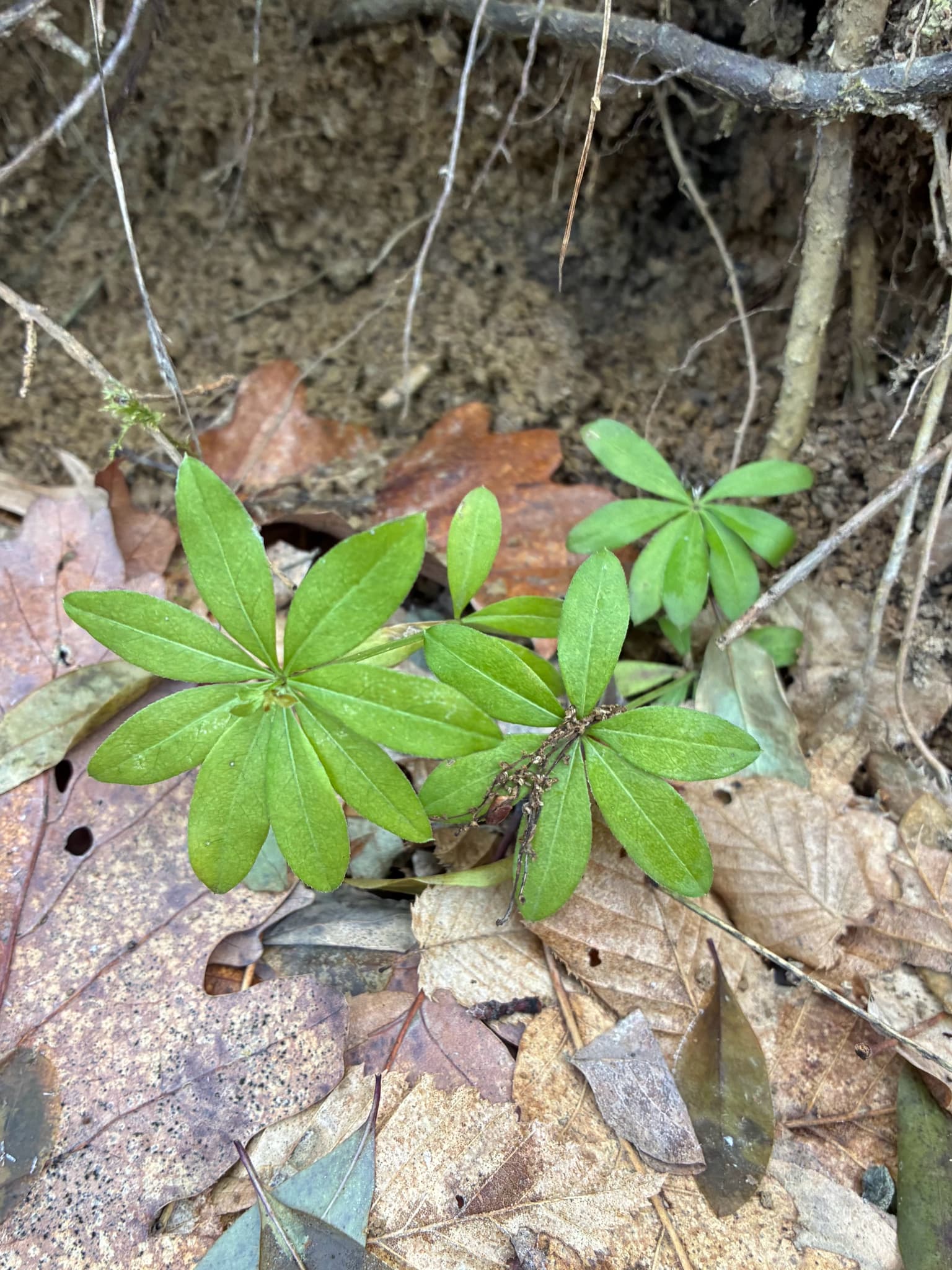
Woodruff
Image: lausc2 (cc-by-nc)
NameWoodruff
Scientific NameGalium odoratum
Common NamesSweet Woodruff, Wild Baby's Breath, Master of the Woods, Waldmeister
Plant FamilyRubiaceae
Natural HabitatNative to cool, moist, shady deciduous woodlands across Europe, North Africa, and Western Asia, often found under trees and along forest edges. It prefers rich, well-drained soil.
Parts Usedleaf,flower,whole_plant
Medicinal Actionsdiuretic, astringent, sedative, anti-inflammatory, carminative
Traditional UsesTraditionally used as a mild sedative to aid sleep and alleviate nervous tension. It has also been employed as a diuretic for urinary tract issues and historically used to flavor beverages like May wine, as well as a strewing herb for its pleasant scent when dried.
Active ConstituentsCoumarins, Iridoid glycosides, Tannins, Asperuloside
Preparation Methodsinfusion, tincture, powder
Contraindications & WarningsDue to its coumarin content, excessive consumption can be hepatotoxic and may interact with anticoagulant medications. It is not recommended for pregnant or breastfeeding women, or individuals with liver disease.
Cultivation NotesPrefers full to partial shade and moist, humus-rich, well-drained soil. It spreads readily by rhizomes and is an excellent ground cover, tolerating dry shade once established.
Raritycommon
Description
Sweet Woodruff is a low-growing perennial herb characterized by its bright green, lance-shaped leaves arranged in distinctive whorls of 6-8 around the stem. It produces small, fragrant white flowers in spring and has a creeping rhizomatous growth habit, often forming dense ground cover.